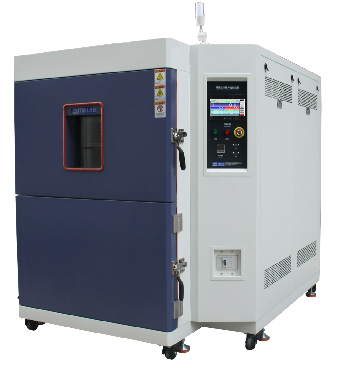
Product Overview
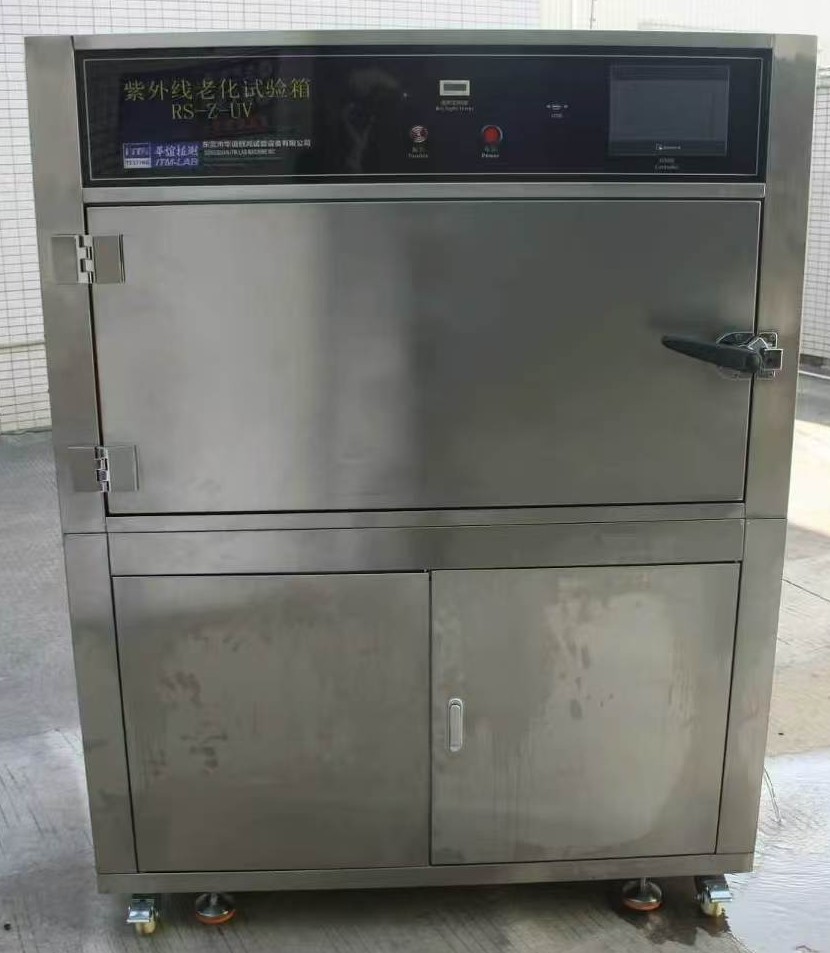
The Z-UV UV Weathering Tester (UV Aging Test Chamber) realizes accelerated weathering test by simulating outdoor ultraviolet radiation, dew and rainfall environment. It can quickly reproduce material fading, cracking, chalking, peeling, strength loss, discoloration and oxidation damage.This equipment is widely used for material screening, formula optimization and weather resistance verification. It meets mainstream international test standards and provides stable and repeatable test data for coatings, plastics, automotive parts, electronic components, adhesives, pigments, fabrics and other products.
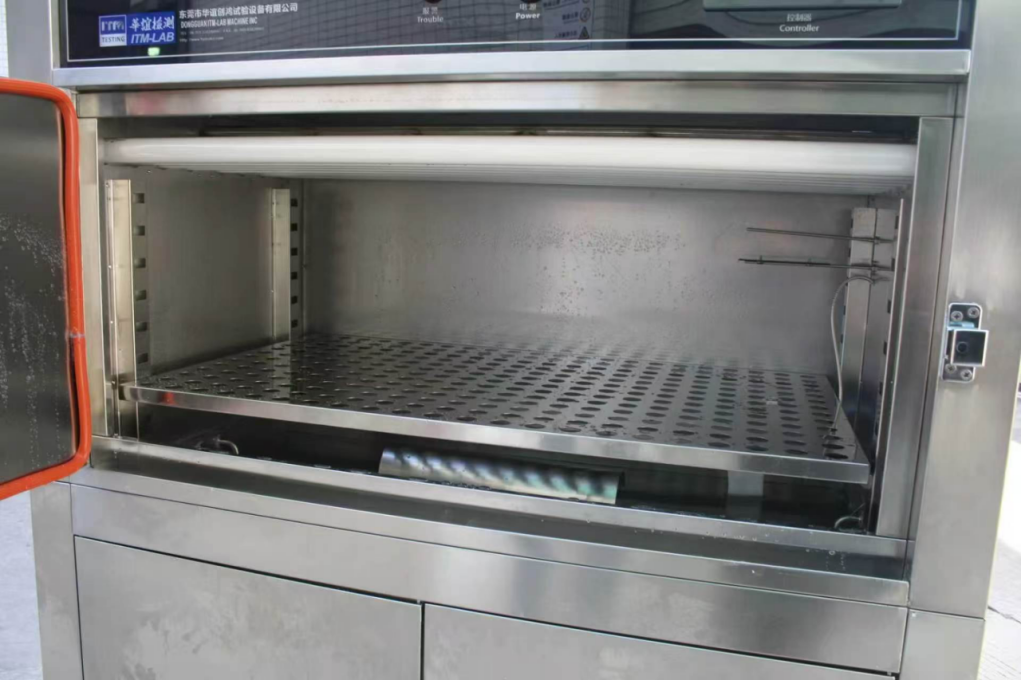
ITM-LAB 's Z-UV chamber adopts 304 stainless steel chamber, intelligent touch screen control and comprehensive safety protection design, which is a reliable choice for laboratory quality control and new product research and development.
Applicable Test Standards
-
ASTM G154, ASTM D4329, ASTM D4587, ASTM D5208
-
ISO 4892-3, ISO 11507
-
GB/T 16422.3, GB/T 16585, GB/T 14522
-
DIN, JIS, SAE J2020 (automotive exterior parts)
Test Methods & Working Modes
-
UV Exposure Mode
Simulate sunlight damage. Equipped with 8 UV-A lamps (315–400nm), with adjustable irradiance, to complete accelerated aging without excessive spectral deviation.
-
Condensation Mode
Simulate outdoor dew and high humidity. Form a high-humidity environment inside the chamber to trigger hydrolysis, blistering, softening and other failure forms.
-
Spray Mode
Simulate rain erosion and thermal shock. Suitable for materials that need to withstand alternating dry-wet and UV-moisture cycles.
Common Standard Test Cycle
-
UV exposure: 60℃ black panel, 4 hours
-
Condensation: 50℃, 4 hours
-
Automatic cycle operation until the set time is reached
Full Technical Parameters
| Item |
Specification |
| UV Lamp |
8 UV-A lamps, 315–400nm, 40W, 1200mm |
| Lamp Life |
Up to 1500 hours |
| Irradiance |
0.4–1.0W/m² adjustable |
| Chamber Temperature |
RT+10℃ to 70℃ |
| Black Panel Temperature |
20–90℃, accuracy ±1℃ |
| Humidity |
≥90%RH |
| Test Space |
1100×700×400 / 500mm |
| Interior Material |
304 stainless steel |
| Controller |
Touch screen programmable |
| Water Control |
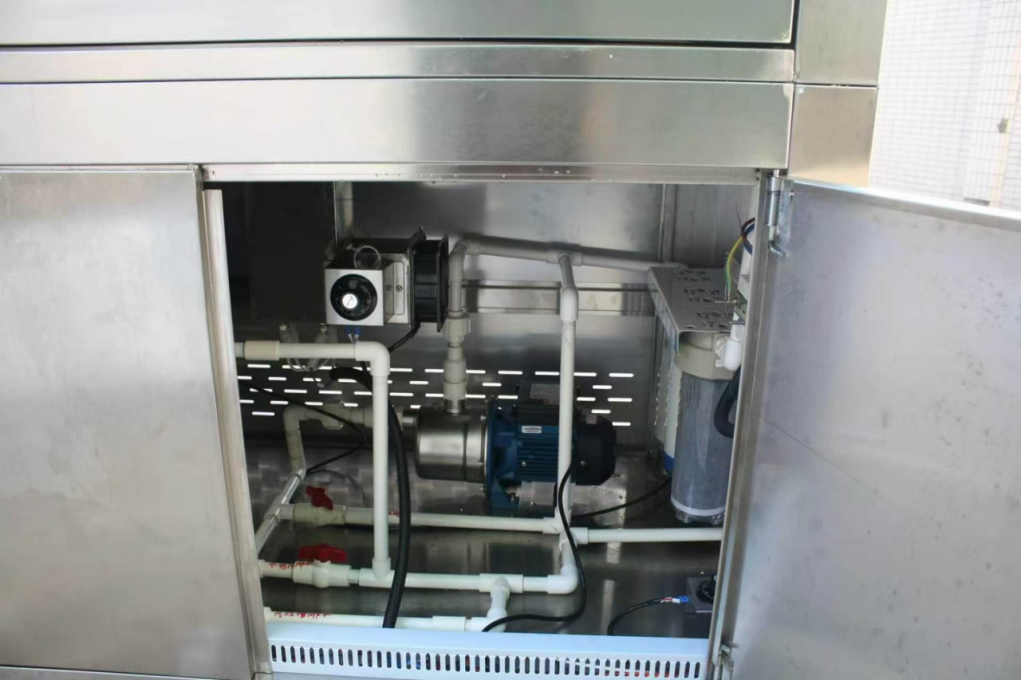
Automatic depth control 25mm |
| Safety |
Over-temperature alarm, water shortage alarm, overload protection, grounding protection |
Key Advantages
-
Real UV simulation: standard UV-A light source, test results are consistent and repeatable
-
Precise control: temperature fluctuation ≤±0.5℃, calibrated irradiance, programmable cycle
-
Durable structure: 304 stainless steel interior, corrosion-resistant in high humidity environment
-
Safe operation: multi-level alarm and protection to ensure laboratory and sample safety
-
Standard-compliant: supports most international certification test requirements
-
Large test space: suitable for plate and parts testing, supporting batch test
UV Test Chamber Selection: 8 Common Pitfalls to Avoid
-
Confusing UV-A and UV-B lamps
UV-B is too harsh and unrealistic for most materials; UV-A is recommended for real weathering simulation.
-
Uncalibrated irradiance adjustment
Cheap equipment only adjusts brightness; professional models support calibrated 0.4–1.0W/m² control.
-
Fake 304 stainless steel
Many low-cost chambers use 201/202 steel, which rusts easily in condensation mode.
-
Poor temperature uniformity
Temperature fluctuation exceeding ±2℃ will directly lead to unstable and invalid test data.
-
Incomplete safety functions
Without water shortage, over-temperature and overload protection, there is a risk of damage and safety hazards.
-
Undersized test space
Small internal space cannot meet actual parts testing; pay attention to effective internal dimensions.
-
Simple controller without programming
Basic timers cannot run standard UV/condensation cycles required by ASTM/ISO.
-
False standard compliance
No clear standard identification and test report; purchase must confirm certified support.
Applications
-
Material weather resistance evaluation
-
Formula optimization and stability test
-
Product durability and accelerated aging test
-
Quality control and third-party certification
-
New material R&D and performance verification
![]()
FAQ
-
What materials can be tested by Z-UV?
Coatings, paints, plastics, automotive parts, electronic casings, adhesives, pigments, textiles, printing inks, etc.
-
What is the difference between UV-A and UV-B?
UV-A (315–400nm) fits real sunlight simulation for daily weathering test. UV-B is only used for rapid screening and is too aggressive for conventional tests.
-
How long does an accelerated aging test take?
Normally 200–1000 hours, equivalent to months or years of outdoor exposure, depending on material and standard requirements.
-
Do I have to use distilled water?
Yes, distilled or deionized water is recommended to avoid scale and ensure stable spray and condensation.
-
Does Z-UV support ISO 4892-3 and ASTM G154?
Yes, it fully meets these two standards and can run their standard test cycles.
-
How often should UV lamps be replaced?
It is recommended to replace UV lamps every 1500 hours to keep stable irradiance output.
-
Is Z-UV suitable for automotive exterior testing?
Yes, it supports SAE J2020 and other automotive standards for interior and exterior parts.
-
Does the equipment support test data recording?
The touch screen controller supports program editing, real-time display and parameter retention for quality traceability.
Phone: +86 18102960079
Email: sales2@itm-lab.com
Address: No. 32, Qiaoxin East Road, Qiaotou Town, Dongguan, Guangdong, China