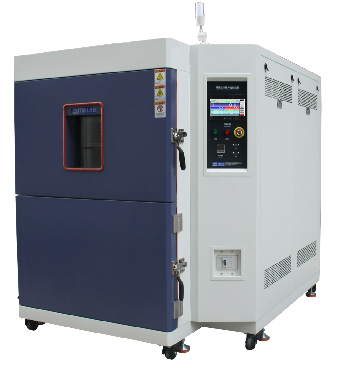
The programmable two-slot thermal shock test chamber CTS-100L is a professional environmental reliability testing equipment designed to simulate drastic high and low temperature sudden changes. It rapidly transfers test samples between hot zone and cold zone to verify product structural stability, material performance and service life under extreme temperature shock conditions.
↵
Different from the three-tank thermal shock chamber, the two-slot dual-chamber structure of CTS-100L adopts independent hot and cold cavity design. It realizes ultra-fast temperature switching in a short time, with smaller floor space and more cost-effective investment, very suitable for laboratory quality inspection, R&D verification and batch production sampling test.
↵
This model strictly complies with mainstream international testing standards including IEC 60068-2-14, MIL-STD-810H, GB/T 2423.22, fully meeting the thermal shock test requirements for electronic components, semiconductors, automotive parts, new energy battery accessories, connectors and precision aerospace components.
Technical Sheet
Key Advantages
-
Independent two-slot hot and cold separation structure, fast temperature conversion speed
-
High-precision temperature control system, stable fluctuation and excellent repeatability
-
Adopts SUS304 stainless steel inner tank, anti-corrosion and long service life
-
Intelligent PLC touch screen control, programmable cycle setting and automatic operation
-
Compact overall layout, saving laboratory installation space
-
Support data record, curve display and test report export
Technical Sheet
|
Model
|
CTS-50L
|
CTS-100L
|
CTS-150L
|
|
Inner size of each zone
|
350x350x400 mm
|
500x400x500 mm
|
600x500x500 mm
|
|
Structural design
|
Two test zones (Hot chamber and cold chamber)
|
|
External chamber size
|
The external size should be subject to the physical object
|
|
Temp. range
|
-40 ~ +150 ℃
|
|
Preheating temp. range
|
RT~+200 ℃
|
|
Precooling temp. range
|
-10~ -60℃
|
|
Preheating time
|
RT~ +200℃ need about 30min, average, nonlinearity, no load
|
|
Precooling time
|
RT~ -60℃ need about 60min, average, nonlinearity, no load
|
|
Temperature fluctuation
|
≤±0.5℃
|
|
Temperature deviation
|
≤±2℃
|
|
Temperature uniformity
|
≤±2℃
|
|
Structure and materials
|
|
External chamber
|
Stainless steel mirror paint
|
|
Inner chamber
|
SUS304 # stainless steel plate
|
|
Insulating layer
|
Hardamine lipid foam and glass cotton
|
|
Max load of chamber
|
5KG~20KG
|
|
Door
|
Two independent door
|
|
Seal
|
Original imported silicone seal strip
|
|
Transportation method
|
Use chain to transport basket between hot chamber and cold chamber
|
|
Heating and cooling system
|
|
Heating system
|
Finned ni-Cr electric heat pipe
|
|
Cooling system
|
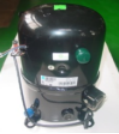
French Tecumesh fully enclosed piston compressor or German Bitzer semi-hermetic compressor, two-stage cascade refrigeration
|
|
Cooling way
|
Air cooling or water cooling
|
Details of main components
|
Air supply temperature measurement system
|
|
Air supply characteristic
|
High uniformity of upper air discharge and lower air return
|
|
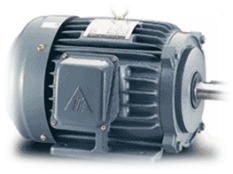
Circulating motor
|
Low voltage asynchronous motor
|
![]()
|
|
Wind turbine
|
Multi-wing centrifugal circulating fan with high and low temperature aluminum alloy blades
|
![]()
|
|
Sensor
|
PT100 platinum resistance temperature and humidity sensor. (wet and dry bulb)
|
![]()
|
Cooling System
|
Cooling System
|
|
Air cooling method
|
Piston reciprocating compressor
|
|
Compressor
|
French-Tecumesh fully enclosed piston
compressor or
German-Bitzer semi-hermetic compressor,
|
![]()
|
|
Refrigerating fluid
|
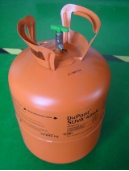
Non-fluorine environmental refrigerant
R404A and R23
|
![]()
|
|
Condenser
|
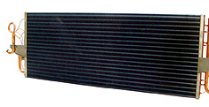
Air-cooled fin type (32mm inlet and outlet pipe diameter)
|
![]()
|
|
Evaporator
|
High efficiency multi-stage finned evaporator with hydrophilic membrane (fin thickened)
|
![]()
|
|
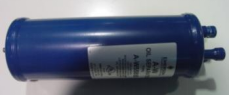
Oil separator
|
Emerson AW
|
![]()
|
|
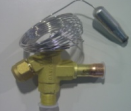
Expansion valve
|
Danfoss thermal expansion valve
|
![]()
|
|
Magnetic Valve
|
Saku Palace and Danfoss in Japan
|
![]()
|
|
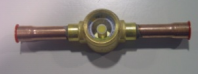
sight glass
|
Danfoss
|
![]()
|
|
Other accessories
|
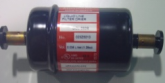
All are international brand quality products (right picture: filter dryer)
|
![]()
|
|
7Dehumidification
|
1. Cryodehumidification by refrigeration system (the air in the box passes through the evaporator at a temperature lower than the dew point, and the water is precipitated).
|
|
System features
|
1 Adopts (BTHC) balanced temperature and humidity regulation mode, automatically switches the flow rate of the refrigeration system according to different working conditions, and cuts off the redundant system in the constant section to maintain energy saving operation and cooling control.
2 Multi-stage evaporator combination, can obtain more uniform and efficient cold volume exchange efficiency and refrigeration output;
3.The flow control is automatically adjusted by the corresponding thermal expansion valve;
|
Heating and cooling system
|
Heating system
|
|
Heating tube
|
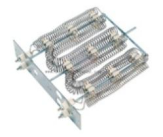
Bare wire nickel chromium alloy electric heating tube
|
![]()
|
|
Control mode
|
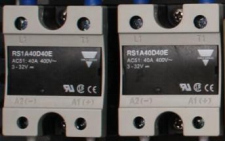
High precision contactless switch control is realized by the output signal of the controller through the SSR solid state relay. (Right picture is Swiss Jiale solid state relay).
|
![]()
|
Application Scope
Electronic circuit boards, IC chips, sensors, automotive electronic parts, new energy battery components, plastic and rubber materials, hardware accessories, communication equipment and other products for rapid cold and hot shock reliability testing.
Why Choose ITM-LAB
We are a professional manufacturer of environmental test chambers and reliability testing equipment with more than 20 years of R&D and production experience. All thermal shock test chambers have passed CE and ISO 9001 certification, with strict factory calibration and complete after-sales service system.
↵
We provide one-stop services including scheme customization, installation, operation training and regular maintenance, supporting global customers with stable quality and professional technical support.
FAQ
Q1: What temperature range does CTS-100L support?
The CTS-100L two-slot thermal shock test chamber covers a temperature range of -40℃ to +150℃, with preheating up to +200℃ and precooling down to -60℃, fully meeting mainstream industrial reliability test requirements.
↵
Q2: What industries and products is this chamber suitable for?
It is widely used for reliability testing of electronic components, PCBs, IC chips, sensors, automotive electronics, new energy battery parts, communication devices and precision industrial materials.
↵
Q3: What international standards does the CTS-100L comply with?
It follows classic testing standards including IEC 60068-2-14, MIL-STD-810H and GB/T 2423.22, suitable for laboratory R&D, quality inspection and factory batch sampling tests.
↵
Q4: What is the temperature accuracy and uniformity?
Temperature fluctuation ≤ ±0.5℃;Temperature deviation and uniformity ≤ ±2℃,ensuring stable and repeatable test data.
↵