Product Overview
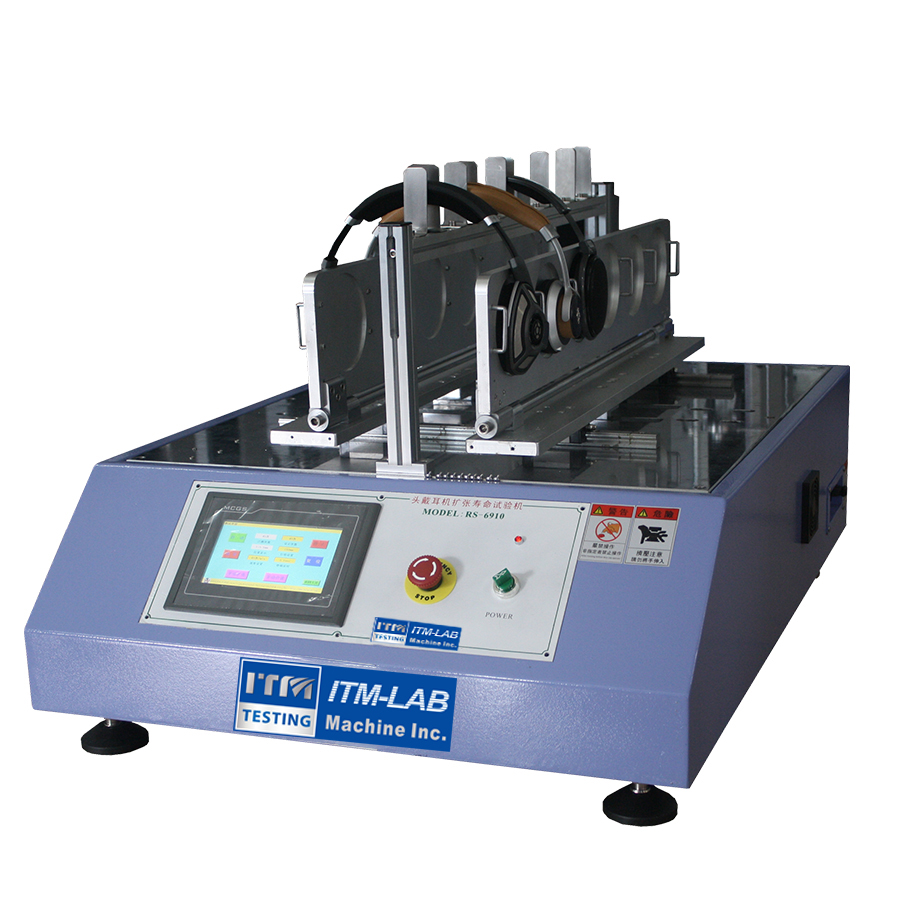
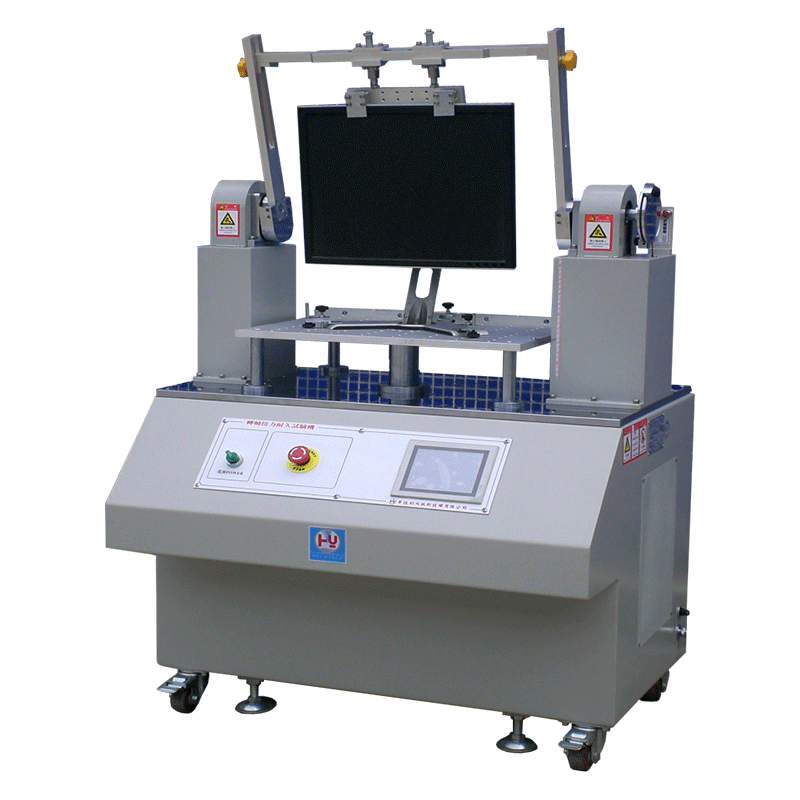
The RS-6910 Headphone Headband Expansion Life Tester is designed to evaluate the mechanical durability of headphone headbands through repeated opening and closing movements. Equipped with an AC servo drive and three independent testing stations, it delivers stable, repeatable motion for product development, quality control, and reliability verification.
Programmable stroke, dwell time, and cycle settings allow the tester to simulate real operating conditions for different headphone designs, helping engineers identify structural weaknesses before products enter mass production.
Why Headband Durability Testing Matters
Every time a headphone is worn or removed, the headband expands and returns to its original position. Although each movement is small, repeated cycles gradually create mechanical stress on hinges, plastic parts, metal frames, and internal wiring.
Without durability testing, these issues may not appear until products have been used for months in the field. Accelerated laboratory testing allows manufacturers to detect potential failures early, compare different designs, and improve product reliability before production begins.
Engineer's Note
The first sign of failure is often hinge looseness or reduced clamping force rather than a broken headband. Early fatigue detection provides valuable data for product optimization.
How Does the RS-6910 Work?
The headphone is securely mounted on a dedicated fixture before testing begins.
A precision AC servo motor repeatedly expands and closes the headband according to the programmed stroke, dwell time, and cycle count. Because every movement follows the same path, each sample is tested under identical conditions.
This repeatable motion enables engineers to evaluate durability, compare prototype designs, and verify product consistency with greater confidence.
Why Is the RS-6910 Designed This Way?
Every feature of the RS-6910 is intended to improve test repeatability and engineering efficiency.
- Three Independent Testing Stations
Three samples can be tested simultaneously under identical settings, making prototype comparison and production verification faster and more consistent.
Servo control maintains smooth and stable movement throughout long-duration testing, reducing variation between test cycles.
- Adjustable Expansion Stroke
The adjustable 100–300 mm stroke accommodates different headphone sizes and structures, allowing test conditions to better reflect real product use.
- Programmable Test Parameters
Stroke, dwell time, and cycle count can be adjusted to match customer specifications, internal quality standards, or product development requirements.
What Tests Can Be Performed?
| Test Type |
Purpose |
Typical Evaluation |
| Headband Expansion Life Test |
Simulate repeated opening and closing |
Fatigue life, structural durability |
| Hinge Fatigue Test |
Evaluate hinge reliability |
Wear, looseness, deformation |
| Structural Durability Test |
Verify frame integrity |
Permanent deformation, mechanical stability |
| Prototype Comparison Test |
Compare different designs or materials |
Product development, design optimization |
| Production Quality Verification |
Inspect production samples |
Batch consistency, quality control |
| Accelerated Life Cycle Test |
Simulate years of normal use |
Service life evaluation |
| Reliability Validation Test |
Support engineering qualification |
Product reliability verification |
Applicable Standards & Test References
The RS-6910 supports durability testing developed according to customer specifications and commonly referenced international standards.
| Standard / Reference |
Typical Application |
| IEC 62368-1 |
Product safety evaluation for audio and ICT equipment |
| IEC 60068 Series |
Environmental and mechanical durability testing |
| Internal Reliability Standards |
Company-specific durability validation |
| Engineering Qualification Procedures |
Product development and design verification |
Note: Test methods and acceptance criteria are generally defined by the manufacturer or end customer. The RS-6910 provides a flexible platform for implementing these testing programs.
Technical Specifications
| Parameter |
Specification |
| Model |
RS-6910 |
| Testing Capacity |
3 Samples Simultaneously |
| Drive System |
AC Servo Motor |
| Expansion Stroke |
100–300 mm (Adjustable) |
| Opening Delay Time |
0.1–9.99 s |
| Placement Delay Time |
0.1–9.99 s |
| Removal Delay Time |
0.1–9.99 s |
| Closing Delay Time |
0.1–9.99 s |
| Test Cycle Range |
1–999,999 Cycles |
| Machine Dimensions |
Approx. W1000 × D698 × H668 mm (Please verify the original depth dimension.) |
| Machine Weight |
Approx. 125 kg |
| Power Supply |
AC 220V, 5A (or specified) |
Typical Testing Procedure
-
Mount the headphone sample onto the testing fixture.
-
Set the expansion stroke, dwell time, and target cycle count.
-
Start the automated durability test.
-
Inspect the headband, hinges, and structural components after testing.
-
Compare results to evaluate durability and identify potential design improvements.
How to Choose a Headphone Headband Tester
When selecting a durability tester, focus on the quality of the test data rather than the machine specifications alone.
Key considerations include:
-
Stable and repeatable servo-controlled motion
-
Adjustable stroke for different headphone designs
-
Multi-station testing for prototype comparison
-
Flexible parameter settings
-
Fixture customization capability
-
Reliable technical support and after-sales service
A well-designed tester should provide consistent, repeatable results that support both product development and production quality control.
Industry Applications
The RS-6910 is widely used in laboratories and manufacturing facilities for headphone durability evaluation.
-
Consumer Electronics – Wired, wireless, Bluetooth, and ANC headphones
-
Gaming Headsets – High-strength headbands and hinge durability testing
-
Office & Communication Devices – Call center and business communication headsets
-
Education Equipment – School and training headsets
-
R&D Laboratories – Prototype comparison and product validation
-
Quality Control Departments – Production consistency and reliability verification
Customer Story
A consumer electronics manufacturer was developing a new Bluetooth headset and needed to compare three different headband structures.
Using the RS-6910, engineers tested all prototypes under identical conditions. Although each sample passed functional inspection, one design showed earlier hinge loosening during life cycle testing.
Based on the results, the hinge structure was optimized before mass production, improving long-term durability while avoiding costly design changes after product launch.