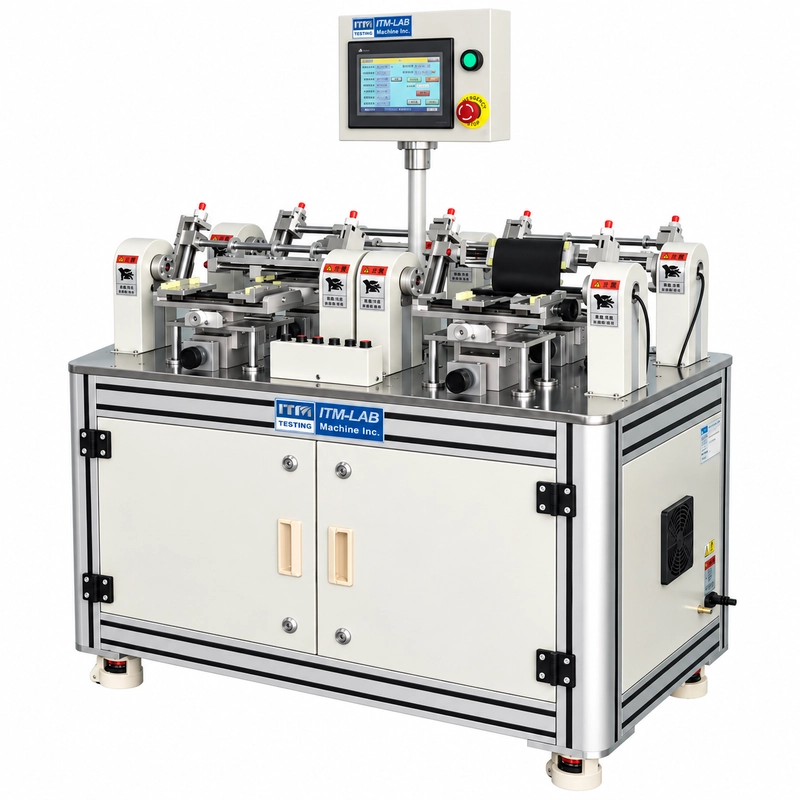
Automatic Tumble Tester for Repeated Drop Testing | RS-DP-12A
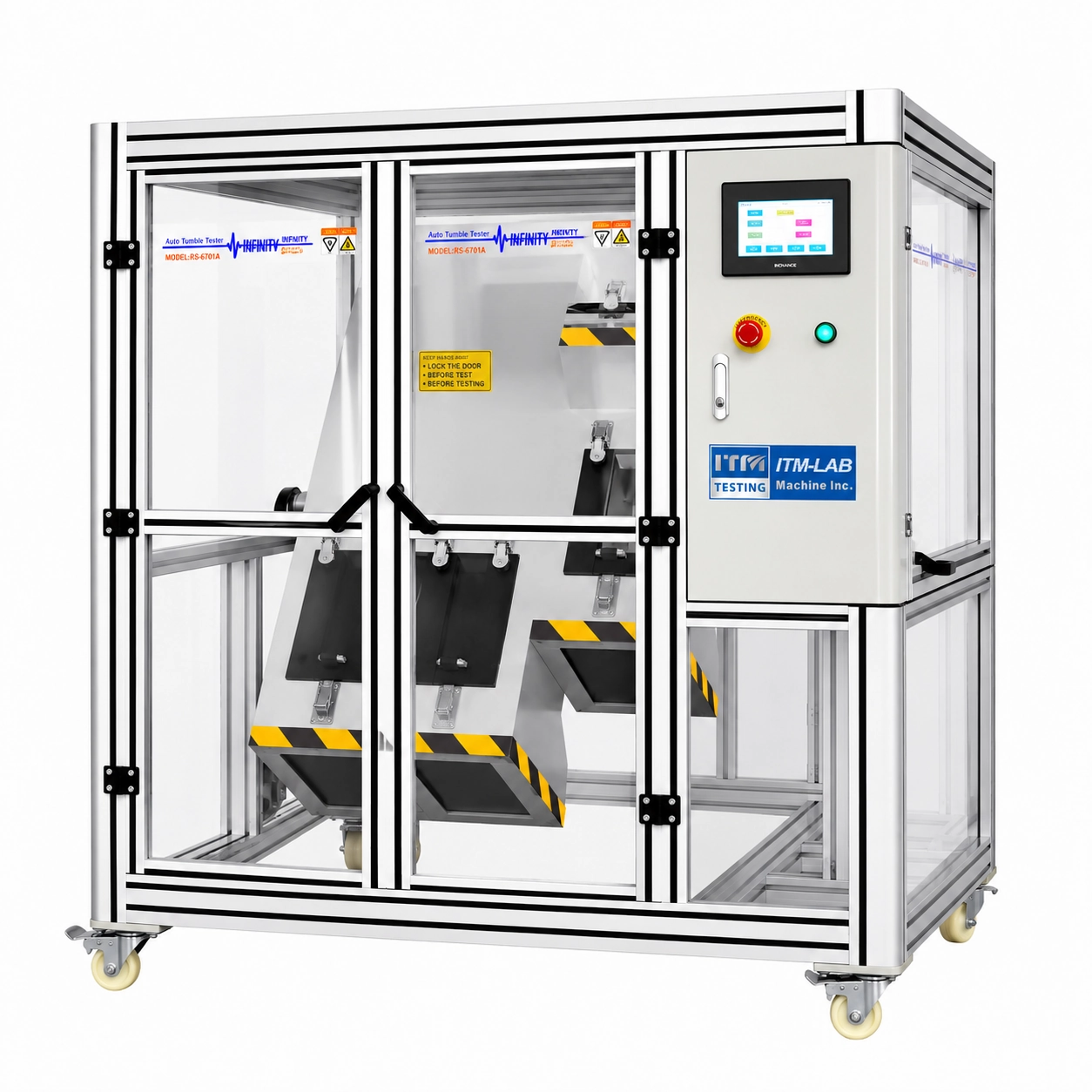
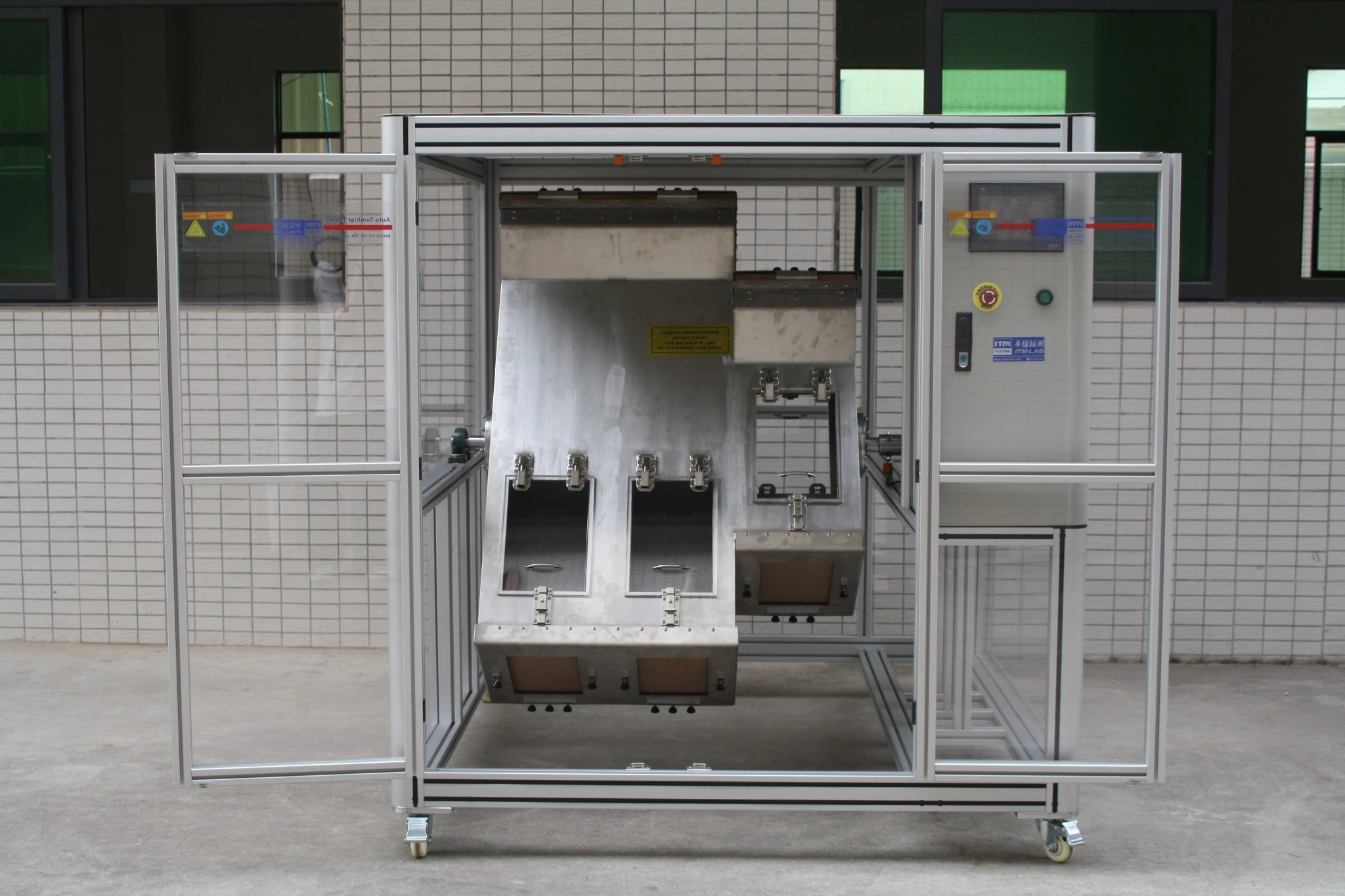
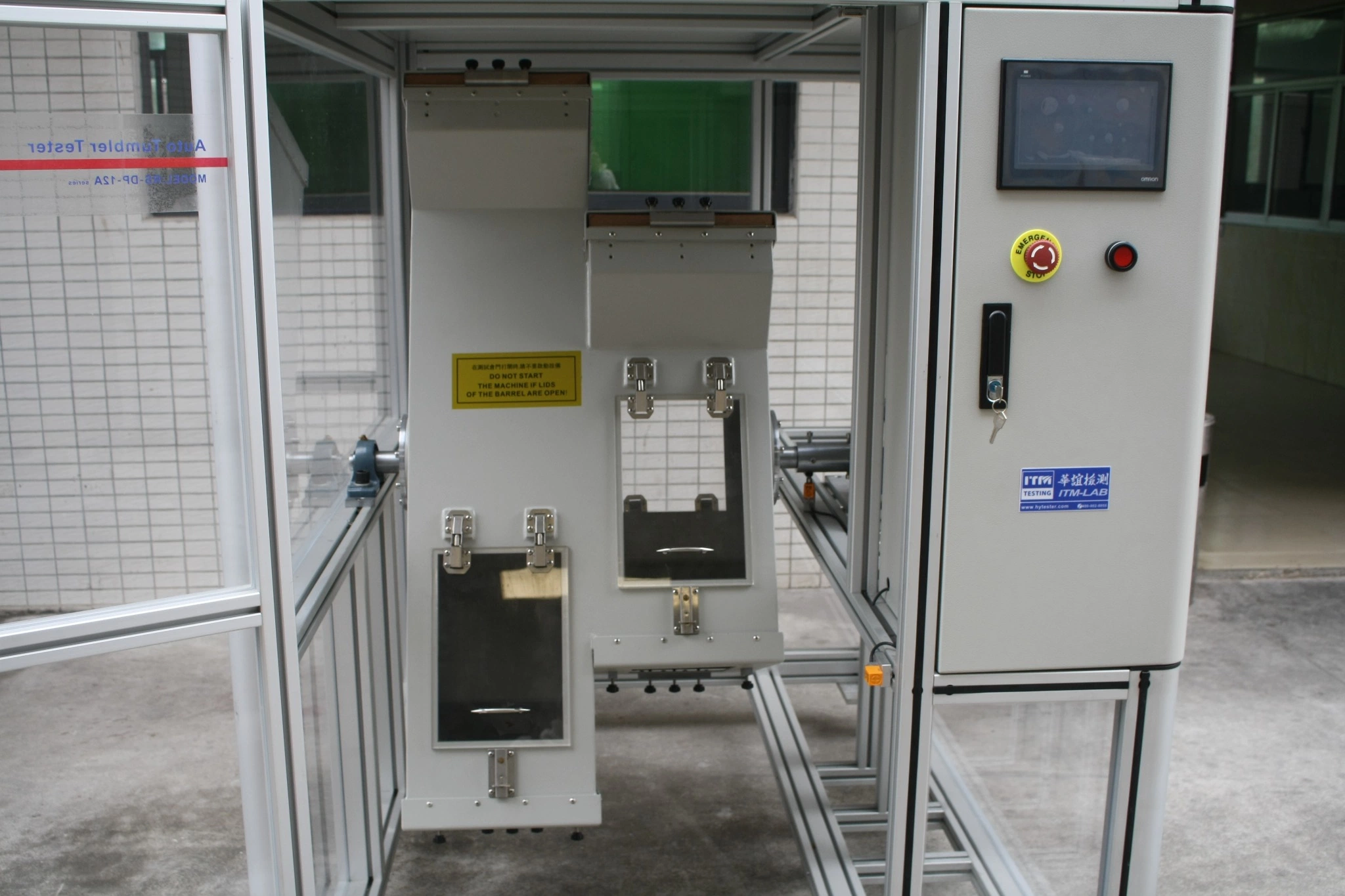
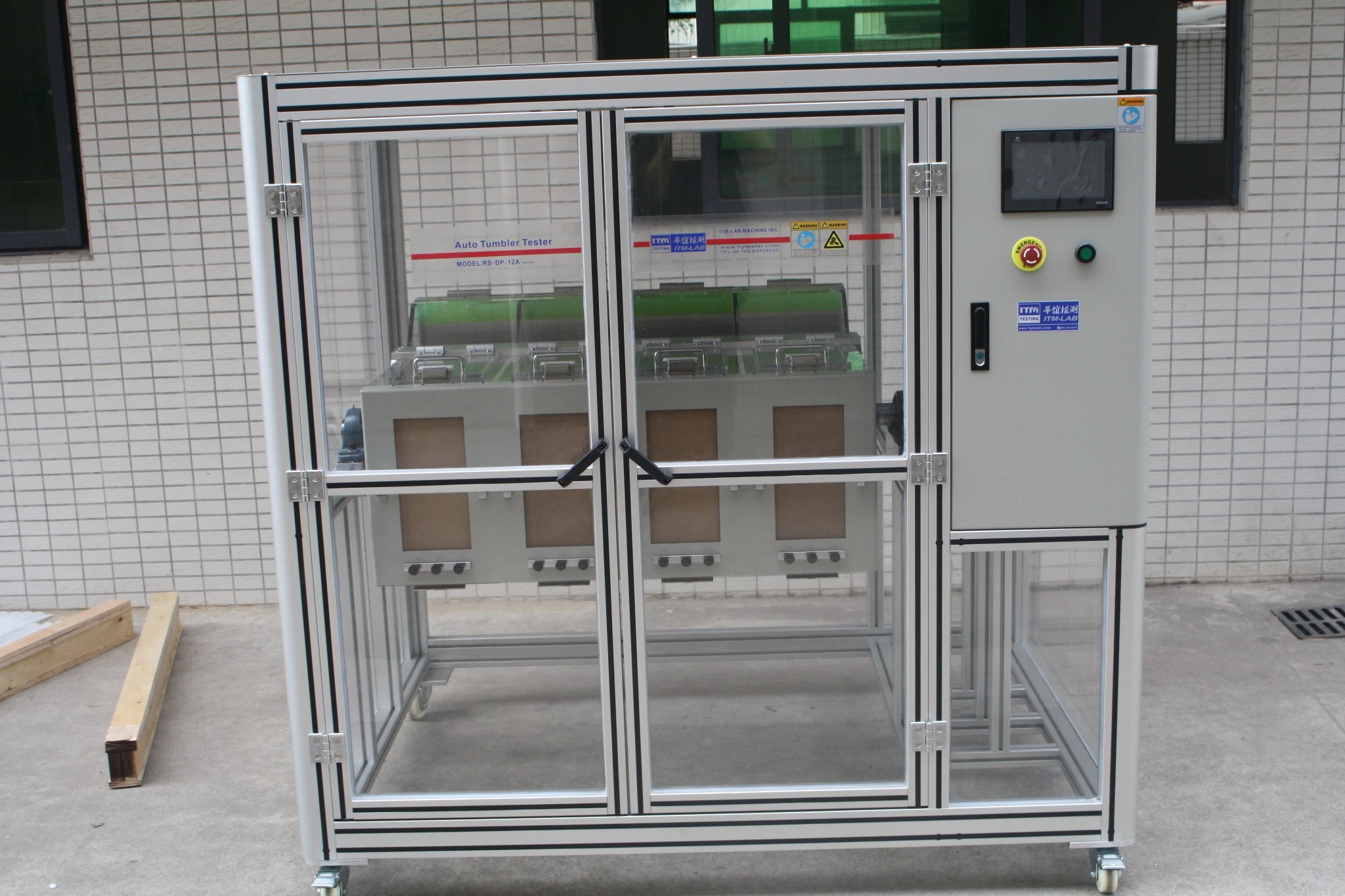
The ITM-LAB RS-DP-12A Tumble Tester performs repeated free-fall impact testing of portable electronics. It supports 500–1000 mm tumble lengths, 5–20 times/min and up to 999,999 counts, with configurable drum dimensions.
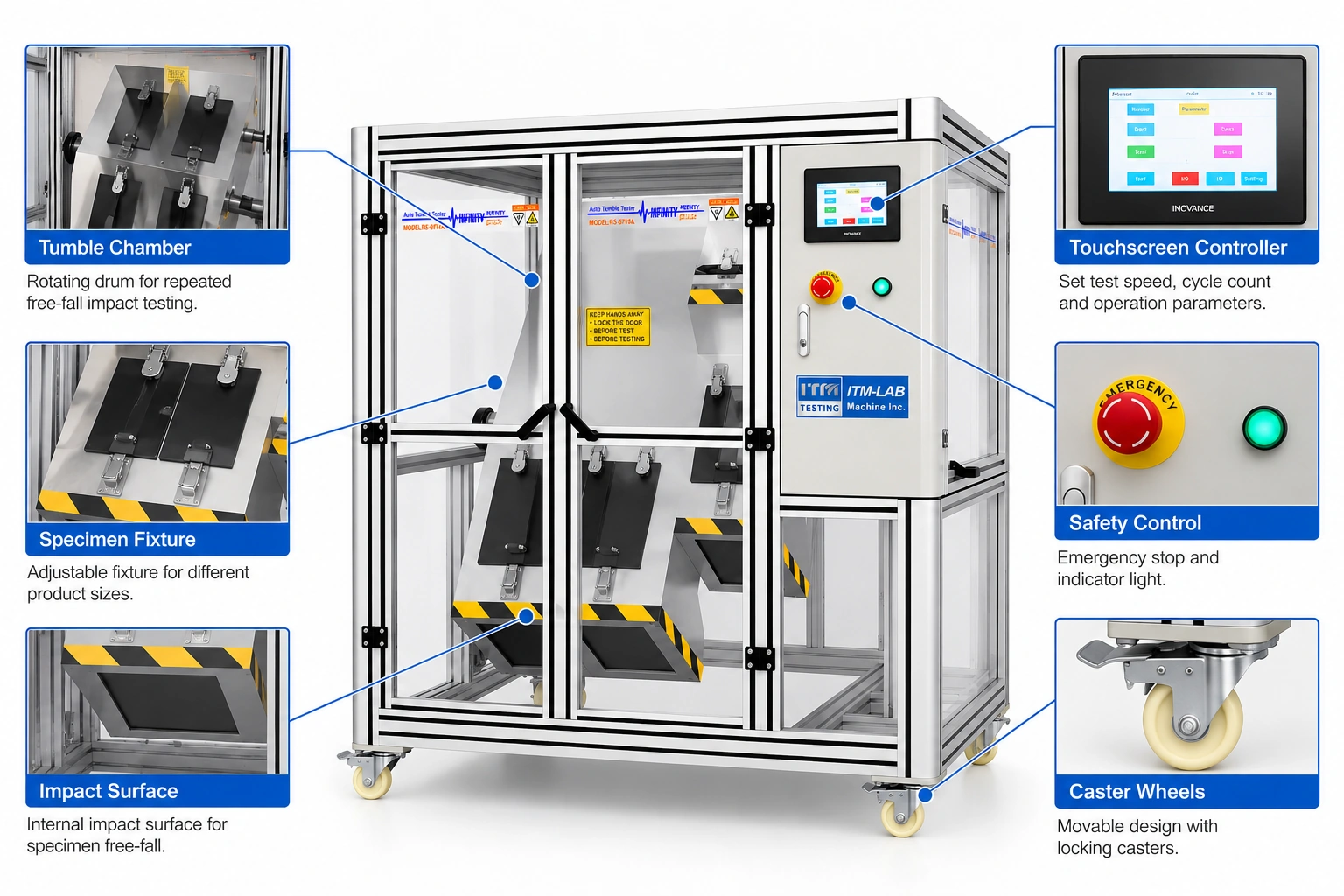
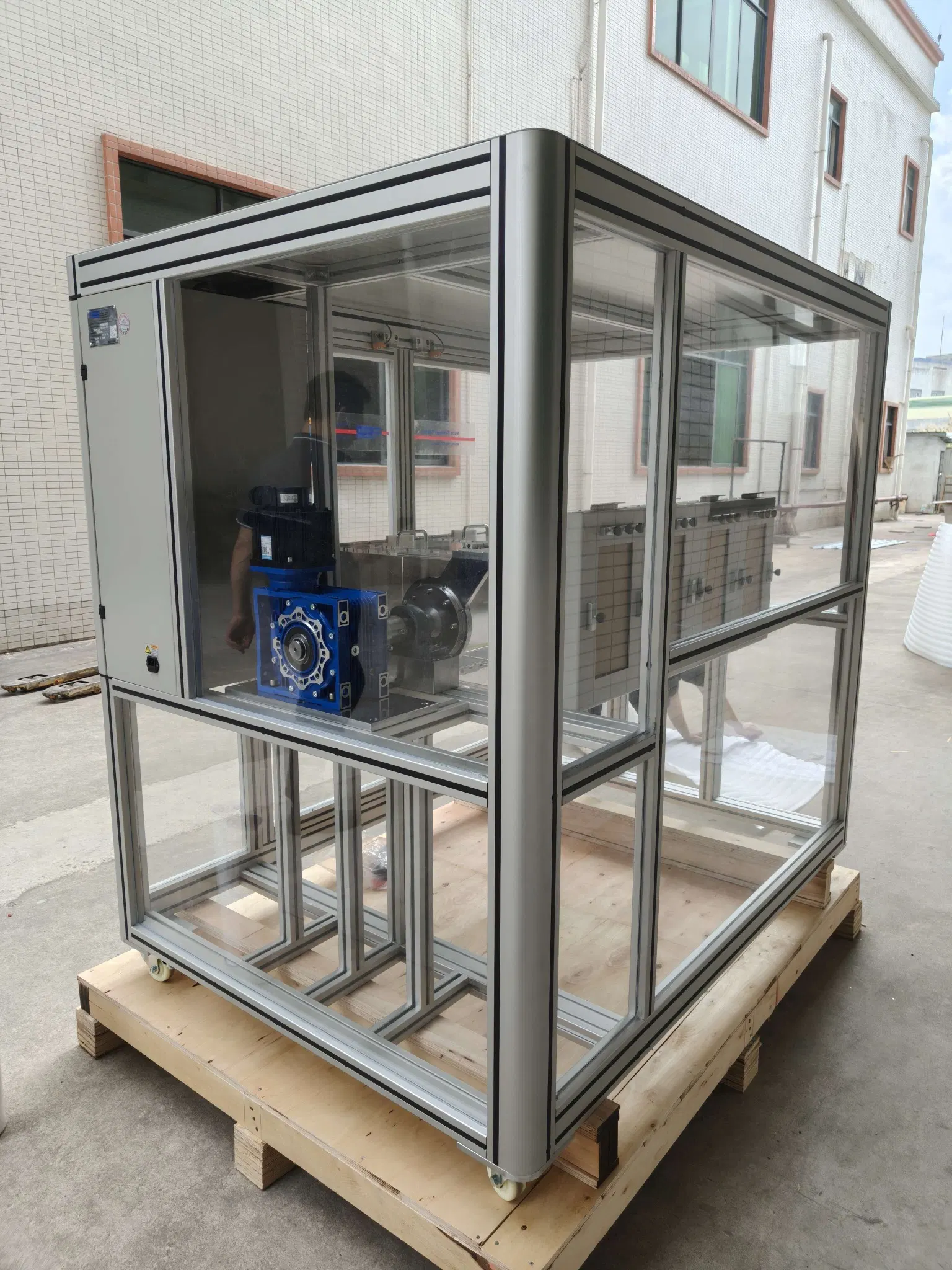
The RS-DP-12A is a rotating drum testing machine used to evaluate the effects of repeated mechanical impacts on finished products and components.
As the drum rotates, specimens are lifted and released onto an impact surface. Repeated impacts expose products to changing orientations and help engineers investigate accumulated mechanical damage.
The equipment is used in product development, quality control and reliability testing for smartphones, earphones, wearable devices, remote controllers and other portable electronic assemblies.Request a Quote
Model: RS-DP-12A
Test Method: Repeated tumble / free-fall impact
Tumble Length: 500–1000 mm, customizable
Test Speed: 5–20 times/min
Counter: 1–999,999
The RS-DP-12A is intended for products and components that require repeated impact evaluation during development or quality inspection.
| Product Category | Typical Specimens | Evaluation Focus |
|---|---|---|
| Mobile Devices | Smartphones, compact handheld devices | Housing damage, assembly retention, functional changes |
| Personal Electronics | Earphones, smartwatches, wearable devices | Enclosure integrity, component movement |
| Consumer Electronics | Remote controllers, small electronic accessories | Mechanical durability after repeated impacts |
| Electronic Assemblies | Connectors, small modules, assembled components | Connection integrity and component retention |
| Portable Accessories | Small charging accessories and housings | Cracking, separation and functional changes |
Specimen suitability depends on product dimensions, mass, drum configuration and the applicable test procedure.
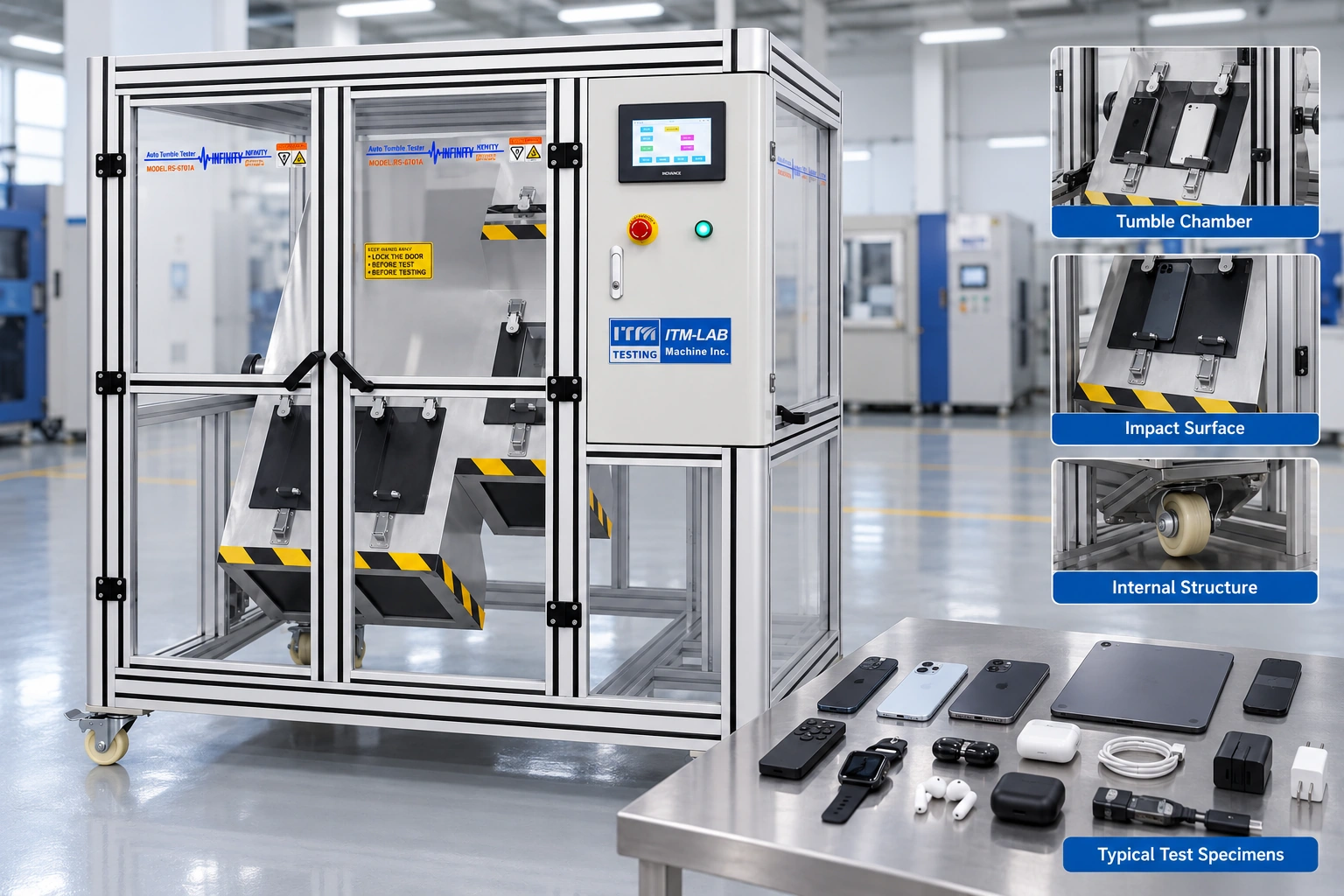
A rotating drum tester repeatedly lifts and releases specimens to generate free-fall impacts.
The testing sequence consists of five stages:
Load: Place the specimen inside the drum.
Set: Configure the required operating conditions and test count.
Rotate: The drum rotates and lifts the specimen.
Impact: The specimen falls onto the internal impact surface.
Inspect: Examine the specimen after the required test interval or completed sequence.
The resulting impacts may occur at different orientations. Unlike a controlled drop tester, a rotating drum does not independently position each specimen for a specified face, edge or corner impact.
The relationship between drum rotations, specimen drops and reported test counts should be defined in the applicable test procedure.
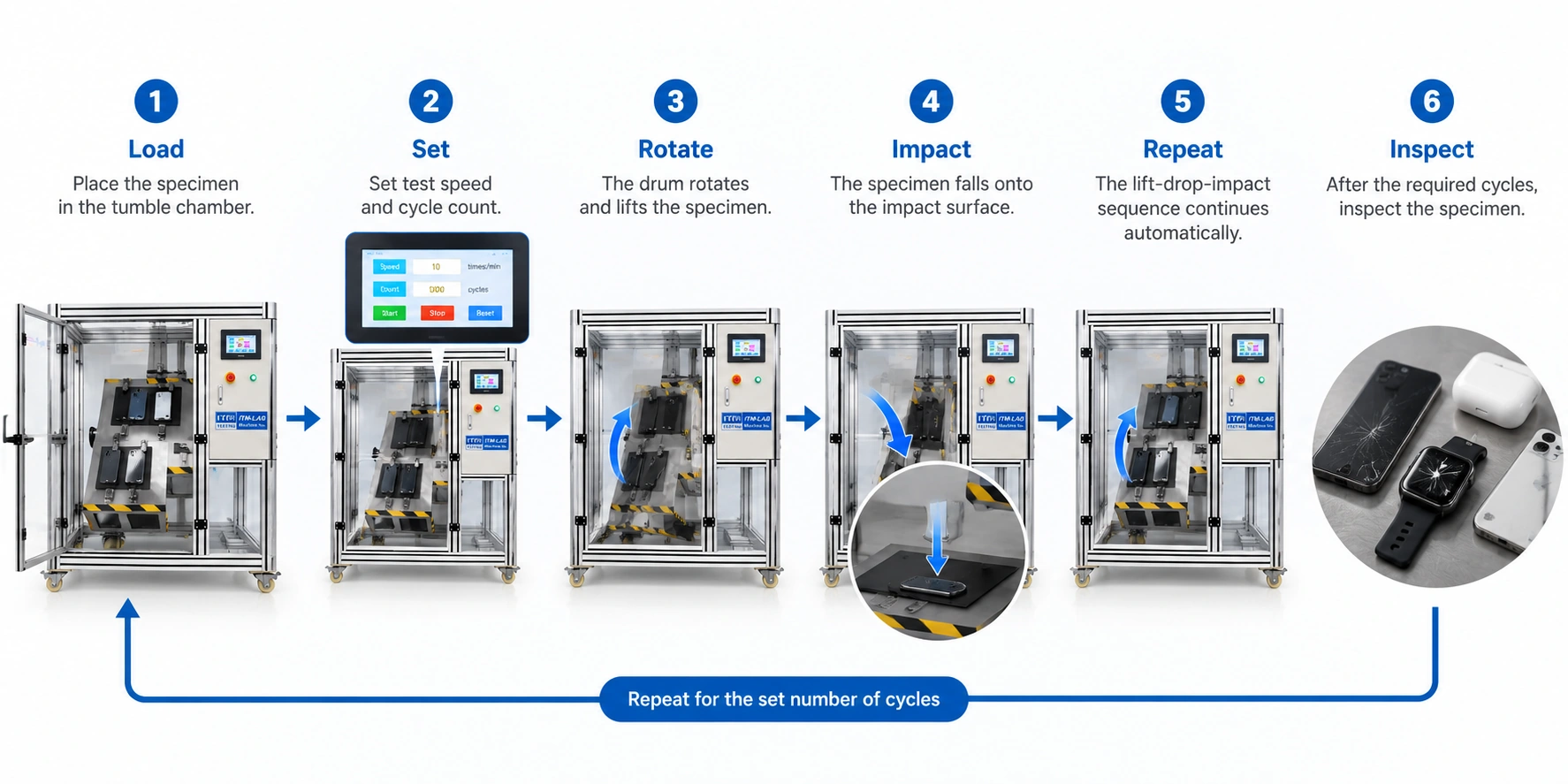
The following specifications are based on the ITM-LAB RS-DP-12 product catalog.
| Parameter | Specification |
|---|---|
| Model | RS-DP-12A |
| Equipment Type | Tumble Tester |
| Tumble Length | 500–1000 mm (or customized) |
| Tumble Width | 350 mm (or customized) |
| Material Options | Steel plate, stainless steel or acrylic plate |
| Test Speed | 5–20 times/min |
| Test Counter | 1–999,999 |
| External Dimensions | 1250 × 1500 × 1680 mm |
| Machine Weight | 250 kg |
| Power Supply | AC 220 V, 3 A (depending on configuration) |
| Customization | Tumble length, width and material configuration |
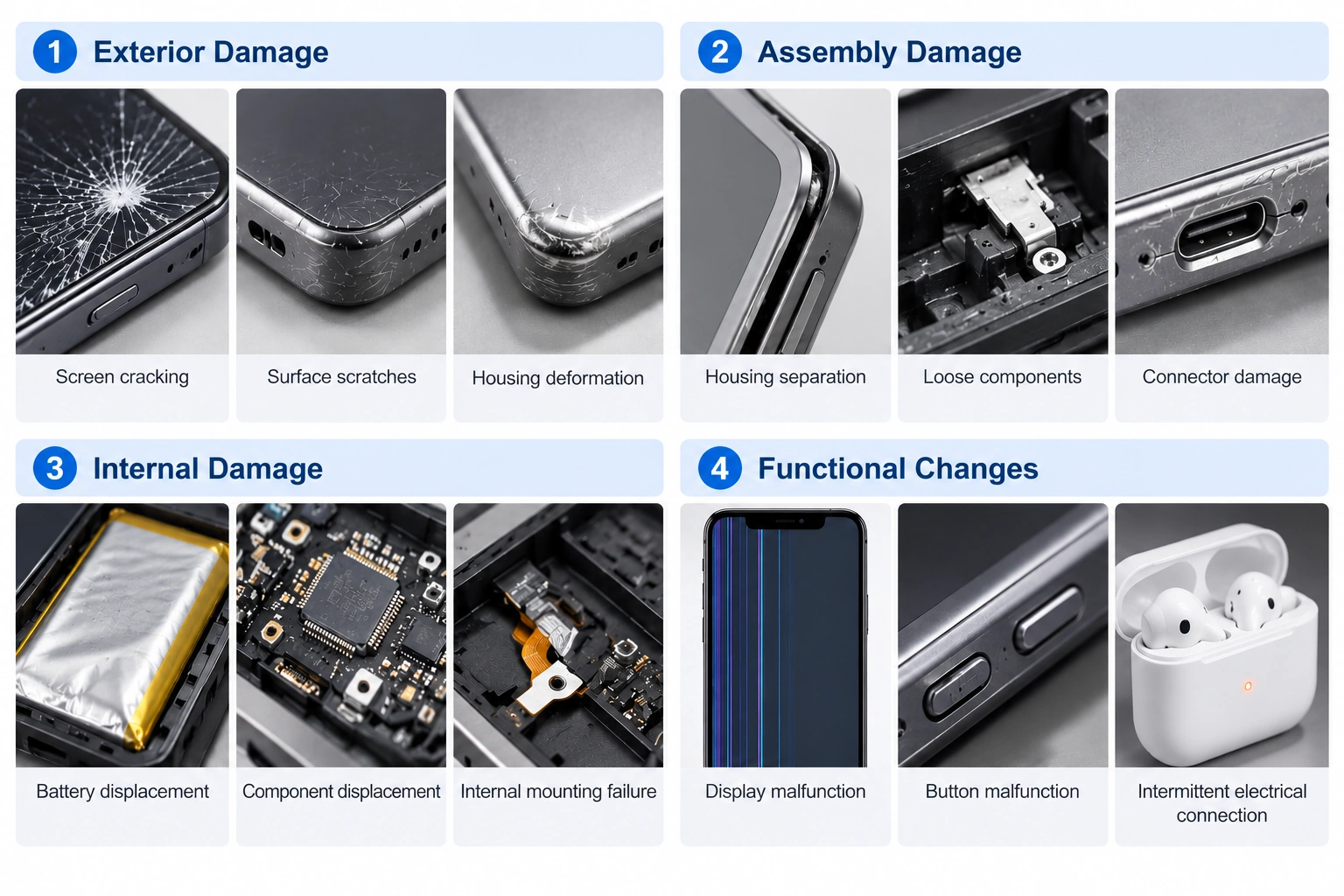
Repeated impacts can produce mechanical damage that may not appear after a single drop.
| Failure Category | Examples |
|---|---|
| Exterior Damage | Housing cracks, surface damage, frame deformation |
| Assembly Damage | Loose fasteners, displaced connectors, detached components |
| Internal Damage | Battery movement, component displacement, internal mounting failure |
| Functional Changes | Display faults, button malfunction, intermittent electrical connections |
Testing results depend on specimen construction, impact conditions, inspection intervals and acceptance criteria.
A tumble tester generates repeated impacts; the test procedure determines whether the specimen passes or fails.
Both machines evaluate mechanical impact resistance, but they use different specimen release methods.
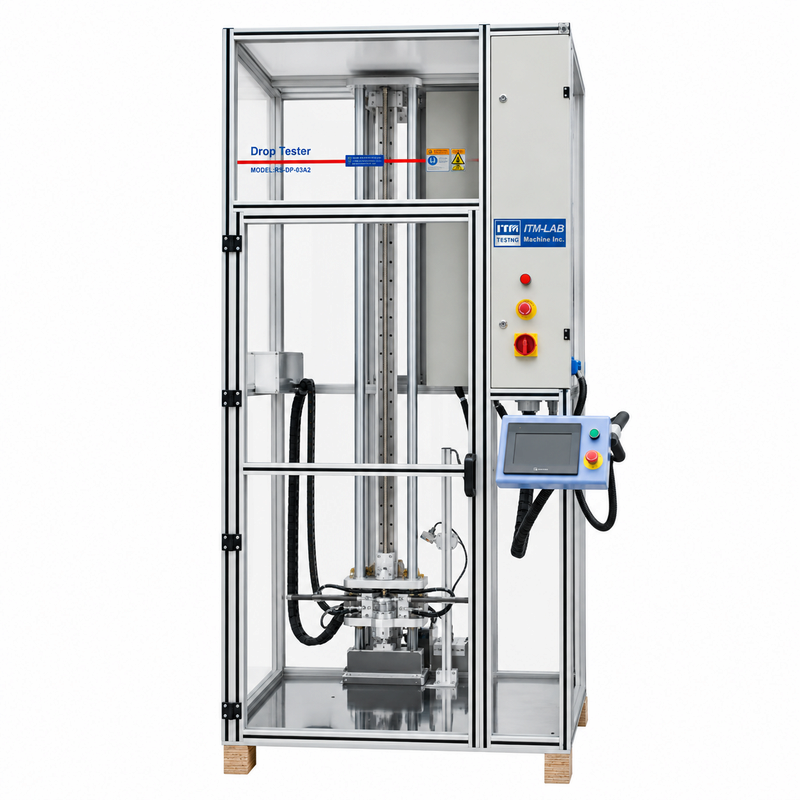
| Comparison | ITM-LAB RS-DP-12A Tumble Tester | ITM-LAB RS-DP-03A2 Controlled Drop Tester |
|---|---|---|
| Primary Test | Repeated tumble / free-fall impact | Controlled free-fall impact |
| Impact Orientation | Varies during drum rotation | Selected face, edge or corner |
| Specimen Positioning | Specimen moves within the drum | Specimen positioned before release |
| Test Repetition | Repeated drum operation | Individual controlled drops |
| Main Evaluation | Accumulated impact damage | Orientation-specific impact response |
| Typical Application | Repeated handling-impact durability | Defined drop-condition verification |
| Equipment Selection Basis | Drum geometry, specimen size, test count | Drop height, specimen orientation, release method |
Repeated free-fall testing is addressed by IEC 60068-2-31, which includes a procedure for repeated free-fall impacts.
| Standard | Relevance to Tumble Testing |
|---|---|
| IEC 60068-2-31 | Environmental testing, rough handling shocks, including repeated free-fall testing |
| YD/T 1539-2019 | Reliability requirements and test methods for mobile communication handsets |
| Customer / OEM Procedures | Product-specific impact conditions, test counts and acceptance criteria |
The applicable edition, specimen configuration, test conditions and acceptance criteria must be confirmed before selecting equipment.
Equipment capability alone does not establish compliance with every requirement of a referenced standard.
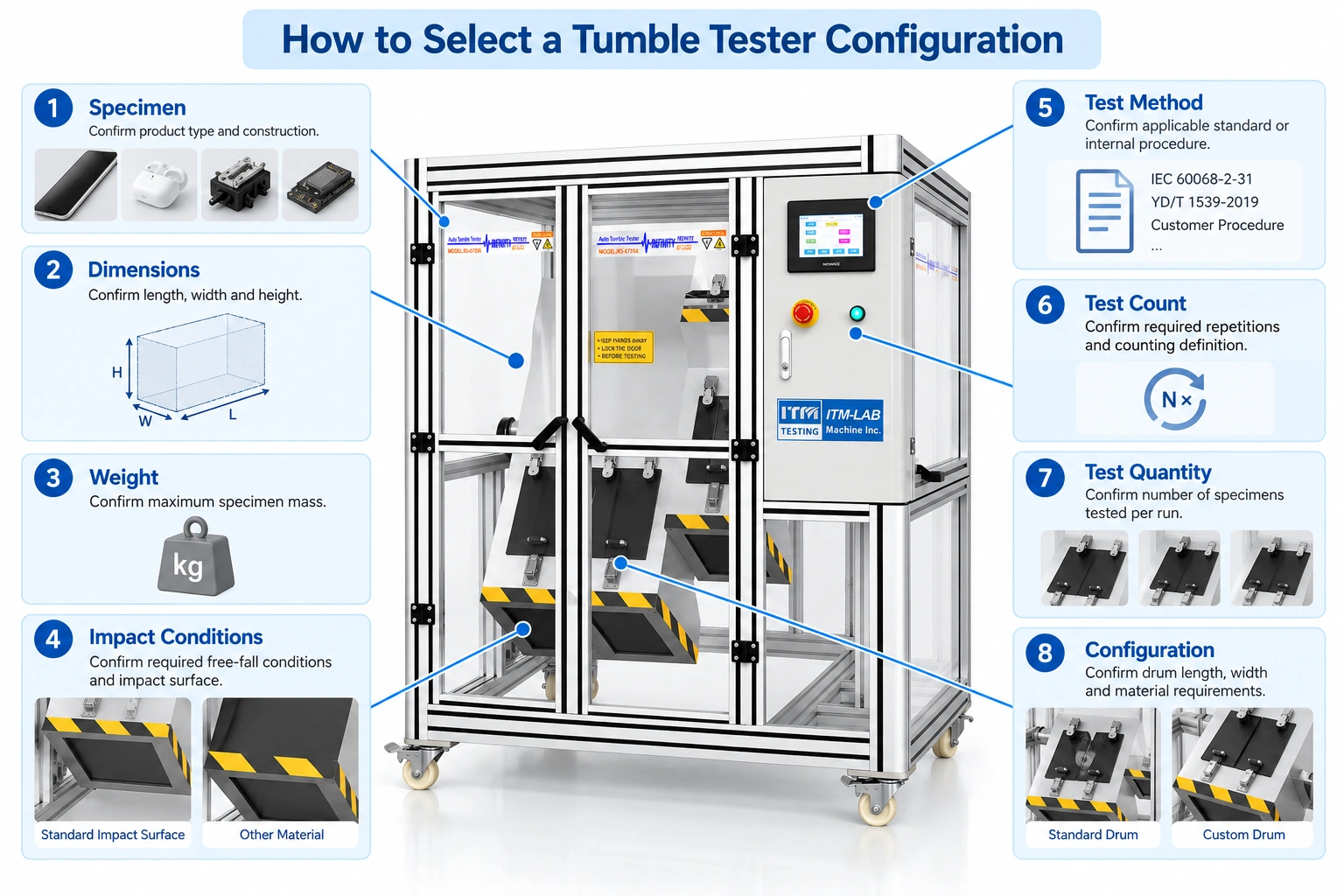
Tumble tester selection begins with the specimen and test procedure rather than the machine dimensions alone.
| Required Information | What to Confirm |
|---|---|
| Specimen | Product type and construction |
| Dimensions | Length, width and height |
| Weight | Maximum specimen mass |
| Test Method | Applicable standard or internal procedure |
| Impact Conditions | Required free-fall conditions and impact surface |
| Test Count | Required repetitions and counting definition |
| Test Quantity | Number of specimens tested per run |
| Configuration | Drum length, width and material requirements |
For example, a smartphone assembly and a small connector module may require different drum configurations because of differences in size, mass and impact behavior.
ITM-LAB can review the specimen information and requested procedure before confirming the RS-DP-12A configuration.
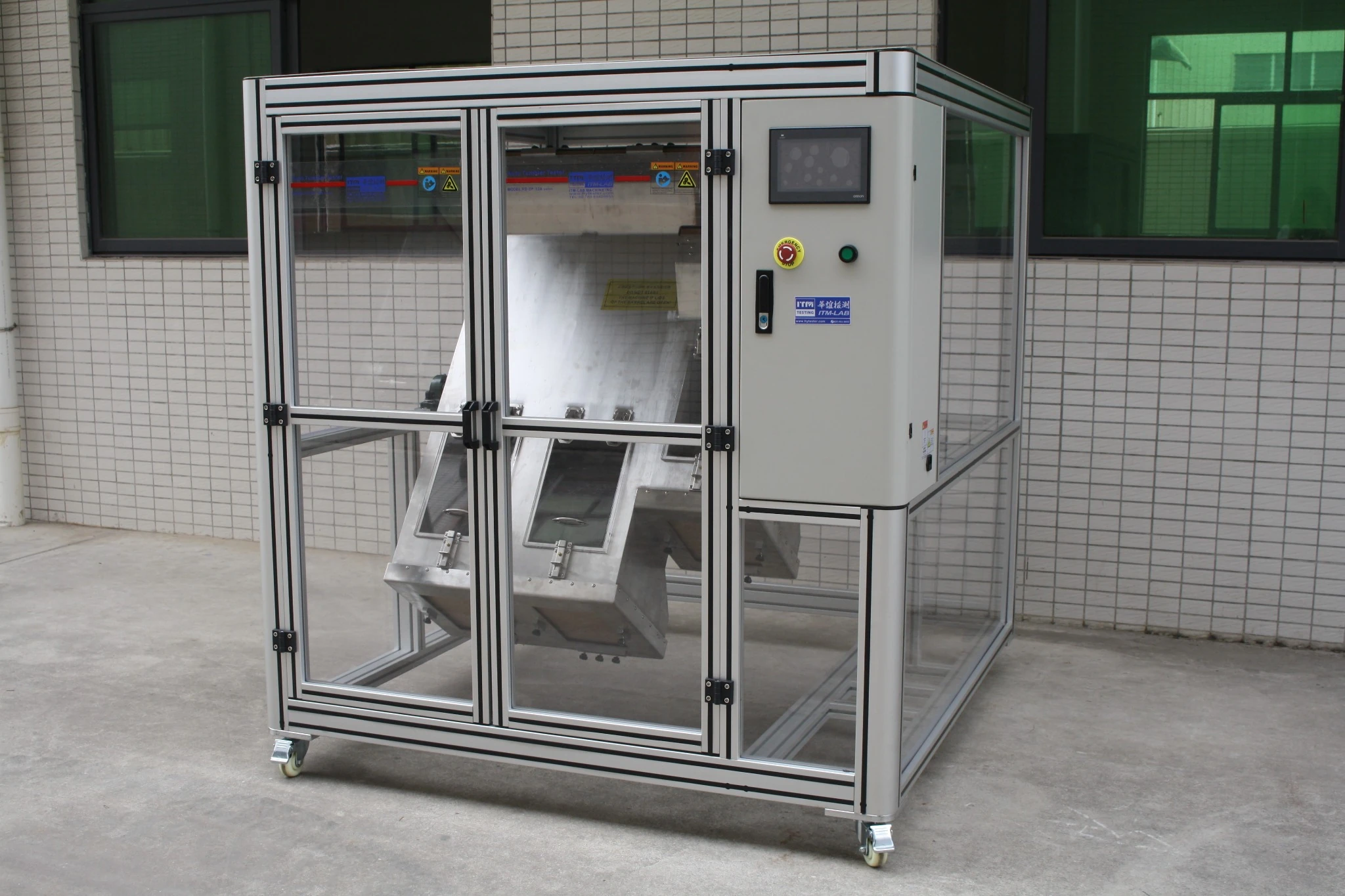
ITM-LAB manufactures testing equipment for product development, quality control and reliability laboratories.
To request an RS-DP-12A configuration and quotation, send your specimen dimensions, weight, required test procedure and testing quantity.
A tumble tester repeatedly releases specimens during drum rotation, producing impacts at changing orientations. A controlled free-fall tester positions the specimen before release to evaluate defined impact orientations.
Yes. The RS-DP-12A is intended for repeated impact evaluation of portable electronics, including smartphones. Specimen dimensions, weight and the required procedure must be checked before configuration.
The catalog specifies 5–20 times/min. The relationship between drum operation and actual specimen impacts should be confirmed according to the selected test method.
The specified counter range is 1–999,999. The required count and its relationship to the test procedure should be defined before testing.
The catalog lists a tumble length of 500–1000 mm and a width of 350 mm. Customized dimensions are available according to specimen and test requirements.
The RS-DP-12A is designed for repeated tumble impacts. Compatibility with a specific IEC 60068-2-31 procedure must be verified against the equipment configuration and required test conditions.
These products are potential applications. Suitability depends on their dimensions, mass, construction and the specified test method.
Provide the specimen type, dimensions, weight, required test standard, impact conditions, test count and number of specimens. These details help determine the required drum configuration.
Contact information
No. 32 Qiaoxin East Road, QiaotouTown, Dongguan City,Guangdong Province,China
Contact