Product Overview
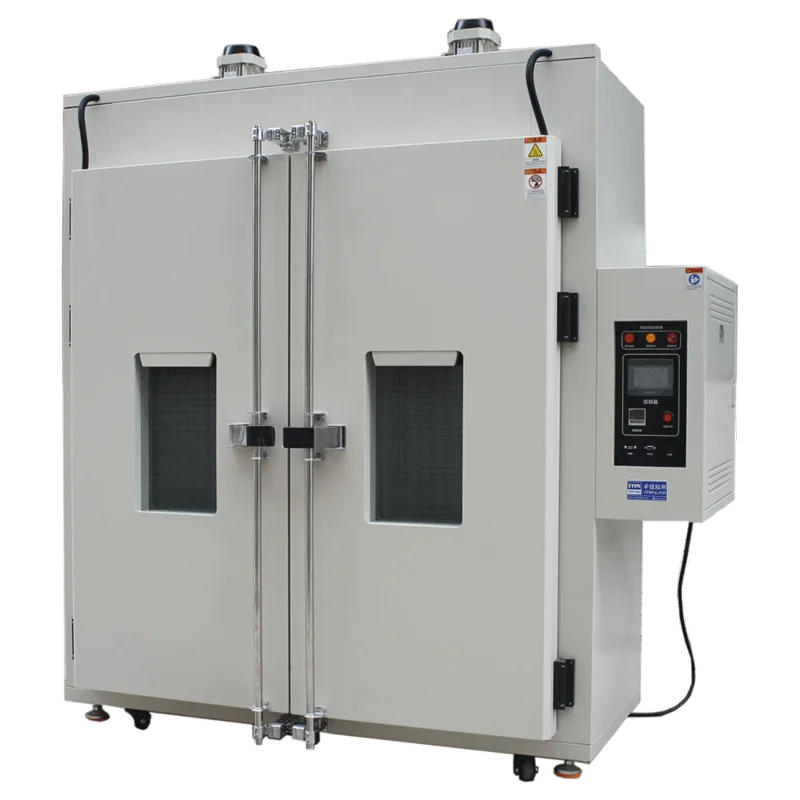
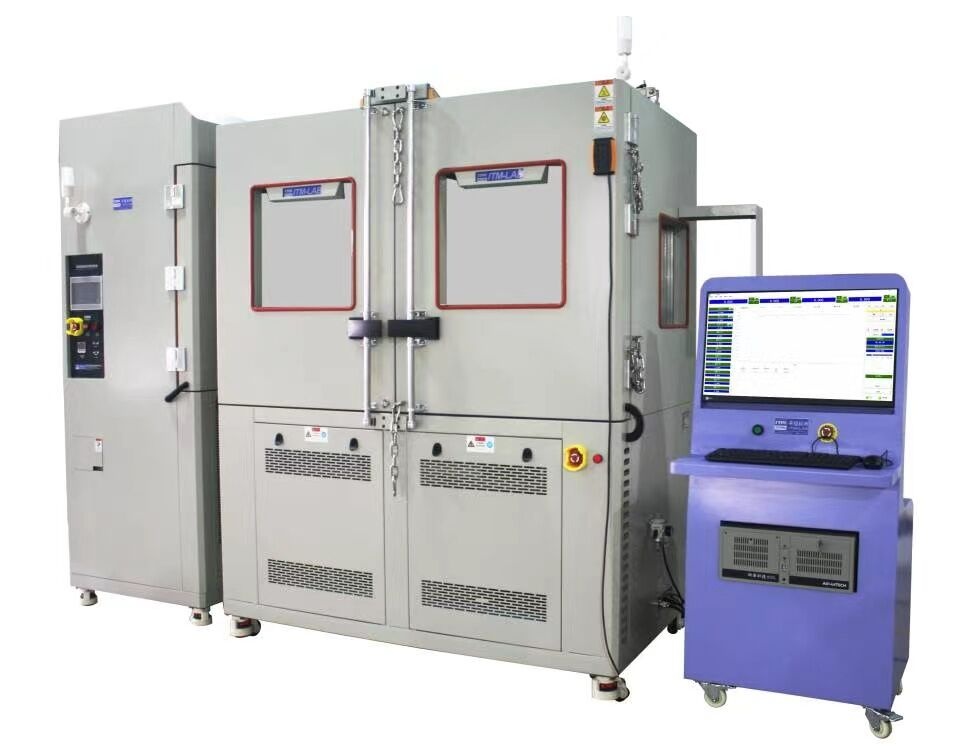
The ITM-LAB DHG Series High Temperature Aging Chamber is designed for burn-in, thermal ageing and reliability testing of electronic products, power supplies, PCB assemblies and automotive electronics.
A key challenge in powered burn-in testing is that the DUTs generate heat of their own. The DHG Series is designed for applications with an internal DUT heat load of up to 750 W, helping maintain a controlled thermal environment while products continue operating inside the chamber.
Available in 1400 L and 2520 L configurations, the series provides a temperature range from RT+10°C to 150°C, with large workspaces for multi-product and rack-based ageing tests.
RT+10–150°C | 1400 / 2520 L | Up to 750 W DUT Heat Load | ≥5°C/min to 80°C
Request a Quote | Send Your Burn-In Requirement
Built for More Than an Empty-Chamber Temperature Test
Temperature performance under no-load conditions tells only part of the story.
During burn-in testing, power supplies, PCBAs and other energized electronics can continuously release heat into the chamber. As DUT quantity and power consumption increase, this additional thermal load can affect airflow, temperature distribution and the actual environment around the specimens.
The DHG Series is designed around this type of powered DUT ageing application, with specified temperature performance both without load and with a 750 W internal heat load.
![]()
Why DUT Heat Load Matters
An empty chamber primarily controls the heat generated by its own heating system and surrounding environment. A burn-in chamber containing powered electronics has another variable to manage: heat generated by the DUTs themselves.
For example:
CHAMBER HEATING
+
HEAT FROM POWERED DUTs
↓
TOTAL THERMAL LOAD
↓
AIR CIRCULATION + EXHAUST + TEMPERATURE CONTROL
↓
ACTUAL DUT ENVIRONMENT
This is why the DHG Series specifies temperature performance separately under no-load conditions and with a 750 W internal heat load.
Temperature Performance
| Test Condition |
Temperature Fluctuation |
Uniformity |
Temperature Deviation |
| No Load, 40–85°C |
≤0.5°C |
≤1.5°C |
≤±1.0°C |
| 750 W DUT Load, 40–85°C |
≤0.8°C |
≤2.0°C |
≤2.0°C |
The distinction is particularly important when comparing chambers for power-on burn-in testing. A chamber that performs well while empty may behave differently once multiple operating products begin releasing heat into the workspace.
![]()
Key Features
| Feature |
Engineering Value |
| Up to 750 W DUT Heat Load |
Designed for ageing tests where operating specimens continuously generate heat inside the chamber. |
| 1400 / 2520 L Workspace |
Provides space for multiple DUTs, specimen racks and production-oriented burn-in arrangements. |
| RT+10°C to 150°C |
Covers high-temperature ageing, burn-in and thermal endurance applications. |
| ≥5°C/min Heat-Up |
Reaches 80°C efficiently under the specified no-load test condition. |
| Forced Air Circulation |
Promotes airflow around multiple specimens and supports consistent chamber temperature distribution. |
| Top Exhaust Design |
Provides an exhaust path for chamber air according to the required test configuration. |
| 0.1°C Setting Resolution |
Allows precise adjustment of the required temperature setpoint. |
| Three-Phase Power Supply |
Designed around an AC 380 V, 50 Hz industrial power configuration. |
Technical Specifications
DHG Series High Temperature Aging Chamber
| Parameter |
DHG-1400L |
DHG-2520L |
| Chamber Capacity |
1400 L |
2520 L |
| Internal Dimensions (W × H × D) |
1400 × 1580 × 600 mm |
2000 × 1800 × 700 mm |
| External Dimensions (W × H × D) |
2300 × 2100 × 910 mm |
2500 × 2300 × 1050 mm |
| Temperature Range |
RT+10°C to 150°C |
RT+10°C to 150°C |
| Setting Resolution |
0.1°C |
0.1°C |
| Heat-Up Rate |
≥5°C/min to 80°C* |
≥5°C/min to 80°C* |
| DUT Heat Load |
Up to 750 W |
Up to 750 W |
| Operating Ambient Temperature |
5–35°C |
5–35°C |
| Operating Ambient Humidity |
10–85% RH |
10–85% RH |
| Power Supply |
AC 380 V, 50 Hz, 3 Phase |
*Heat-up performance is specified from RT+10°C to 80°C under the defined no-load condition and follows a non-linear temperature rise.
Temperature Control Performance
| Condition |
Fluctuation |
Uniformity |
Deviation |
| No Load, 40–85°C |
≤0.5°C |
≤1.5°C |
≤±1.0°C |
| 750 W Load, 40–85°C |
≤0.8°C |
≤2.0°C |
≤2.0°C |
Have a higher DUT heat load or a different chamber layout? Send us the DUT quantity, individual power consumption and rack arrangement before selecting the chamber.
High-Temperature Ageing Applications
The DHG Series is primarily intended for electronic and electrical products that require prolonged exposure to elevated temperature, particularly where multiple specimens are tested simultaneously or remain powered during the test.
![]()
Powered DUT Burn-In Testing
Burn-in testing is different from simply placing an unpowered specimen in a hot chamber.
When electronic products remain energized, the chamber must accommodate the electrical connections, physical rack layout and heat generated by the operating DUTs. For multi-product testing, these factors should be considered together rather than independently.
A typical configuration may include:
Multi-level specimen racks
Powered DUTs
Cable routing / pass-through ports
Defined airflow around the specimens
Independent over-temperature protection
![]()
DHG-1400L or DHG-2520L?
The larger chamber is not automatically the better choice. Capacity should be selected around the actual DUT layout and the required number of specimens per test batch.
DHG-1400L
1400 L Workspace
Internal dimensions:
1400 × 1580 × 600 mm
A practical starting point for:
- Power supplies and adapters
- PCB assemblies
- Medium-size electronic products
- Multi-specimen burn-in
- Moderate rack configurations
DHG-2520L
2520 L Workspace
Internal dimensions:
2000 × 1800 × 700 mm
Better suited when the application requires:
- Larger DUTs
- More specimens per batch
- Larger multi-level rack systems
- Greater internal working space
- Production-oriented ageing capacity
Do not select chamber volume alone. DUT dimensions, quantity, spacing, rack layout and total heat dissipation all influence the usable test capacity.
Configure the Chamber Around Your Test
Large-capacity burn-in systems often require more application information than a conventional high-temperature oven.
Before selecting the DHG configuration, determine:
What is being tested?
↓
How large is each DUT?
↓
How many DUTs per batch?
↓
Will the DUTs be powered?
↓
How much heat will they generate?
↓
What temperature is required?
↓
How long is the test?
↓
How will power and signal cables enter the chamber?
These answers determine much more than chamber volume.
![]()
Available Burn-In System Configurations
The chamber can be configured around the DUT and the electrical requirements of the burn-in test.
Multi-Level DUT Racks
Internal rack arrangements can be configured for multiple specimens and different product dimensions.
DUT Power & Cable Routing
Pass-through arrangements can be incorporated for external power, signal or monitoring connections where required.
Over-Temperature Protection
Independent protection can be configured to respond to abnormal chamber temperature conditions and protect the test setup.
Ventilation Configuration
Air intake and top exhaust arrangements can be adapted to the required chamber and DUT configuration.
Final configuration should be confirmed according to the DUT, electrical load and safety requirements of the actual test.
Send Us Your Burn-In Requirement
Choosing a high temperature aging chamber for powered electronics requires more than specifying temperature range and chamber volume.
For an accurate DHG configuration, send our engineering team:
DUT name / application
DUT dimensions — W × H × D
Quantity per batch
Power consumption per DUT
Total estimated DUT heat load
Powered or unpowered during testing
Target temperature
Test duration
Rack arrangement
Cable / test-port requirements
Local power supply
We can then determine whether the DHG-1400L or DHG-2520L is the more appropriate starting configuration and identify any rack, electrical or safety requirements for the test.
Request a Quote | Send Your Test Requirement