ISO 2248 (ISO 2248:1985 Packaging — Complete, filled transport packages — Vertical impact test by dropping) serves as the foundational pillar for global logistics and packaging QA. It defines the exact criteria for evaluating a transport package’s structural integrity and its ability to protect inner contents when subjected to vertical drops.
Whether you are optimizing your packaging to pass stringent e-commerce protocols (such as Amazon APASS) or aiming to slash transit damage rates in cross-border supply chains, understanding the nuances of the ISO 2248 test matrix is critical. Drawing from ITM-LAB’s years of engineering and manufacturing expertise in packaging test equipment, this guide provides an actionable, factory-floor blueprint for compliance.
1. Core Concepts & Standard Interpretation
Scope of Applicability
ISO 2248 applies strictly to complete, filled transport packages.
-
Target Objects: Corrugated boxes, wooden crates, plastic drums, bulk pallets, and composite shipping containers.
-
Conditioning Requirement: Testing must be performed on packages that have undergone specific atmospheric conditioning (typically referencing ISO 2233). Temperature and humidity significantly alter the structural rigidity of fiberboard, making pre-test conditioning non-negotiable.
ISO 2248 vs. ASTM D5276: What is the Difference?
In international trade, manufacturers frequently confuse these two standards. Their primary technical distinctions include:
| Comparison Metric | ISO 2248 | ASTM D5276 |
| Publishing Body | International Organization for Standardization (ISO) | American Society for Testing and Materials (ASTM) |
| Measurement Units | Strictly Metric (meters, millimeters, kilograms) | Dual/Imperial (inches, pounds, feet) |
| Identification Method | Numeric coding system (Faces 1 through 6) | Point-Face-Edge combination (e.g., Corner 1-2-5) |
| Primary Markets | Europe, Asia, and Global Supply Chains | Dominant in North America |
2. Drop Tester Technical Requirements
When executing an ISO 2248 test, the precision of your testing apparatus directly dictates the validity of your data. Per Section 4 of the standard, compliant [drop test machines] must meet these rigorous engineering benchmarks:
Rigidity of the Impact Surface
The base plate cannot be a standard warehouse concrete floor. The standard mandates a "rigid, non-deformable impact surface":
-
Mass Ratio: The mass of the impact surface must be at least 50 times greater than the maximum weight of the test package.
-
Construction: Typically constructed from solid steel plate (minimum 10mm thickness) anchored directly into a concrete foundation block. The surface must be flat within 0.1mm. If the surface flexes, it absorbs the drop energy, yielding a false-pass result.
Release Mechanism & Free-Fall Tolerances
-
Zero Interference: The lift arm or clamping mechanism must release the package cleanly without imparting any rotational torque or angular velocity.
-
Angular Deviation: During free fall, the package’s alignment relative to the impact surface must not drift by more than 2° from its intended impact angle (especially critical for edge and corner drops).
3. The Engineering Data: Drop Height Matrix
The ISO 2248 standard does not dictate a single, mandatory drop height. Instead, the drop height must be calculated by cross-referencing the package’s gross mass against the intended transport severity.
Below is the industry-standard drop height matrix aligned with ISO quality control principles:
| Gross Mass M (kg) | Low Severity (Air Freight / Light Palletized) | Medium Severity (Standard Truckload / LTL) | High Severity (Cross-Border Sea / E-Commerce Parcel) |
| M ≤ 10 | 800 mm | 1000 mm | 1200 mm |
| 10 < M ≤ 20 | 600 mm | 800 mm | 1000 mm |
| 20 < M ≤ 30 | 500 mm | 600 mm | 800 mm |
| 30 < M ≤ 40 | 400 mm | 500 mm | 600 mm |
| M > 40 | 300 mm | 400 mm | 500 mm |
Pro Engineer's Tip: A common rookie mistake is setting a blanket 1000mm drop height across all products. If a package exceeds 30kg, a 1000mm drop generates massive instantaneous G-forces that can pulverize standard outer corrugated boxes. Always align your testing parameters with the matrix above.
4. Sample Preparation & Pre-Conditioning
Sample Integrity
-
Samples must represent the final production state. Prototype boxes or hand-cut mockups do not reflect actual structural performance.
-
Dummy loads (such as sandbags or weighted plates) may be used to substitute the product, provided they match the exact mass, dimensions, and center of gravity (CoG). Testing empty boxes is strictly invalid.
-
Sample Size: A minimum of 3 pristine samples per test cycle is standard lab practice.
Atmospheric Pre-Conditioning
Corrugated fiberboard loses up to 50% of its compression strength when exposed to high humidity.
-
Standard Lab Environment: 23°C ± 2°C (73.4°F ± 3.6°F) at 50% ± 5% RH for at least 24 hours.
-
Tropical Transit Simulation: 40°C ± 2°C at 90% ± 5% RH to evaluate adhesive degradation and moisture-induced delamination.
5. The 10-Step ISO 2248 Testing Procedure
To achieve repeatable, auditable lab results, follow this sequential 10-step protocol:
-
Step 1: Face Identification & Labeling Identify and number the faces of the package according to ISO 2206. The top face is designated as 1, the right side as 2, the bottom as 3, the left side as 4, the front as 5, and the rear as 6.
-
Step 2: Baseline Physical Measurement Weigh the package to confirm gross mass, record external dimensions, and take high-resolution baseline photographs of all joints and seams.
-
Step 3: Calibrate Drop Height Input your target height into the testing machine's control console based on the drop height matrix.
-
Step 4: Base Face Drop (Face 3) Position the package on the release mechanism with Face 3 perfectly parallel to the impact surface (tilt < 2°). Initiate the drop sequence.
-
Step 5: Sequential Face Drops Repeat the process for the remaining faces in order: Face 1, Face 2, Face 4, Face 5, and Face 6.
-
Step 6: Edge Drops Adjust the drop orientation to isolate structural seams. Execute drops on critical bottom edges (e.g., edge 3-5, edge 3-2).
-
Step 7: Corner Drop (The Ultimate Stress Test) Orient the package so that the most vulnerable corner (typically corner 2-3-5) points directly downward. Ensure the theoretical center of gravity aligns vertically with the corner point before releasing.
-
Step 8: Post-Impact Inspection & Data Logging After every drop, pause to inspect for structural deformations, tears, or joint separations. Document each impact with a camera.
-
Step 9: Unboxing Evaluation Carefully slice the sealing tape. Evaluate internal dunnage (EPS, EPE foam, or molded pulp trays) for crushing or compression failure.
-
Step 10: Product Functionality Verification Power on the inner product (if electronic) and run structural/cosmetic checks. Any loss of primary product functionality constitutes a package test failure.
6. Root Cause Analysis: Common Failures & Engineering Fixes
Through years of analyzing data in our testing facility, we have found that over 70% of corrugated package drop failures stem from two specific issues. Here are the professional engineering workarounds:
Failure Mode A: Corner puncturing and crushing during corner drops.
-
Root Cause: Standard corrugated board cannot redistribute the highly concentrated point-load forces generated during a corner impact.
-
Engineering Fix: Integrate rigid L-shaped heavy-duty paper corner protectors inside the box corners, or increase the density of your internal EPE cushioning foam from 18 kg/m³ to 25 kg/m³.
Failure Mode B: Large-scale splitting of sealing tape upon face impact.
-
Root Cause: Standard BOPP packaging tape becomes brittle under low temperatures or tears instantly under high-velocity internal hydraulic shockwaves.
-
Engineering Fix: Transition to a fiber-reinforced filament tape applied in an "H-tape" pattern. This ensures structural forces are distributed evenly down the box side-panels.
7. ITM-LAB Package Drop Testing Solutions
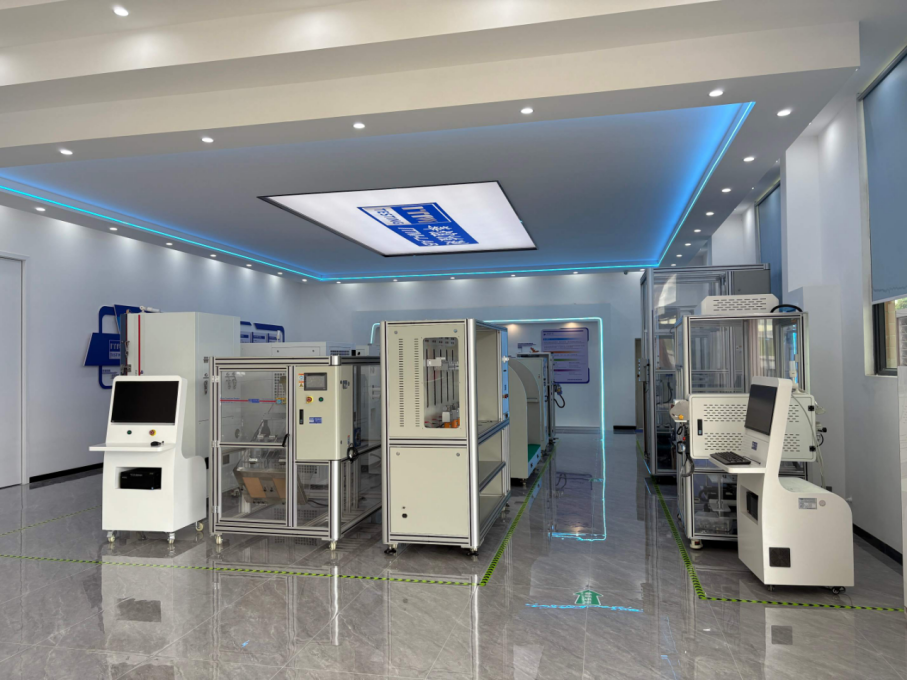
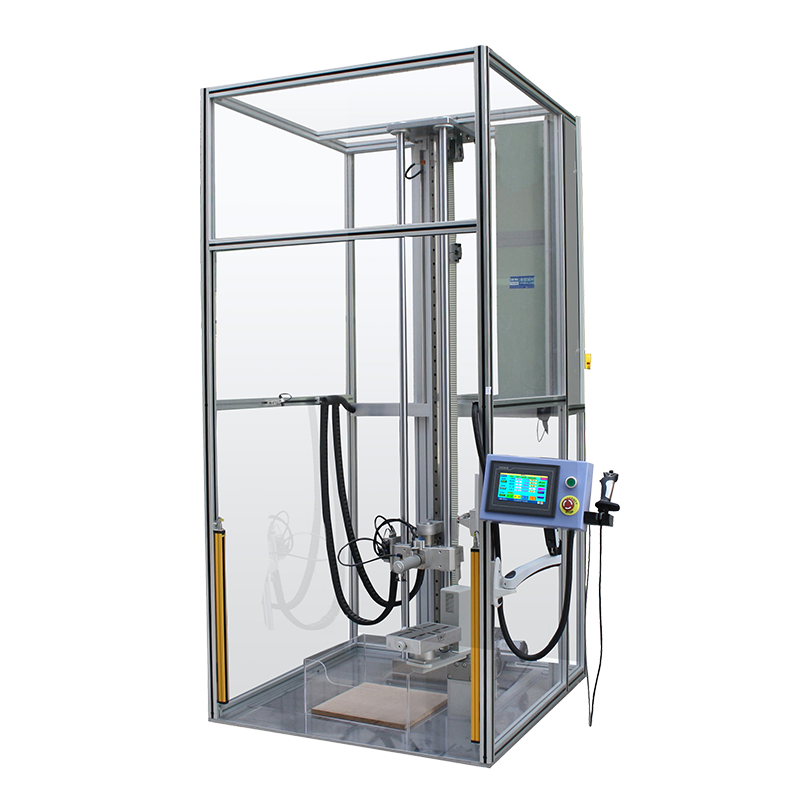
As a premier manufacturer of laboratory-grade packaging evaluation machinery, ITM-LAB designs high-precision testing hardware calibrated specifically to meet ISO 2248 engineering metrics.
Featured Equipment
-
ITM-DL150 Single-Arm Drop Tester: Engine-engineered for small-to-medium consumer electronics and e-commerce parcels. Features a closed-loop digital height adjustment system with a tolerance of < ±5mm.
-
ITM-DL300 Precision Double-Arm Drop Tester: Designed for large appliances and heavy industrial crates. Features a dual-arm synchronous pneumatic breakaway time of < 0.002 seconds, guaranteeing an absolute drop angle deviation within 2°.
Intelligent Calibration Software
Our testing machines are powered by a proprietary software suite pre-programmed with ISO 2248 and ASTM D5276 testing sequences. Operators simply input the gross mass, and the system automatically calibrates the target height while providing step-by-step UI prompts for the "Face-Edge-Corner" cycle. It generates an audit-ready, one-click PDF test report.
To consult with our engineering team regarding turnkey packaging lab setups or tailored machine quotes, please initiate an online chat or submit a [technical inquiry]. Our [contact our application engineers] team will respond with a tailored analysis within 1 business hour.