
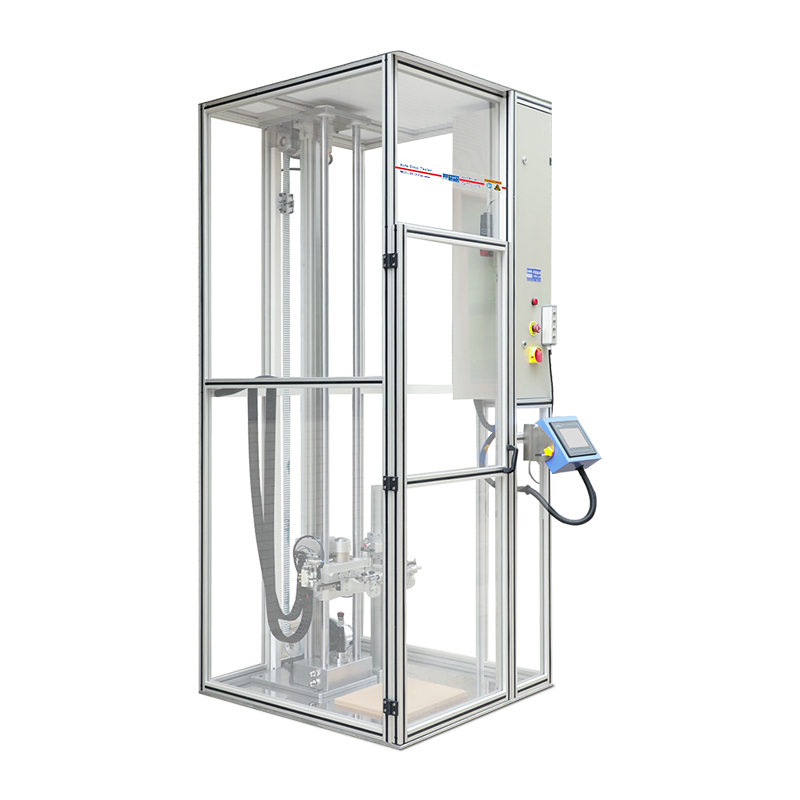
ASTM D5276 defines the standard test method for directed drop testing of loaded containers by the free-fall method. This specification covers apparatus requirements, specimen preparation, testing procedures, drop height determination, and reporting criteria for quality control, packaging certification, and supply chain research applications.
This guide provides detailed implementation procedures based on ASTM D5276 (current revision) and 26 years of packaging and reliability testing experience.
What is ASTM D5276?
Full Standard Title
ASTM D5276: "Standard Test Method for Drop Test of Loaded Containers by Free Fall"
Scope
Covers the determination of the capability of a container to withstand the sudden shock resulting from a free-fall impact, or the capability of a container and its inner packing to protect its contents during a free-fall impact. It is applicable to loaded boxes, cylindrical containers, bags, and sacks tested at ambient conditions.
Applicable Materials & Container Types
-
Corrugated Cartons & Shipping Boxes: Single-wall, double-wall, and triple-wall fiberboard boxes.
-
Electronic Product Packaging: Smart devices, household appliances, and heavy industrial electronics packaging.
-
Plastic & Wooden Crates: Rigid logistics containers.
-
Flexible Packaging: Large bags, sacks, and pouches.
Related Standards
-
ISTA 1A / 3A: International Safe Transit Association protocols (heavily reference ASTM D5276 drop methodologies).
-
ISO 2248: International equivalent standard for packaging vertical impact drop tests.
-
ASTM D4169: Standard practice for performance testing of shipping containers and systems.
Standard Source: ASTM International (
Test Equipment Requirements
Drop Tester Machine Specifications
Per ASTM D5276 Section 5 - Apparatus:
Drop Mechanism (Single Arm / Double Wing)
-
Free Fall Precision: The lifting and releasing mechanism must ensure a completely free fall. During the release instant, the apparatus must not impart any rotational, sideways, or pitching acceleration to the container.
-
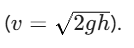
Velocity Deviation: The actual impact velocity must be within $\pm 2\%$ of the theoretical velocity calculated from the set drop height
![]()
Alignment and Orientation Control
-
Angle Precision: The apparatus must be capable of gripping and releasing the container so that it impacts precisely on the designated face, edge, or corner.
-
Tolerance: The impacting surface must be parallel to the rigid drop surface within
![]() for flat-face drops, and within
for flat-face drops, and within ![]() for edge and corner drops.
for edge and corner drops.
 for flat-face drops, and within
  for edge and corner drops.
Drop Target Surface (Impact Base)
-
Mass Massiveness: The drop surface must consist of a rigid, concrete, stone, or steel base.
-
Weight Requirement: The mass of the drop target must be at least 50 times the weight of the heaviest container being tested.
-
Deflection: The surface must be flat within 2 mm across its entirety and sufficiently rigid to prevent any observable deflection during impact.
Common Issue: Rotational Drag
Worn release leaf components on single-arm drop testers or uneven pneumatic pressure on double-wing drop testers can cause the machine to "drag" the container during release. This alters the drop orientation and invalidates the test. Regular calibration of the release mechanism is critical.
Specimen Preparation & Identification
Container Marking Standards
To ensure repeatable data calculation, the container must be systematically marked before testing per ASTM D5276 guidelines.
Rectangular Containers (Cartons & Boxes)
Orient the box with the top surface facing up (normally the flap closure side).
-
Faces: Face 1 is the Top, Face 2 is the Bottom, Face 3 is the Right side, Face 4 is the Left side, Face 5 is the Front, and Face 6 is the Back.
-
Edges: Identified by the two intersecting faces (e.g., Edge 1-2 is the edge between the top and bottom, Edge 2-3 is the edge between the bottom and right side).
-
Corners: Identified by the three intersecting faces (e.g., Corner 1-2-5).
        +--------------+
       /   Face 1     /|
      /   (Top)      / |
     +--------------+  |
     |              |  | Face 3
     |   Face 5     |  | (Right)
     |  (Front)     | /
     |              |/
     +--------------+
Dimensional & Weight Tolerances
-
Gross Mass Measurement: Weigh the loaded container to the nearest 0.1 kg or 0.5% of its total mass.
-
Actual Contents: Testing must always be performed with the actual product inside. If dummy products are used for safety, they must identically duplicate the mass, center of gravity, and physical footprint of the real product.
Testing Procedure
Pre-Test Preparation
-
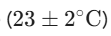
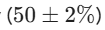
Environmental Conditioning: Minimum 24 hours of specimen conditioning at standard temperature
![]() and relative humidity
and relative humidity ![]() per ASTM D4332 to normalize fiberboard moisture content.
per ASTM D4332 to normalize fiberboard moisture content. -
Determine Drop Height: Height is decided based on container gross weight and product fragility (typically ranges from 300 mm to 1500 mm).
 and relative humidity
  per ASTM D4332 to normalize fiberboard moisture content.
Test Execution Steps
Step 1: Machine Setup & Height Calibration
-
Position the drop test equipment on a level surface.
-
Set the digital controller to the required drop height, measuring from the lowest point of the container to the impact surface.
Step 2: Specimen Mounting & Orientation
-
Place the container onto the drop arm or split wings.
-
Align the target face, edge, or corner precisely using the orientation fixture.
Step 3: Execution of the Free Fall
-
Ensure the safety perimeter is clear.
-
Trigger the automatic release button. The support system accelerates downwards faster than gravity, allowing the container to fall freely.
Step 4: The Drop Sequence (Standard 10-Drop Series)
Unless otherwise specified by a protocol like ISTA 1A, a complete evaluation involves 10 sequential drops:
-
Drop 1: Corner 1-2-5 (The critical weakest corner).
-
Drops 2-4: Three edges radiating from that corner (Edges 1-2, 1-5, and 2-5).
-
Drops 5-10: All six flat faces of the container.
Step 5: Post-Impact Evaluation
-
Immediately examine the exterior for structural failures (burst seams, crushed corners, tape separation).
-
Open the container to inspect inner packaging integrity and evaluate the operational condition of the actual product.
Test Report Requirements
Per ASTM D5276 Section 13, the following technical data points are mandatory:
-
Material & Container Specifications: Dimensions, board grade, closure method (tape/glue), and gross weight.
-
Product Description: Type of electronics or contents, inner cushioning type (EPS, EPE foam, or molded pulp).
-
Test parameters: Exact drop heights used, number of drops executed, and precise orientations tested.
-
Failure Observations: Detailed description of structural degradation, deformation dimensions, or inner product damage.
Sample Test Report Format
📦 PACKAGING DROP TEST REPORT per ASTM D5276
-------------------------------------------------------------
Client / Facility: Quality Control Lab 3
Test Date: 2026-05-18
Apparatus: ITM-LAB Single Arm Drop Tester (Model: ITM-DT150)
Target Surface: 50mm Solid Steel Plate over Reinforced Concrete

SPECIMEN DETAILS
- Container Type: Double-Wall Corrugated Carton (BC-Flute)
- Dimensions: 450 mm x 350 mm x 300 mm
- Gross Weight: 22.4 kg
- Contents: Server Power Supply Unit (Wrapped in EPE Foam)

TEST CONDITIONS & PARAMETERS
- Pre-Conditioning: 48 Hours at 23°C, 50% RH
- Drop Height: 760 mm (30 inches) per ISTA 1A Requirement
- Drop Sequence: Standard 10-Drop Cycle (1 Corner, 3 Edges, 6 Faces)

RESULTS & EVALUATION
- Drop 1 (Corner 1-2-5): Minor deformation, no tearing.
- Drops 2-4 (Edges): Structural integrity stable.
- Drops 5-10 (Faces): Face 2 (Bottom flap) showed 15mm tape slippage.
- Internal Inspection: Inner EPE foam compressed by 8%.
  The electronic product remained fully functional with zero cosmetic damage.
- PASS / FAIL Status: COMPLIANT / PASS

Tested By: [Lead Test Engineer]
Common Testing Issues and Solutions
Issue 1: Specimen Rotates or Flips During Flight
-
Symptoms: The container lands on a face instead of the intended edge or corner.
-
Causes: The drop arm is returning too slowly, hitting the box on its way down; or the split wings are opening asynchronously.
-
Solutions: Adjust the pneumatic release valve to maximize acceleration. Upgrade to an automatic directional drop tester with a clean electro-magnetic release system.
Issue 2: Excessive Splitting of Carton Corners
-
Symptoms: The box splits completely open at the first corner drop, exposing inner contents.
-
Causes: Inadequate fiberboard moisture level (over-dried packaging material) or incorrect flute direction during box manufacturing.
-
Solutions: Strictly verify that humidity conditioning parameters match ASTM D4332 standards. Ensure the container manufacturing process utilizes proper cross-directional scoring.
Comparison: ASTM D5276 vs. ISO 2248
| Technical Aspect | ASTM D5276 | ISO 2248 |
| Drop Surface Mass | 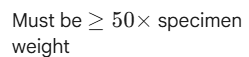 |
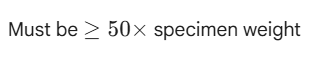 |
| Orientation Tolerance | Within 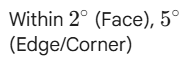 |
Within 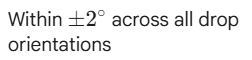 |
| Height Verification | Measured from lowest point | Measured from lowest point |
| Scope Flexibility | Allows custom drop series profiles | Stricter on fixed protocol series |
ITM-LAB ASTM D5276 Testing Solutions
ITM-LAB manufactures professional-grade packaging reliability equipment configured for complete ASTM D5276 and ISTA standard compliance. Backed by 26 years of testing experience, our machines ensure seamless laboratory operations.
Equipment Capabilities
-
Single Arm Drop Tester (Standard Model): Ideal for general cartons and shipping box applications up to 100 kg. Features an unobstructed dropping path and automatic brake reset.
-
Double Wing Drop Tester (Heavy Duty): Engineered for extra-large pallet loads, heavy freight, and massive appliances. Employs dual-synchronized pneumatic tracking.
-
6-Axis Robot Orientation Drop Tester: Specifically engineered for high-end consumer electronics (smartphones, foldables, and smartwatches). Delivers precision orientation accuracy within $\pm 1^{\circ}$ for highly repeatable targeted drop testing.
Optimize Your Supply Chain Safety Today
Ensure your shipping containers comply with international transit requirements and protect your high-value products from shipping damage.
