
Rolling Angle Drop Tester: Complete Guide & IEC Standards 2026 2026-01-08 15:50:10
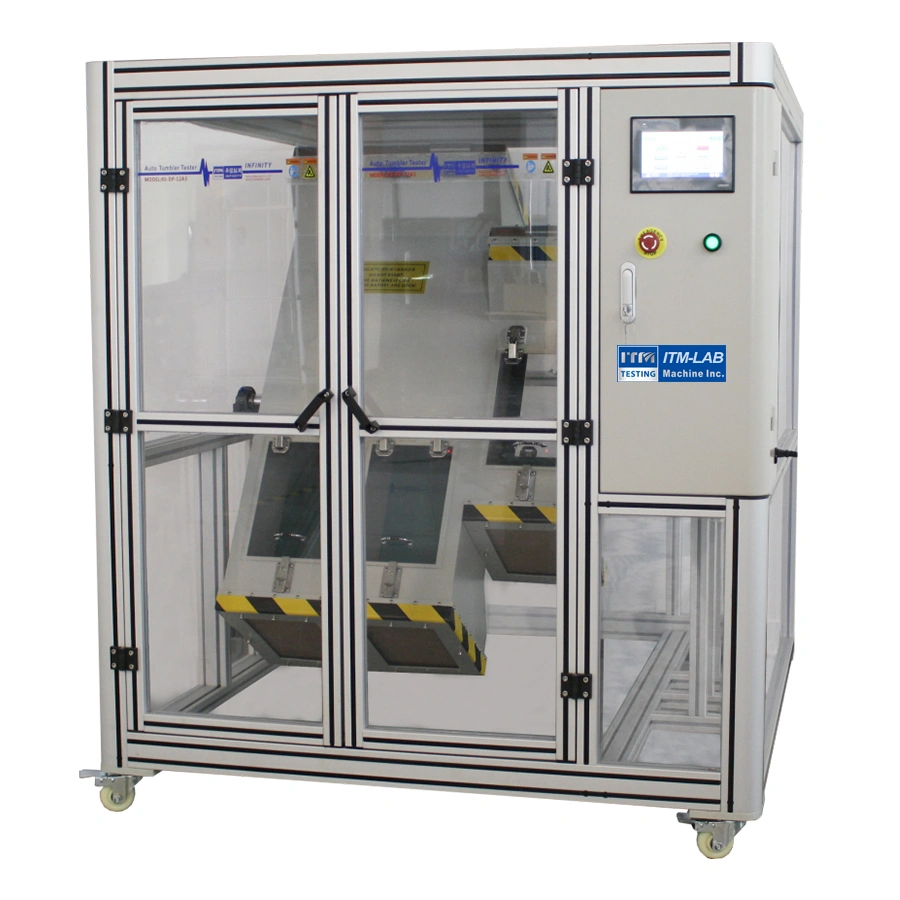
ROLLING DROP TESTER SERIES
↵
Rolling angle drop testing quantifies product reliability under repeated rolling and drop impacts, providing essential data for product design, quality control, and certification compliance. This guide covers rolling angle drop tester specifications, international standards, and selection criteria based on 27 years of manufacturing experience in materials and product reliability testing equipment.
↵
From small electronic devices to battery packs, rolling angle drop testers simulate real-world handling and transportation conditions, ensuring products can withstand repeated impacts without structural failure. This comprehensive guide leverages industry best practices and standard requirements to help laboratories, manufacturing facilities, and certification institutions select, operate, and maintain rolling angle drop testers effectively.
1. What Is a Rolling Angle Drop Tester?
A rolling angle drop tester (also known as a tumble drop tester, roller drop tester, or tumbling drop tester) is a specialized reliability testing equipment designed to simulate the repeated rolling and free-fall conditions that products encounter during daily use, packaging, handling, and transportation. Unlike single free-drop testers that deliver a single impact, rolling angle drop testers perform continuous rotation and drop cycles to replicate the cumulative impact forces small portable products experience in real-world scenarios.
↵
The equipment consists of a test drum assembly, drive system, control unit, drop height adjustment mechanism, rigid impact surface, and safety enclosure. It is widely used across industries to verify the impact resistance, structural stability, and overall durability of products, ensuring they meet international safety and quality standards.
↵
Core Function:
The machine positions a test sample inside one or more rotating drums. As the drum rotates at a controlled speed, the sample is lifted to a preset height by the drum’s internal ribs or guide structures. When the sample reaches the highest point of the drum’s rotation, it falls freely onto a rigid impact surface (typically hardened steel or concrete) due to gravity. This cycle repeats continuously for a set number of times, speed, or until the sample fails, allowing testers to evaluate cumulative impact resistance.
↵
Measured Parameters:
-
Cumulative Impact Resistance: The ability of the product to withstand repeated rolling and drop cycles without structural damage or functional failure.
-
Failure Cycle Count: The number of rolling/drop cycles a product can endure before showing signs of damage (e.g., cracks, component detachment, functional failure).
-
Drop Height Consistency: The uniformity of the drop height across all cycles, critical for accurate and repeatable test results.
-
Rolling Speed: The rotational speed of the drum, which determines the frequency of impacts and simulates different transportation or handling conditions.
-
Impact Force: The force exerted on the sample during each drop, measured using optional load cells for advanced testing applications.
↵
The ITM-LAB RS-DP-12A is a representative model of this equipment, tailored specifically for small electronic products, batteries, and electronic accessories. It is widely used in R&D laboratories, quality control departments, and certification institutions to verify the impact resistance, structural stability, and overall reliability of products.
2. Key Components and Working Principle
A high-quality rolling angle drop tester relies on precision components working in harmony to deliver consistent, repeatable test results. Each component is designed to meet international standard requirements, ensuring test data is valid and recognized by certification bodies worldwide.
↵
2.1 Test Drum Assembly
The test drum is the core component of the rolling angle drop tester, responsible for lifting and dropping the test sample. Its design directly impacts test accuracy and repeatability.
Drum Design Configurations:
-
Single-Drum Design: Features one test drum, suitable for small-batch testing, R&D applications, or laboratories with limited test volume. Ideal for testing individual samples or low-volume production runs.
-
Dual-Drum Design: Equipped with two independent test drums (like the ITM-LAB RS-DP-12A), allowing simultaneous testing of two samples. Improves test efficiency for mass production quality control, reducing testing time by 50% compared to single-drum models.
-
Multi-Drum Design: Rare, but available for high-volume testing (e.g., 4+ drums), used in large manufacturing facilities or third-party testing labs with high throughput requirements.↵
Drum Material and Specifications:
Per IEC 60068-2-32 and GB/T 2423.8, the drum must be constructed from wear-resistant, rigid materials to ensure long-term stability and consistent performance. Common specifications include:
-
Material: Hardened steel (HRC 55-60) or stainless steel, resistant to corrosion and wear from repeated sample impacts.
-
Inner Surface: Smooth or ribbed (depending on test requirements). Ribbed drums provide consistent lifting of samples, while smooth drums simulate more random rolling conditions.
-
Diameter and Width: Varies by application. For small electronic products (e.g., smartphones, TWS earphones), drum diameter typically ranges from 300mm to 500mm, with width from 200mm to 300mm (RS-DP-12A features 300mm width drums).
-
Thickness: Minimum 5mm for steel drums, ensuring rigidity and preventing deformation under repeated impacts.
2.2 Drive System
The drive system powers the rotation of the test drums, controlling the rolling speed and ensuring consistent rotation throughout the test. Two main drive systems are used in rolling angle drop testers:
Servo Motor Drive System:
Most modern rolling angle drop testers (including the ITM-LAB RS-DP-12A) use high-precision servo motors (e.g., Panasonic, Siemens) for drive control. Key advantages include:
-
Precise Speed Control: Speed range of 1–20 cycles per minute, adjustable in 0.1 cycle increments, ensuring compliance with standard requirements.
-
Consistent Rotation: Minimal speed fluctuation (±0.5 cycles per minute), ensuring each drop cycle is identical for repeatable test results.
-
Quiet Operation: Lower noise levels compared to gear-driven systems, suitable for laboratory environments.
-
Energy Efficiency: Reduced power consumption, ideal for long-duration testing.
Gear-Driven Drive System:
Older or entry-level models may use gear-driven systems, which are more cost-effective but less precise. Key characteristics:
-
Speed Range: 5–15 cycles per minute, with limited adjustability.
-
Speed Fluctuation: ±1 cycle per minute, which may affect test repeatability for high-precision applications.
-
Maintenance Requirements: More frequent lubrication and gear inspection compared to servo systems.
2.3 Control Unit
The control unit is the "brain" of the rolling angle drop tester, allowing operators to set test parameters, monitor test progress, and record data. Modern testers feature two main control configurations:
PLC + Touch Screen Control:
Standard on mid-to-high-end models (including the RS-DP-12A), this configuration uses a programmable logic controller (PLC, e.g., Mitsubishi, Omron) and a touch screen interface. Key features:
-
Parameter Setting: Intuitive interface for setting drop height, rolling speed, number of cycles, and test mode (continuous, interval, or manual).
-
Data Display: Real-time display of test progress, cycle count, speed, and any errors or alarms.
-
Data Storage: Built-in memory for storing test parameters and results (up to 1000 test records), with USB export capability for data analysis.
-
Programmable Test Protocols: Pre-programmed test methods for common standards (IEC 60068-2-32, GB/T 2423.8, UL 1642), reducing operator error.
PC-Based Control:
Used in advanced testing laboratories, PC-based control systems offer enhanced data analysis and integration capabilities. Features include:
-
Advanced Data Logging: Real-time recording of impact force, cycle count, and drop height, with graphing capabilities (force vs. time, cycle vs. damage).
-
LIMS Integration: Ability to export data directly to Laboratory Information Management Systems (LIMS) for centralized data management.
-
Custom Test Protocols: Flexible programming for non-standard test requirements, ideal for R&D applications.
-
Remote Control: Optional remote access for monitoring tests from outside the laboratory.
2.4 Drop Height Adjustment Mechanism
Drop height is a critical test parameter, as it directly impacts the impact force exerted on the sample. Rolling angle drop testers feature two main height adjustment configurations:
Fixed Height Models:
Designed for specific standard requirements (e.g., 0.5m drop height for IEC 60068-2-32). Ideal for laboratories that only test products to a single standard, offering simplicity and cost-effectiveness.
Adjustable Height Models:
Most modern testers (including the RS-DP-12A) feature adjustable drop heights, typically ranging from 0.3m to 1.5m. Key features:
-
Dual-Position or Continuous Adjustment: The RS-DP-12A offers dual fixed positions (0.5m and 1.0m), while high-end models offer continuous adjustment in 10mm increments.
-
Height Locking Mechanism: Ensures the drop height remains consistent throughout the test, preventing accidental adjustments.
-
Calibration Marks: Clear, calibrated marks for accurate height setting, compliant with ISO 9513 Class 1 accuracy requirements.
2.5 Impact Surface
The impact surface is the rigid surface onto which the sample falls, and its properties are specified by international standards to ensure consistent test results. Per IEC 60068-2-32 and ASTM D5276:
-
Material: Hardened steel (HRC 58-62) or concrete, with a minimum thickness of 20mm for steel and 100mm for concrete.
-
Flatness: Surface flatness tolerance of ±0.025mm over the entire contact area, ensuring uniform impact distribution.
-
Rigidity: No deformation under impact loads (maximum deflection ≤0.1mm under 100kg impact), preventing energy absorption by the surface.
-
Replaceability: Removable impact plates for easy replacement when worn, extending the life of the tester.
2.6 Safety Enclosure
Safety is a critical consideration for rolling angle drop testers, as samples may break or fragment during testing. Per occupational safety standards (OSHA, CE), testers must include a safety enclosure with the following features:
-
Transparent Viewing Window: Tempered glass window for monitoring the test without opening the enclosure, protecting operators from flying debris.
-
Safety Interlock: Automatically stops the test if the enclosure door is opened, preventing operator injury.
-
Emergency Stop Button: Easily accessible button to stop the test immediately in case of an emergency.
-
Debris Collection Tray: Removable tray at the bottom of the enclosure to collect broken sample parts, simplifying cleanup.
3. Types of Rolling Angle Drop Testers
Rolling angle drop testers are classified based on several criteria, including load capacity, drive system, application specialization, and automation level. Choosing the right type depends on test volume, sample characteristics, standard requirements, and budget.
3.1 By Load Capacity Classification
Load capacity refers to the maximum weight of the test sample the machine can accommodate. Classification is based on industry standard requirements and typical sample weights:
|
Capacity Range
|
Typical Applications
|
Sample Examples
|
Drum Type
|
|---|---|---|---|
|
0.5–2 kg
|
Small electronic products, batteries, electronic accessories
|
Smartphones, TWS earphones, button batteries, remote controls
|
Single/Dual Drum (300–400mm diameter)
|
|
2–5 kg
|
Medium-sized electronic devices, small appliances
|
Tablets, portable speakers, small power banks, digital cameras
|
Dual Drum (400–500mm diameter)
|
|
5–10 kg
|
Large electronic devices, small industrial components
|
Laptops, small medical devices, industrial sensors
|
Dual/Multi Drum (500–600mm diameter)
|
|
Above 10 kg
|
Heavy industrial components, large batteries
|
Industrial battery packs, large sensors, small machinery parts
|
Heavy-Duty Dual/Multi Drum (600mm+ diameter)
|
Source: Capacity classifications based on IEC 60068-2-32, GB/T 2423.8, and UL 1642 sample requirements
↵
3.2 By Drive System
As discussed in Section 2.2, rolling angle drop testers are primarily categorized by their drive system, each with distinct advantages and applications:
Servo-Driven Rolling Angle Drop Testers:
-
Capacity Range: 0.5–10 kg (typical), up to 20 kg for heavy-duty models.
-
Speed Range: 1–20 cycles per minute, adjustable in 0.1 cycle increments.
-
Applications: R&D laboratories, quality control departments, certification institutions (requires high precision and repeatability).
-
Advantages: Precise speed control, consistent rotation, quiet operation, energy efficiency, and easy integration with control systems.
-
Disadvantages: Higher initial cost compared to gear-driven models.
Gear-Driven Rolling Angle Drop Testers:
-
Capacity Range: 0.5–5 kg (typical), suitable for low-precision applications.
-
Speed Range: 5–15 cycles per minute, limited adjustability.
-
Applications: Entry-level quality control, small manufacturing facilities, or testing applications with low precision requirements.
-
Advantages: Lower initial cost, simple design, easy maintenance.
-
Disadvantages: Less precise speed control, higher noise levels, more frequent maintenance↵
3.3 By Application Specialization
Many rolling angle drop testers are purpose-built for specific industries or product types, ensuring compliance with industry-specific standards and requirements:
Consumer Electronics Rolling Angle Drop Testers:
Designed for testing small electronic devices per IEC 60068-2-32 and GB/T 2423.8. Features include:
-
Dual-drum design for efficient testing of smartphones, TWS earphones, and tablets.
-
Adjustable drop heights (0.5m–1.0m) to meet different product specifications.
-
Soft-grip drum liners (optional) to prevent surface scratches on delicate products.
-
PLC + touch screen control with pre-programmed test protocols for common electronic products.
-
Example: ITM-LAB RS-DP-12A, tailored for small consumer electronics and accessories.
Battery Rolling Angle Drop Testers:
Purpose-built for testing small lithium-ion batteries, button batteries, and battery packs per UL 1642, IEC 62133, and GB 31241. Features include:
-
Explosion-proof safety enclosure (critical for battery testing, as batteries may catch fire or explode during testing).
-
Heat-resistant impact surface to withstand high temperatures from battery failures.
-
Gas venting system to release toxic fumes from battery failures.
-
Data logging of temperature and impact force during testing.
Packaging Rolling Angle Drop Testers:
Designed for testing small product packaging per ISTA 3A/3B and ASTM D5276. Features include:
-
Larger drums (400–600mm diameter) to accommodate small packaging boxes and blister packs.
-
Adjustable rolling speed to simulate different transportation conditions (e.g., truck, air freight).
-
Impact force measurement to evaluate packaging protection performance.
3.4 By Automation Level
Automation level determines the amount of manual intervention required, impacting test efficiency and consistency:
Manual Rolling Angle Drop Testers:
-
Operation: Manual start/stop, manual cycle counting, and manual height adjustment.
-
Applications: Low-volume testing, entry-level laboratories, or educational institutions.
-
Advantages: Lowest cost, simple design, easy to operate.
-
Disadvantages: High operator error, low test efficiency, no data logging.
Semi-Automatic Rolling Angle Drop Testers:
-
Operation: Automatic cycle counting, automatic stop at preset cycles, manual sample loading/unloading.
-
Applications: Medium-volume testing, quality control departments in small to medium manufacturing facilities.
-
Advantages: Reduced operator error, improved test efficiency, basic data logging.
-
Disadvantages: Still requires manual sample handling, limited data analysis capabilities.
Fully Automatic Rolling Angle Drop Testers:
-
Operation: Automatic sample loading/unloading (via robotic arm), automatic cycle counting, automatic data logging, and LIMS integration.
-
Applications: High-volume testing, large manufacturing facilities, third-party testing labs.
-
Advantages: Highest test efficiency, minimal operator intervention, advanced data analysis, compliance with ISO 17025.
-
Disadvantages: Highest initial cost, complex maintenance, requires trained operators.
4. Technical Specifications Table
The following table outlines industry-standard technical specifications for rolling angle drop testers, with a focus on the ITM-LAB RS-DP-12A and other common models. Specifications are aligned with IEC 60068-2-32, GB/T 2423.8, and UL 1642 requirements.
|
Parameter
|
Specification Range (Industry Standard)
|
ITM-LAB RS-DP-12A Specification
|
Verification Standard
|
|---|---|---|---|
|
Max Test Weight
|
0.5–10 kg
|
2 kg
|
IEC 60068-2-32
|
|
Drop Height
|
0.3–1.5m (adjustable)
|
0.5m + 1.0m (dual-position)
|
ISO 9513 Class 1
|
|
Rolling Speed
|
1–20 cycles/min
|
1–20 cycles/min (adjustable)
|
IEC 60068-2-32
|
|
Speed Accuracy
|
±0.5 cycles/min
|
±0.3 cycles/min
|
ISO 7500-1
|
|
Drum Quantity
|
1–4 sets
|
2 sets (dual-drum)
|
Application-Dependent
|
|
Drum Diameter
|
300–600mm
|
300mm
|
IEC 60068-2-32
|
|
Drum Width
|
200–400mm
|
300mm
|
IEC 60068-2-32
|
|
Drum Material
|
Hardened steel (HRC 55-60)
|
Hardened steel (HRC 58)
|
ASTM E9
|
|
Impact Surface
|
Hardened steel (HRC 58-62), flatness ±0.025mm
|
Hardened steel (HRC 60), flatness ±0.02mm
|
ASTM D5276
|
|
Control System
|
PLC + Touch Screen / PC-Based
|
OMRON Touch Screen + Mitsubishi PLC
|
IEC 61131-2
|
|
Drive System
|
Servo Motor / Gear-Driven
|
Panasonic Servo Motor
|
ISO 7500-1
|
|
Power Supply
|
AC 220V/110V, 50/60Hz
|
AC 220V, 50Hz
|
IEC 60950-1
|
|
Data Storage
|
Up to 1000 test records
|
Up to 1000 test records (USB export)
|
ISO 17025
|
Note: Specifications represent industry-standard ranges per IEC, ASTM, and UL requirements. Actual parameters vary by manufacturer and model. The ITM-LAB RS-DP-12A is optimized for small consumer electronics and battery testing.
5. International Testing Standards
Rolling angle drop testing must comply with relevant international and national standards to ensure the validity and recognition of test results. These standards specify test procedures, equipment requirements, sample preparation, and acceptance criteria for different industries and product types.
5.1 Electronic Products Standards
IEC 60068-2-32: Environmental testing — Part 2-32: Tests — Test Ed: Free fall
This is the primary international standard for rolling angle drop testing of electronic products. It specifies the requirements for simulating free-fall and rolling drop conditions for electronic equipment and components.
Key Requirements:
-
Test Sample Preparation: Samples must be in their normal operating condition, with all components installed (e.g., batteries, covers, accessories).
-
Drop Height: Typically 0.5m or 1.0m, depending on the product type (small portable devices use 0.5m; larger devices use 1.0m).
-
Number of Cycles: 100–1000 cycles, depending on the product’s intended use (e.g., 100 cycles for daily use devices, 1000 cycles for industrial devices).
-
Rolling Speed: 10 cycles per minute, unless otherwise specified.
-
Acceptance Criteria: After testing, the sample must remain functional, with no structural damage (e.g., cracks, component detachment) or performance degradation.
GB/T 2423.8: Environmental testing for electrical and electronic products — Part 2: Test methods — Test Ed: Free fall
This is the Chinese national standard equivalent to IEC 60068-2-32, widely used in domestic testing laboratories and manufacturing facilities. It is identical to IEC 60068-2-32 in terms of test procedures and requirements, ensuring compatibility with international standards.
5.2 Battery Standards
UL 1642: Standard for safety of lithium-ion batteries
This standard specifies safety requirements for lithium-ion batteries, including rolling angle drop testing to evaluate battery durability and safety under impact conditions.
Key Requirements:
-
Test Sample: Fully charged lithium-ion battery or battery pack.
-
Drop Height: 1.0m, with the battery dropped onto a hardened steel surface.
-
Number of Cycles: 100 cycles, with the battery rotated 90° after every 25 cycles to ensure all sides are tested.
-
Acceptance Criteria: No fire, explosion, leakage, or excessive heating during or after testing.
IEC 62133: Secondary cells and batteries containing alkaline or other non-acid electrolytes — Safety requirements for portable sealed secondary cells, and for batteries made from them, for use in portable applications
This standard includes rolling angle drop testing requirements for portable secondary batteries (e.g., lithium-ion, nickel-cadmium). It specifies similar test procedures to UL 1642, with a focus on battery safety and performance.
5.3 Packaging Standards
ISTA 3A/3B: International Safe Transit Association standards for packaging testing
ISTA 3A and 3B specify rolling angle drop test requirements for small packages (ISTA 3A) and medium-sized packages (ISTA 3B). These standards simulate the transportation environment, ensuring packages can protect their contents during shipping.
Key Requirements:
-
Package Preparation: Packages must be fully assembled, with the product inside (simulating real-world shipping conditions).
-
Rolling Speed: 15 cycles per minute for ISTA 3A, 10 cycles per minute for ISTA 3B.
-
Number of Cycles: 200 cycles for ISTA 3A, 500 cycles for ISTA 3B.
-
Acceptance Criteria: No damage to the package or product, and the package must maintain its structural integrity.
ASTM D5276: Standard Test Method for Drop Impact Resistance of Loaded Containers by Rolling
This ASTM standard specifies the test method for evaluating the drop impact resistance of loaded containers using rolling angle drop testers. It is widely used in the packaging industry to ensure containers can withstand repeated impacts during transportation.
Standards Source: IEC International (www.iec.ch), ASTM International (www.astm.org), UL (www.ul.com), and ISTA (www.ista.org) - publicly available standard references.
6. Applications and Industries
Rolling angle drop testers are used across a wide range of industries to ensure product reliability, safety, and compliance with international standards. Their ability to simulate real-world rolling and drop conditions makes them essential for product development, quality control, and certification.
6.1 Consumer Electronics Industry
The consumer electronics industry is the largest user of rolling angle drop testers, as small portable devices are frequently dropped or mishandled during use and transportation. Key applications include:
Daily Applications:
-
Reliability testing of smartphones, tablets, and smart watches per IEC 60068-2-32.
-
Durability testing of TWS earphones, Bluetooth speakers, and remote controls.
-
Quality control of portable chargers, calculators, and digital cameras.
-
R&D testing of new electronic products to improve impact resistance.
Acceptance Criteria:
Electronic devices must remain fully functional after rolling drop testing, with no cracks, scratches (beyond cosmetic), or component detachment. For example, a smartphone must still make calls, display images, and charge properly after 100 cycles of 0.5m rolling drops.
6.2 Battery Industry
Battery manufacturers use rolling angle drop testers to ensure battery safety and durability, as batteries are prone to damage during transportation and use. Key applications include:
Daily Applications:
-
Safety testing of small lithium-ion batteries, button batteries, and battery packs per UL 1642 and IEC 62133.
-
Quality control of batteries for consumer electronics, medical devices, and industrial applications.
-
R&D testing of new battery designs to improve impact resistance and safety.
Acceptance Criteria:
Batteries must not catch fire, explode, leak, or overheat during or after testing. They must also maintain their electrical performance (e.g., voltage, capacity) within acceptable limits.
6.3 Electronic Accessories Industry
Electronic accessories (e.g., connectors, plugs, memory cards) require rolling angle drop testing to ensure they can withstand repeated impacts during handling and transportation. Key applications include:
-
Testing of USB connectors, charging cables, and memory cards per IEC 60068-2-32.
-
Quality control of small electronic components for automotive, industrial, and consumer applications.
6.4 Packaging Industry
Packaging manufacturers use rolling angle drop testers to evaluate the protective performance of small packages. Key applications include:
-
Testing of blister packaging, small boxes, and plastic packaging per ISTA 3A and ASTM D5276.
-
Quality control of packaging for electronic products, cosmetics, and small consumer goods.
-
R&D testing of new packaging materials to improve impact resistance.
6.5 Medical Device Industry
Medical device manufacturers use rolling angle drop testers to ensure small medical devices (e.g., glucose monitors, hearing aids) can withstand repeated impacts during use and transportation. Testing is performed per IEC 60601-1 (medical device safety standard) and IEC 60068-2-32.
6.6 Automotive Electronics Industry
Automotive electronics (e.g., car remote controls, dashboard sensors) require rolling angle drop testing to ensure they can withstand the harsh environment of automotive transportation and use. Testing is performed per ISO 16750 (environmental conditions for automotive electronics).
7. How to Choose the Right Rolling Angle Drop Tester for Your Needs
Choosing the right rolling angle drop tester requires careful analysis of your test requirements, sample characteristics, standard compliance needs, and budget. The following step-by-step guide will help you select the ideal machine for your application.
7.1 Step 1: Define Test Objectives and Standards
The first step is to clarify your test objectives and the standards you need to comply with. This will determine the key specifications of the tester (e.g., drop height, speed, capacity).
Key Questions to Ask:
-
What products will you be testing? (e.g., smartphones, batteries, packaging)
-
Which standards do you need to comply with? (e.g., IEC 60068-2-32, UL 1642, ISTA 3A)
-
What is the purpose of testing? (e.g., R&D, quality control, certification)
-
What are the acceptance criteria for your tests? (e.g., no functional failure, no structural damage)
Example: If you are testing smartphones for quality control, you will need a tester that complies with IEC 60068-2-32, with a drop height of 0.5m, speed of 10 cycles/min, and capacity of 2kg (like the ITM-LAB RS-DP-12A).
7.2 Step 2: Determine Sample Characteristics
Your sample’s size, weight, and fragility will determine the tester’s capacity, drum dimensions, and safety features.
Key Sample Parameters to Consider:
-
Sample Weight: Calculate the maximum weight of your test samples to select the appropriate load capacity. For example, if your heaviest sample is 1.5kg, choose a tester with a capacity of 2kg (providing a 33% safety margin).
-
Sample Size: Measure the maximum length, width, and height of your samples to ensure they fit inside the test drum. The drum width should be at least 50mm larger than the sample’s maximum width to allow free rolling.
-
Fragility: Fragile samples (e.g., glass components, delicate electronics) may require soft-grip drum liners to prevent surface damage during testing.
7.3 Step 3: Calculate Required Specifications
Based on your test objectives and sample characteristics, calculate the key specifications you need in a rolling angle drop tester:
Drop Height Calculation:
Drop height is specified by the standard you are complying with. For example:
-
IEC 60068-2-32 (small electronics): 0.5m or 1.0m
-
UL 1642 (batteries): 1.0m
-
ISTA 3A (small packaging): 0.75m
Choose a tester with adjustable drop height if you need to comply with multiple standards.
Rolling Speed Calculation:
Rolling speed is also specified by the standard. Most standards require a speed of 10–15 cycles per minute. Choose a tester with precise speed control (±0.5 cycles/min) for accurate results.
Drum Quantity Calculation:
Drum quantity depends on your test volume:
-
Low volume (<20 tests/day): Single-drum tester
-
Medium volume (20–100 tests/day): Dual-drum tester (like the RS-DP-12A)
-
High volume (>100 tests/day): Multi-drum tester
7.4 Step 4: Evaluate Automation and Data Management Needs
The level of automation you need depends on your test volume and the complexity of your test protocols:
Low Volume (<20 tests/day):
Manual or semi-automatic tester with basic controls. Manual testers are cost-effective, while semi-automatic testers reduce operator error with automatic cycle counting.
Medium Volume (20–100 tests/day):
Semi-automatic tester with PLC + touch screen control, data logging, and USB export. This allows for efficient testing and basic data analysis.
High Volume (>100 tests/day):
Fully automatic tester with robotic sample loading, LIMS integration, and advanced data analysis. This minimizes operator intervention and ensures compliance with ISO 17025.
7.5 Step 5: Consider Safety Features
Safety is critical, especially if you are testing batteries or fragile products that may break or explode. Key safety features to look for:
-
Transparent safety enclosure with safety interlock
-
Emergency stop button
-
Debris collection tray
-
Explosion-proof enclosure (for battery testing)
7.6 Step 6: Evaluate Manufacturer Strength and After-Sales Support
Choose a manufacturer with rich industry experience, professional R&D capabilities, and complete after-sales support. Key factors to consider:
-
Industry experience: Minimum 10 years of manufacturing rolling angle drop testers.
-
Standard compliance: Manufacturer should have experience designing testers that meet IEC, ASTM, and UL standards.
-
After-sales support: On-site installation, operation training, calibration services, and 24/7 technical support.
-
Customer reviews: Check reviews from other customers in your industry to verify product quality and service.
Example: ITM-LAB has 27 years of experience in testing equipment manufacturing, with more than 10,000 cooperative customers worldwide (including SUNWODA, CATL, FOXCONN, OPPO), and offers comprehensive after-sales support.
8. Common Testing Issues and Solutions
Even with high-quality equipment, rolling angle drop testing can encounter issues that affect test accuracy and repeatability. Below are the most common issues, their root causes, and practical solutions.
8.1 Problem 1: Inconsistent Test Results (High Coefficient of Variation)
Inconsistent results (e.g., some samples pass, some fail under the same test conditions) are a common issue, often caused by poor test setup or equipment calibration.
Root Causes:
-
Inconsistent drop height (due to improper height adjustment or worn height locking mechanism).
-
Rolling speed fluctuation (due to servo motor wear or gear-driven system inaccuracies).
-
Sample placement (samples not centered in the drum, leading to uneven rolling and drop angles).
-
Impact surface deformation (worn or damaged impact surface absorbing energy, leading to inconsistent impact forces).
-
Drum inner surface wear (ribbed drums with worn ribs fail to lift samples consistently, resulting in varying drop heights).
-
Environmental factors (temperature fluctuations or vibration in the test area affecting equipment performance).
Practical Solutions:
-
Calibrate drop height regularly (per ISO 9513 Class 1 standards) using a calibrated height gauge, and inspect the height locking mechanism for wear—replace worn parts immediately.
-
For servo-driven systems, perform monthly motor calibration and check for speed fluctuations; for gear-driven systems, lubricate gears regularly and replace worn gears to reduce speed variation.
-
Standardize sample placement: Use positioning fixtures to center samples in the drum, ensuring consistent rolling and drop angles for each test.
-
Inspect the impact surface weekly for wear or deformation; replace removable impact plates when flatness tolerance exceeds ±0.025mm (per ASTM D5276).
-
Maintain a stable test environment: Keep the tester in a temperature-controlled room (18–25°C) free from vibration, and avoid placing other equipment near the tester that could cause interference.
![]()

