Why Temperature and Humidity Testing Matters for Lithium Batteries
Lithium-ion batteries are widely used in EVs, energy storage systems, consumer electronics, and industrial equipment—but their performance and safety are highly sensitive to temperature and humidity changes. Extreme heat, cold, or high humidity can lead to battery swelling, capacity loss, internal short circuits, or even thermal runaway. Temperature and humidity reliability testing is critical to verifying battery durability, ensuring compliance with global standards (UL 1642, IEC 62660, UN 38.3), and reducing field failure risks for manufacturers.
Core Test Principles for Lithium Battery Temperature Humidity Testing
The goal of this testing is to simulate the real-world environments lithium batteries may encounter during production, storage, transportation, and use. By exposing battery cells, modules, or packs to controlled temperature and humidity cycles, engineers can evaluate key performance indicators:
-
Capacity retention rate after cyclic temperature-humidity exposure
-
Internal resistance change and charge-discharge efficiency
-
Seal integrity (to prevent moisture intrusion)
-
Safety performance (no leakage, swelling, or thermal runaway)
This testing also helps identify potential design flaws, material defects, or manufacturing issues that could affect battery lifespan and safety.
Standard Test Conditions & Parameters
Most lithium battery temperature humidity tests follow global standards, with adjustable parameters based on battery type (cell, module, pack) and application scenario (EV, energy storage, consumer electronics). Common test conditions include:
-
Temperature range: -70°C to 150°C (adjustable for extreme environment simulation)
-
Humidity range: 10% RH to 95% RH (constant or cyclic humidity control)
-
Test cycle: 24–168 hours (depending on standard requirements and battery use case)
-
Cycle mode: Constant temperature-humidity, alternating high-low temperature with humidity, or damp heat aging
For EV battery packs, additional vibration or thermal shock tests are often combined with temperature humidity testing to simulate real-road conditions.
How to Choose Suitable Test Equipment
Selecting the right environmental test chamber is key to accurate, reliable lithium battery temperature humidity testing. Key factors to consider include:
-
Temperature and humidity control precision: ±0.5°C temperature accuracy and ±3% RH humidity accuracy are recommended for strict testing requirements.
-
Safety design: Explosion-proof chambers are mandatory for lithium battery testing, with pressure relief valves and flame-retardant materials to prevent accidents.
-
Chamber size: Match the chamber volume to your test samples (cell, module, or full battery pack) to ensure uniform temperature and humidity distribution.
-
Programmability: Support for custom test cycles and data logging to meet different standard requirements and record test results for compliance documentation.
Recommended Equipment: ITM‑LAB Double‑layer High and Low Temperature Explosion‑proof Test Chamber
For safe, stable lithium battery temperature and humidity testing, the ITM‑DEP‑288L Double‑layer High and Low Temperature Explosion‑proof Test Chamber is purpose-built for battery reliability verification.
-
Designed for battery cells, modules, packs and electronic components under rapid temperature change
-
Double-layer structure enhances thermal stability and safety during high-low temperature cycling
-
Explosion-proof configuration meets strict safety requirements for lithium battery testing
-
Supports wide temperature and humidity ranges to simulate harsh real-world environments
-
Delivers consistent, uniform test conditions for repeatable, credible results
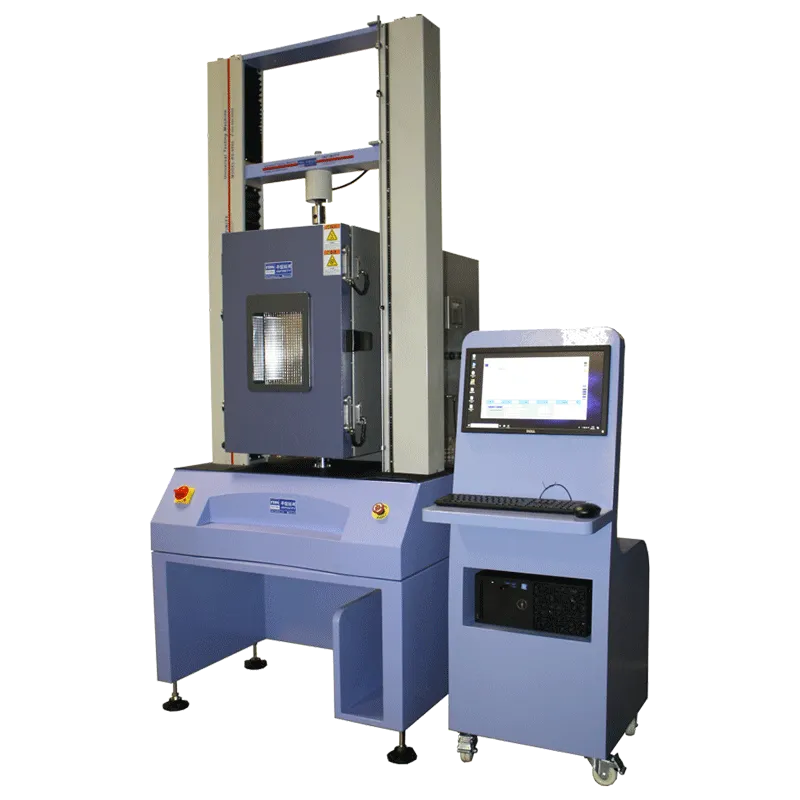
Supporting Equipment: High and Low Temperature Battery Extrusion & Needle Testing Machine RS‑6006GDW
To provide complete lithium battery safety verification under high and low temperature environments, ITM-LAB also provides the
RS‑6006GDW High and Low Temperature Battery Extrusion & Needle Testing Machine — a key supporting equipment for lithium battery reliability testing. This equipment is specially designed for extrusion and acupuncture tests of batteries and battery modules in high and low temperature environments, equipped with video monitoring function that can automatically save test videos and reproduce the entire test process, fully meeting the safety testing needs of lithium battery manufacturers.
Overseas Customer Application Case
One of our European lithium battery manufacturers customer adopted ITM-LAB’s integrated testing solution, which includes the ITM-DEP-288L Double-layer High and Low Temperature Explosion-proof Test Chamber and RS-6006GDW High and Low Temperature Battery Extrusion & Needle Testing Machine, to conduct comprehensive reliability and safety verification for their export battery products.
The customer’s core demand was to meet international standards (UL 1642, IEC 62660) and pass overseas market certification. The ITM-DEP-288L completed the high and low temperature humidity cycling test of battery modules, while the RS-6006GDW carried out extrusion and acupuncture safety tests under the same temperature environment, with video monitoring function providing complete test records for certification. The two sets of equipment ran stably, with accurate test data, helping the customer successfully pass international certification and smoothly enter the European market.
Common Challenges & Solutions
Many manufacturers face issues during lithium battery temperature humidity testing—here are practical solutions:
-
Moisture condensation on battery surfaces: Use a chamber with anti-condensation design to avoid false test results caused by external moisture.
-
Uneven temperature distribution: Choose a chamber with optimized air circulation systems to ensure consistent conditions across all test samples.
-
Data inaccuracy: Regularly calibrate the chamber’s temperature and humidity sensors to maintain test precision.
Conclusion
Lithium battery temperature and humidity reliability testing is non-negotiable for manufacturers looking to ensure product safety, compliance, and market competitiveness. By following standard test conditions and selecting the right equipment, you can effectively evaluate battery performance and reduce field failures.