- 2026-03-30 13:43:14
- admin
Choosing a temperature & humidity test chamber is not simply a matter of selecting the largest chamber or the widest temperature range.
The right configuration depends on the actual test conditions, sample size, humidity requirements, chamber performance, applicable test standards, and laboratory environment.
A chamber that does not match these requirements can lead to unstable test conditions, insufficient workspace, unnecessary equipment costs, or test results that do not meet the required method.
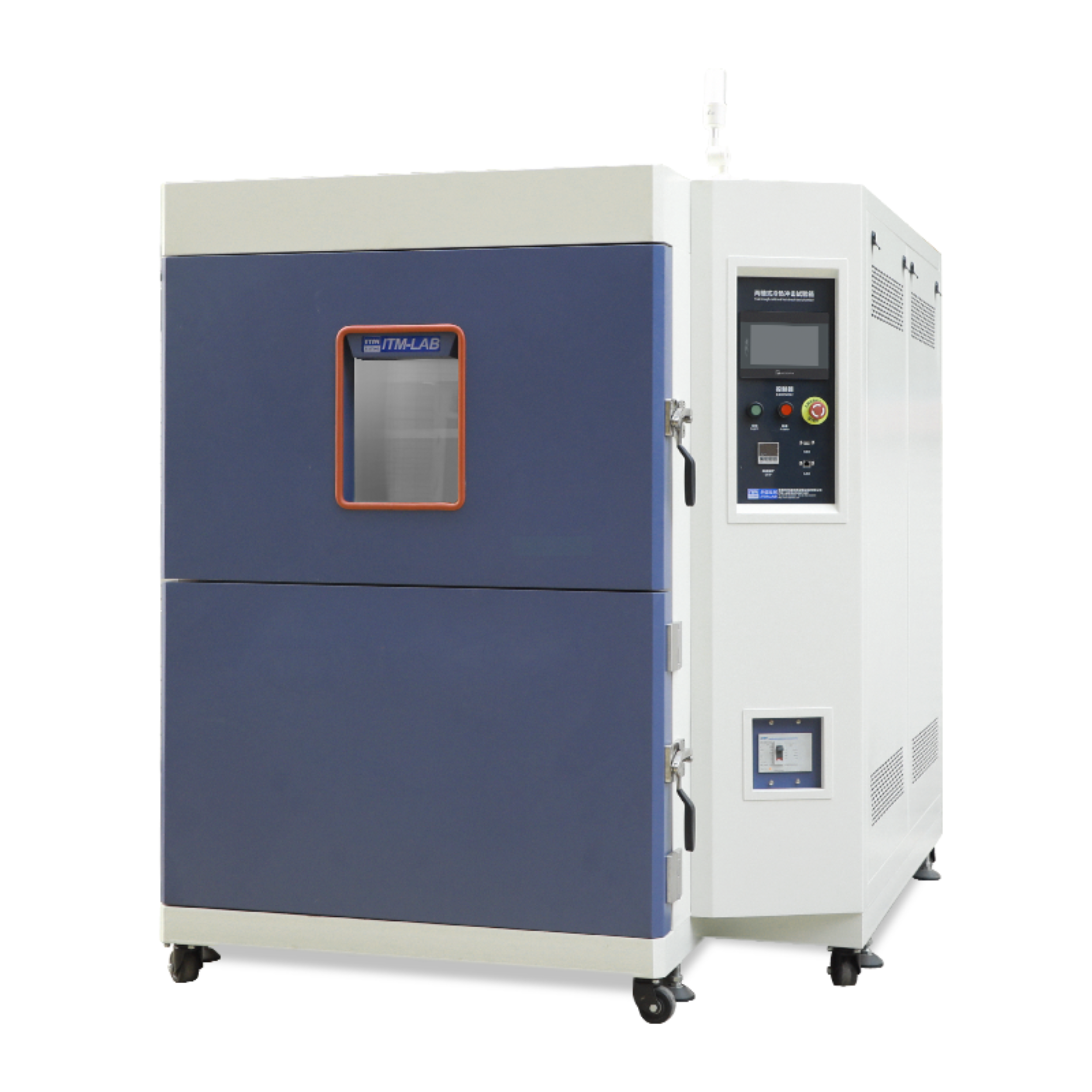
This guide explains how to evaluate a temperature & humidity test chamber from a practical purchasing perspective and how to select an appropriate configuration for your application.
Quick Answer: How Do You Choose the Right Test Chamber?
Start with these six questions:
- What temperature range does your test require?
- What temperature/RH combinations must the chamber maintain?
- How much usable workspace do your samples and fixtures require?
- What temperature and humidity performance does your test method specify?
- Which IEC, ASTM, ISO, GB/T, or customer-specific test method applies?
- Can your laboratory support the chamber's power, dimensions, ambient conditions, and heat dissipation requirements?
For a practical selection, use this sequence:
Test Condition → Sample → Capacity → Performance → Standard → Facility
Do not select a chamber based only on nominal volume, maximum temperature, or maximum relative humidity.

The 6-Step Chamber Selection Method
When helping customers select an environmental test chamber, the most useful approach is to work backward from the test requirement.
| Selection Step | Key Question |
|---|---|
| 1. Test Condition | What temperature and humidity conditions are required? |
| 2. Sample | What are the sample dimensions, quantity and weight? |
| 3. Capacity | How much usable workspace is needed? |
| 4. Performance | What accuracy, uniformity and transition rates are required? |
| 5. Standard | Which test method must be followed? |
| 6. Facility | Can the laboratory support the selected chamber? |
This approach avoids one of the most common purchasing mistakes: choosing a chamber first and trying to adapt the test requirements afterward.
1. Define Your Actual Test Conditions
Before comparing models or suppliers, define the environmental conditions your samples must experience.
At minimum, identify:
- Minimum test temperature
- Maximum test temperature
- Required relative humidity
- Required temperature/RH combinations
- Temperature cycling requirements
- Test duration
- Number and size of samples
- Applicable test standard
For example, these are very different requirements:
-40°C / dry heat
85°C / 85% RH
40°C / 95% RH
Cyclic temperature and humidity testing
A chamber suitable for one condition may not be the best configuration for another.
Start with the test procedure, not the chamber catalog.
If your customer specification or laboratory procedure already defines the temperature, RH, cycle and duration, use those requirements as the starting point for equipment selection.
2. How to Choose the Temperature Range
The required temperature range should cover the lowest and highest temperatures specified by your test procedure.
The GDJS series is available in two temperature configurations:
| Configuration | Temperature Range |
|---|---|
| B Type | -40°C to +150°C |
| C Type | -70°C to +150°C |
-40°C vs -70°C: Which One Should You Choose?
A -70°C chamber is not automatically the better choice.
If your test procedure only requires temperatures down to -40°C, the B configuration may provide the required range.
If the test requires temperatures below -40°C, the C configuration provides the additional low-temperature capability.
| Requirement | B Type | C Type |
|---|---|---|
| Down to -40°C | ✓ | ✓ |
| Below -40°C | — | ✓ |
| Up to +150°C | ✓ | ✓ |
The correct selection should therefore be based on the actual lowest test temperature, rather than simply choosing the widest available range.
3. How to Choose the Required Humidity Range
The GDJS series provides a humidity operating range of:
20% to 98% RH
However, one important point is often overlooked:
Humidity capability cannot be evaluated independently from temperature.
Relative humidity is temperature-dependent. Therefore, a chamber specified for 20–98% RH should not automatically be interpreted as being capable of maintaining every RH value at every temperature.
For example, if your test requires:
85°C / 85% RH
or
40°C / 95% RH
the specific temperature/RH combination should be confirmed against the chamber's operating envelope.
Before purchasing, provide the supplier with:
- Required temperature
- Required RH
- Required test duration
- Cycling or steady-state requirement
- Applicable test standard
This allows the chamber configuration to be evaluated against the actual test point, rather than only its headline RH specification.

4. How to Choose the Right Chamber Capacity
Chamber capacity should be based on usable workspace, not simply the volume of the sample.
You need to consider:
- Sample dimensions
- Number of samples
- Fixtures
- Sample weight
- Required spacing
- Airflow around the samples
- Future testing requirements
A sample should not simply be squeezed into the chamber because the nominal volume appears large enough.
GDJS Standard Capacity Range
| Model | Effective Volume | Internal Size (W × D × H) |
|---|---|---|
| GDJS-100L-B/C | 100L | 400 × 500 × 500 mm |
| GDJS-150L-B/C | 150L | 500 × 500 × 600 mm |
| GDJS-225L-B/C | 225L | 500 × 600 × 750 mm |
| GDJS-408L-B/C | 408L | 600 × 800 × 850 mm |
| GDJS-800L-B/C | 800L | 1000 × 800 × 1000 mm |
| GDJS-1000L-B/C | 1000L | 1000 × 1000 × 1000 mm |
A practical sizing rule
Think of chamber selection as:
Sample + fixture + clearance + airflow space = required usable workspace
If you test multiple samples simultaneously, also consider how the samples will be positioned on the shelves and whether your testing volume may increase in the future.

5. Which GDJS Capacity Is Right for Your Application?
The following can be used as an initial selection guide:
| Testing Requirement | Possible Starting Range |
|---|---|
| Small components / limited sample quantity | 100–150L |
| Small to medium components | 150–225L |
| Larger components or assemblies | 408L |
| Large assemblies / multiple samples | 800L |
| Large-scale or high-volume testing | 1000L |
These are starting points rather than automatic model recommendations.
The final model should be determined by the actual sample dimensions, fixtures, weight, test conditions and required airflow.
6. Temperature Fluctuation, Deviation and Uniformity Are Not the Same
When comparing environmental chambers, buyers often see several temperature specifications that appear similar.
They are not interchangeable.
| Specification | What It Describes |
|---|---|
| Temperature Fluctuation | Change in temperature over time at a measurement location |
| Temperature Deviation | Difference between the actual temperature and the set value |
| Temperature Uniformity | Temperature difference between different locations inside the chamber |
For the GDJS series:
| Performance Parameter | Specification |
|---|---|
| Temperature Fluctuation | ±0.5°C |
| Temperature Deviation | ≤±1°C |
| Temperature Uniformity | ≤2.0°C |
| Humidity Fluctuation | ±1% RH |
| Humidity Deviation | ≤±3% RH |
Why does this distinction matter?
Imagine the controller is set to 85°C.
The chamber could maintain an average temperature close to 85°C while still having measurable temperature differences between different locations.
That is why fluctuation, deviation and uniformity should be evaluated separately when comparing chambers.
7. Check Heating and Cooling Performance
Heating and cooling rate becomes particularly important when your test procedure includes repeated temperature transitions.
The GDJS series specifies:
| Performance | Specification |
|---|---|
| Heating Dynamic Rate | ≥3°C/min |
| Cooling Dynamic Rate | ≥1°C/min |
| Thermal Transition Overshoot | ≤2°C |
These values are based on the manufacturer's defined test conditions and should not be treated as identical under every sample load.
Heating and cooling rate matters most when you perform:
- Temperature cycling
- Accelerated environmental testing
- Repeated temperature transitions
- Short-duration test programs
- Automated environmental profiles
If your test specification requires a particular transition time, provide the required temperature change and transition time when requesting a quotation.

8. Check the Chamber's Construction
Performance specifications are important, but construction quality also affects long-term operation.
The GDJS chamber is designed with several features intended for environmental testing applications.
Inner Chamber
The chamber uses SUS304 stainless steel for the internal liner.
This provides a durable, corrosion-resistant test workspace that is also relatively easy to clean.
Insulation
The insulation structure combines:
- Hard polyurethane foam
- Ultra-fine glass fiber insulation
The purpose is to reduce heat transfer between the chamber and the laboratory environment.
Observation Window
A 300 × 400 mm three-layer vacuum glass observation window provides visibility of the samples during testing.
An electric heating system is used to reduce frost and condensation around the observation window during low-temperature operation.
Door Sealing
High-temperature-resistant silicone seals help maintain the chamber's controlled environment.
Test Port
A standard test port is available in:
- 50 mm diameter
- 100 mm diameter
The port can be used for wiring or connecting external measurement equipment.

9. Consider the Controller and Communication Requirements
The control system should match your testing workflow rather than simply having the largest number of features.
Depending on the selected configuration, GDJS chambers can provide functions such as:
- Temperature and humidity control
- Programmable test sequences
- Real-time monitoring
- USB interface
- RS-232 interface
- Fault alarms
- Data recording
Before ordering, confirm your requirements for:
- Program steps
- Data logging
- Communication interface
- External monitoring
- Data export
- Controller configuration
Controller and communication options should be confirmed for the specific model and configuration.
10. Select the Chamber According to the Test Standard
Environmental test standards define specific test methods and conditions.
The GDJS series is designed for applications involving environmental testing methods such as:
IEC 60068-2-1
Low-temperature testing.
IEC 60068-2-2
Dry heat testing.
IEC 60068-2-30
Damp heat, cyclic testing.
IEC 60068-2-78
Damp heat, steady-state testing.
Other industry or customer-specific standards may also apply.
Important: Standard ≠ Generic Chamber Certification
A common purchasing mistake is to ask:
"Is this chamber IEC 60068 certified?"
A better question is:
"Can this chamber meet the environmental conditions and performance requirements of the specific IEC 60068 test method I need to perform?"
Before ordering, confirm:
- Test standard
- Specific test method
- Temperature conditions
- Humidity conditions
- Test duration
- Cycle requirements
- Performance requirements
- Calibration or verification requirements
11. Check Your Laboratory Before Ordering
A technically suitable chamber may still be unsuitable for your laboratory if the facility cannot support its installation requirements.
GDJS Facility Requirements
| Item | Requirement |
|---|---|
| Ambient Temperature | 5°C–35°C |
| Ambient Relative Humidity | ≤85% RH |
| Atmospheric Pressure | 80–106 kPa |
| Power Frequency | 50±0.5 Hz |
| 60 Hz | Supported |
| Mechanical Environment | Avoid strong vibration |
| Air Quality | Avoid high concentrations of dust, corrosive or hazardous gases |
The laboratory should also be free from strong electromagnetic radiation sources that could interfere with equipment operation.
12. Allow Enough Installation Clearance
Environmental chambers generate heat during operation, so adequate ventilation and heat dissipation space are important.
For the GDJS series, reserve at least:
600 mm on the left
600 mm on the right
600 mm at the rear
Also check the complete delivery route before ordering a large chamber.
For larger models, verify:
- Laboratory door width
- Corridor width
- Elevator dimensions
- Loading access
- Final installation location
This is particularly important for the 800L and 1000L models.
13. Check Power Supply Before Purchasing
The required electrical configuration varies by model.
| Model | Power Supply |
|---|---|
| GDJS-100L-B/C | AC 220V, 3 kW |
| GDJS-150L-B/C | AC 380V, 4.5 kW |
| GDJS-225L-B/C | AC 380V, 5.5 kW |
| GDJS-408L-B/C | AC 380V, 7.5 kW |
| GDJS-800L-B/C | AC 380V, 10 kW |
| GDJS-1000L-B/C | AC 380V, 11 kW |
Always confirm the exact voltage, phase, frequency and power requirements for the selected configuration before installation.
14. Common Temperature & Humidity Chamber Selection Mistakes
Choosing a chamber only by volume
A 225L chamber is not necessarily suitable just because the sample volume is less than 225L.
Sample dimensions, fixtures and airflow space must also be considered.
Choosing -70°C without a requirement for it
A wider temperature range is useful only when your test procedure requires it.
Looking only at the maximum RH
The maximum RH value does not describe the complete temperature-humidity operating envelope.
Comparing only temperature fluctuation
Fluctuation, deviation and uniformity describe different performance characteristics.
Ignoring installation conditions
A chamber that fits on paper may not fit through the laboratory door or have enough space for heat dissipation.
Selecting based only on a standard number
The specific test method and conditions matter more than simply listing a standard on a quotation.
15. GDJS Temperature & Humidity Test Chamber: Key Specifications
The GDJS series provides six standard capacities from 100L to 1000L.
| Parameter | GDJS Series |
|---|---|
| Temperature Range | -40°C / -70°C to +150°C |
| Humidity Range | 20–98% RH* |
| Capacity | 100–1000L |
| Temperature Fluctuation | ±0.5°C |
| Humidity Fluctuation | ±1% RH |
| Temperature Deviation | ≤±1°C |
| Humidity Deviation | ≤±3% RH |
| Temperature Uniformity | ≤2.0°C |
| Heating Dynamic Rate | ≥3°C/min |
| Cooling Dynamic Rate | ≥1°C/min |
| Thermal Transition Overshoot | ≤2°C |
| Shelf Load | 20 kg |
| Noise Level | ≤70 dB(A) |
* Actual humidity capability depends on temperature and operating conditions.
16. Which GDJS Configuration Fits Your Test?
Use the following as an initial selection framework:
| Your Requirement | Selection Direction |
|---|---|
| Temperature down to -40°C | B or C configuration |
| Temperature below -40°C | C configuration |
| Small sample quantity | 100–225L |
| Medium-sized assemblies | 225–408L |
| Large assemblies | 408–800L |
| Multiple or large samples | 800–1000L |
| Cyclic temperature testing | Check heating/cooling requirements |
| Damp heat testing | Verify temperature/RH operating envelope |
| IEC 60068 testing | Confirm the applicable test method |
The final configuration should always be confirmed against the actual test procedure and sample requirements.
17. What Information Should You Send When Requesting a Quote?
A supplier can recommend a much more appropriate chamber when the RFQ includes the actual testing conditions.
You do not need to know the model number first.
Provide:
- Required temperature range
- Required humidity range
- Specific temperature/RH test points
- Sample dimensions
- Sample weight
- Number of samples
- Required test cycle
- Test duration
- Applicable test standard
- Laboratory power supply
- Available installation space
- Required communication functions
- Calibration requirements
- Special test ports or fixtures
A useful RFQ format
Temperature: -40°C to +150°C
Humidity: 20–98% RH
Sample: 400 × 300 × 250 mm
Sample Weight: 15 kg
Test: 85°C / 85% RH
Standard: IEC 60068
Power Available: AC 380V
Quantity: 1 set
With this information, the supplier can recommend the appropriate capacity and configuration instead of quoting a generic model.
Temperature & Humidity Test Chamber Buying Checklist
Before requesting a quotation, confirm:
- ☐ Temperature range
- ☐ Humidity range
- ☐ Required temperature/RH combinations
- ☐ Sample dimensions
- ☐ Sample weight
- ☐ Number of samples
- ☐ Required chamber capacity
- ☐ Test cycle
- ☐ Test duration
- ☐ Applicable test standard
- ☐ Heating/cooling requirements
- ☐ Laboratory power supply
- ☐ Available installation space
- ☐ Required communication interface
- ☐ Calibration requirements
- ☐ Special options
FAQ
How do I choose a temperature and humidity test chamber?
Start with the required temperature and humidity conditions, then determine sample dimensions, capacity, performance requirements, test standards and laboratory conditions. For the GDJS series, the selection process can be summarized as test condition → sample → capacity → performance → standard → facility.
What is the difference between a -40°C and -70°C chamber?
A -40°C configuration covers testing down to -40°C, while a -70°C configuration provides additional low-temperature capability for tests requiring temperatures below -40°C. Both configurations reach up to +150°C.
What chamber size do I need?
Select the chamber according to sample dimensions, fixtures, sample quantity, airflow space and future testing requirements. GDJS models range from 100L to 1000L.
Can a temperature & humidity chamber maintain 98% RH at every temperature?
No. Humidity capability depends on chamber temperature and operating conditions. The specific temperature/RH combination should be checked against the chamber's operating envelope.
What is the difference between temperature fluctuation and temperature uniformity?
Temperature fluctuation describes changes over time, while temperature uniformity describes temperature differences between locations inside the chamber. Temperature deviation describes the difference between the actual and set temperature.
Does a larger chamber always provide better testing?
No. A larger chamber provides more workspace, but excessive capacity can increase equipment cost and energy requirements. The chamber should be sized according to the sample, fixtures, airflow requirements and future testing needs.
How much clearance does an environmental chamber need?
For the GDJS series, at least 600 mm of open space should be reserved on the left, right and rear sides for heat dissipation.
Can the GDJS series be used for IEC 60068 testing?
The GDJS series is designed for environmental testing applications involving applicable IEC 60068 methods, including low-temperature, dry heat and damp heat testing. The specific configuration should be confirmed against the required test method.
Why Choose ITM-LAB GDJS Temperature & Humidity Test Chambers?
The GDJS series is designed around the practical requirements of environmental testing:
- Six standard capacities: 100L to 1000L
- Two low-temperature configurations: -40°C and -70°C
- Temperature range: up to +150°C
- 20–98% RH humidity capability*
- ±0.5°C temperature fluctuation
- ±1% RH humidity fluctuation
- SUS304 stainless steel inner chamber
- Standard test ports
- USB communication
- Optional RS-232 communication
- Multiple chamber capacity options for different sample sizes
* Actual humidity capability depends on temperature and operating conditions.
The objective is not to sell the largest or widest-range chamber.
It is to match the chamber configuration to the actual test requirement.
Need Help Selecting the Right Configuration?
Send ITM-LAB your:
Temperature + Humidity + Sample Size + Sample Weight + Test Standard + Available Installation Space
Our team can help identify a suitable GDJS capacity and configuration based on your testing requirements.
Request a Customized Recommendation
Email: sales2@itm-lab.com
WhatsApp: +86 181 0296 0079
Get a GDJS Model Recommendation and Quote