
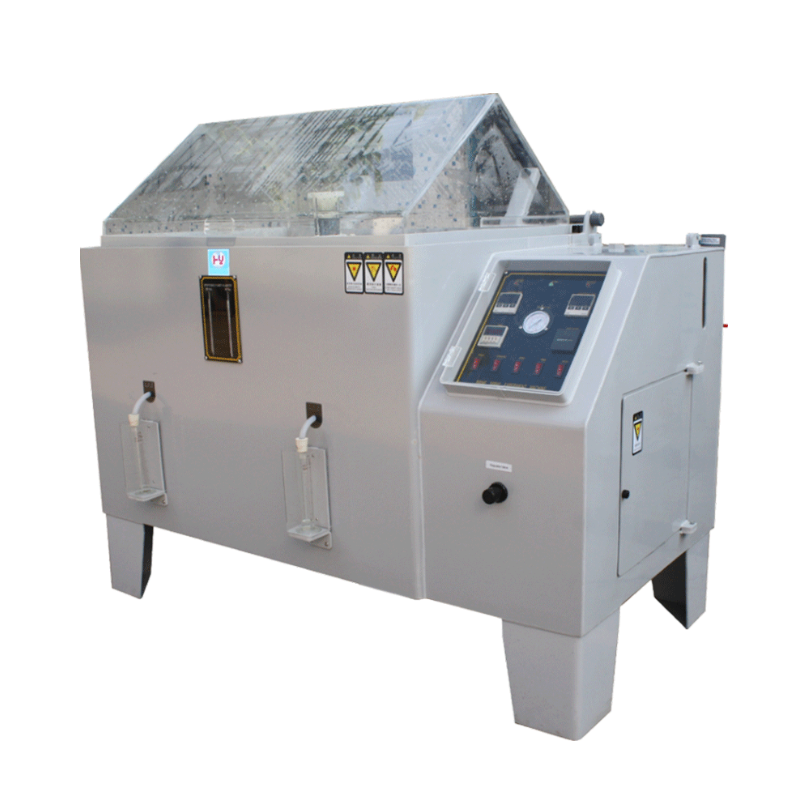
Salt spray test chambers are essential for evaluating the corrosion resistance of materials and coatings, but like any equipment, they can develop faults that affect test accuracy and performance. Common issues include no salt spray, uneven fog distribution, temperature fluctuations, and salt crystallization. In this guide, we identify the most common faults of salt spray test chambers and provide step-by-step troubleshooting tips to resolve them quickly.
Fault 1: No salt spray or weak spray. If your chamber is not producing salt spray or the spray is weak, the most common causes are clogged nozzles, low salt solution levels, or a faulty pump. First, check the salt solution tank—ensure it is filled to the recommended level with a 5% NaCl solution. Next, inspect the spray nozzles for clogs (caused by salt crystallization) and clean them with a soft brush or distilled water. If the nozzles are clean and the solution level is correct, check the pump for power supply and functionality—replace the pump if it is faulty.
Fault 2: Uneven salt fog distribution. Uneven fog can lead to inconsistent test results, as some samples may be exposed to more salt spray than others. This issue is often caused by misaligned nozzles, blocked air vents, or improper sample placement. Adjust the nozzles to ensure they are directed evenly across the test area. Clean the air vents to ensure proper airflow, and rearrange the samples to avoid blocking the fog flow. Additionally, check the air pressure—low air pressure can cause uneven fog distribution, so adjust it to the recommended level (typically 0.1-0.2 MPa).
Fault 3: Temperature fluctuations (cannot maintain 35°C ± 2°C). The standard temperature for ASTM B117 testing is 35°C ± 2°C, so temperature fluctuations can invalidate test results. Common causes include a faulty temperature sensor, damaged heating element, or poor door seal. Check the temperature sensor for accuracy and replace it if necessary. Inspect the heating element for damage or burnout—replace it if it is not functioning. Check the door seal for wear or gaps, and replace it if it is damaged to prevent temperature leaks.
Fault 4: Salt crystallization buildup. Salt crystallization can damage internal components, clog nozzles, and affect test performance. This occurs when the salt solution evaporates and leaves behind salt deposits. To resolve this, flush the salt solution system regularly (weekly for heavy use) with distilled water. Wipe down the inner chamber with a damp cloth to remove any crystallization, and ensure the chamber is properly ventilated after testing.
Fault 5: Error codes on the control panel. If the control panel displays an error code, refer to your user manual for specific troubleshooting steps. Common error codes include low water, high temperature, and pump failure. Most error codes can be resolved by checking the corresponding component (e.g., refilling the water tank, inspecting the pump). If the error persists, contact ITM-LAB’s technical support.
Prevention tips: Regular maintenance is the best way to prevent common faults. Use only distilled or deionized water for the salt solution, and replace the solution regularly to avoid contamination. ITM-LAB’s Environmental Test Chambers (including salt spray models) are designed with durability in mind, and our technical support team is available to help resolve any issues you may encounter.
By identifying and resolving these common faults quickly, you can minimize downtime, ensure accurate test results, and extend the lifespan of your salt spray test chamber.
