What is a Fatigue Testing Machine?
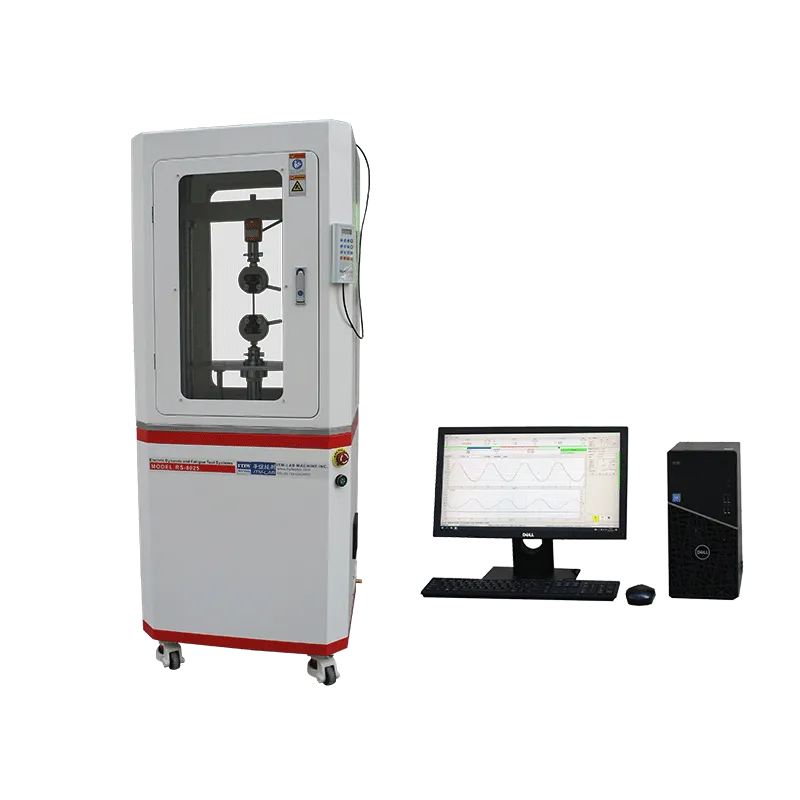
A fatigue testing machine applies cyclic loading to materials and components to determine fatigue life, endurance limits, and failure behavior under repeated stress. Unlike static testing (like a standard tensile test), fatigue testing replicates real-world service conditions where components experience millions of load cycles
The Nature of Fatigue Failure
Fatigue failure is insidious because it occurs at stress levels well below the material’s yield strength.3 It typically follows a three-stage process:
-
Crack Initiation: Microscopic cracks form at stress concentrations (notches, surface defects).4https://practicalmaintenance.net/?p=1149
-
Crack Propagation: The crack grows incrementally with each successive load cycle.5https://caeassistant.com/blog/abaqus-fatigue-analysis-video/
-
Catastrophic Fracture: The remaining cross-section can no longer support the load, leading to sudden failure.6https://www.interfaceforce.com/understanding-the-anatomy-of-fatigue-failure/#:~:text=Stress%20concentration%20in%20the%20cracking,until%20a%20sudden%20fracture%20occurs.
High-Cycle Fatigue (HCF) vs. Low-Cycle Fatigue (LCF)
Selecting the right equipment depends on whether you are performing HCF or LCF testing.
| Parameter | High-Cycle Fatigue (HCF) | Low-Cycle Fatigue (LCF) |
| Cycle Range | $>10^4$ to ^9$ cycles | $ to ^4$ cycles |
| Stress Level | Below yield (Elastic) | Above yield (Plastic) |
| Control Mode | Force-controlled | Strain-controlled |
| Failure Mechanism | Surface crack initiation | Hysteresis energy accumulation |
| Common Standards7 | ASTM E466, ISO 10998 | ASTM E606, ISO 121069 |
Types of Fatigue Testing Systems
1. Servo-Hydraulic Fatigue Testers
These are the "workhorses" of the industry, using high-pressure hydraulic actuators to apply heavy loads.
-
Best for: Large structural components, LCF testing, and high-force aerospace applications.
-
Advantage: Extremely versatile; handles both very low and high frequencies (up to 100 Hz).
-
Price Range: ,000 – ,000.
2. Electrodynamic (Shaker) Systems
These systems use electromagnetic actuators, similar to a giant speaker coil, to vibrate the specimen.10
-
Best for: Small components, medical devices (stents), and electronics.
-
Advantage: Capable of extremely high frequencies (up to 2,000 Hz), allowing ^7$ cycles to be reached in hours.
-
Price Range: ,000 – ,000.
3. Rotating Beam Testers
A specialized, low-cost method where a specimen is rotated while a bending moment is applied.11 https://en.kmtl.co.jp/service/tests/fatigue
-
Best for: Determining the endurance limit of steels and general material screening.12https://biopdi.com/fatigue-testing/
-
Advantage: Simple operation and very reliable for = -1$ (fully reversed) bending.
-
Price Range: ,000 – ,000.
4. Resonant Fatigue Testing Systems
These systems operate at the natural resonant frequency of the specimen-fixture assembly.13https://www.worldoftest.com/resonant-fatigue-testing-machines
-
Best for: Ultra-high-cycle fatigue (VHCF) and high-volume production testing.
-
Advantage: Uses minimal energy to achieve very high speeds (14^9$ cycles in days).15https://pmc.ncbi.nlm.nih.gov/articles/PMC8123850/
-
Price Range: ,000 – ,000.
S-N Curves and Life Prediction
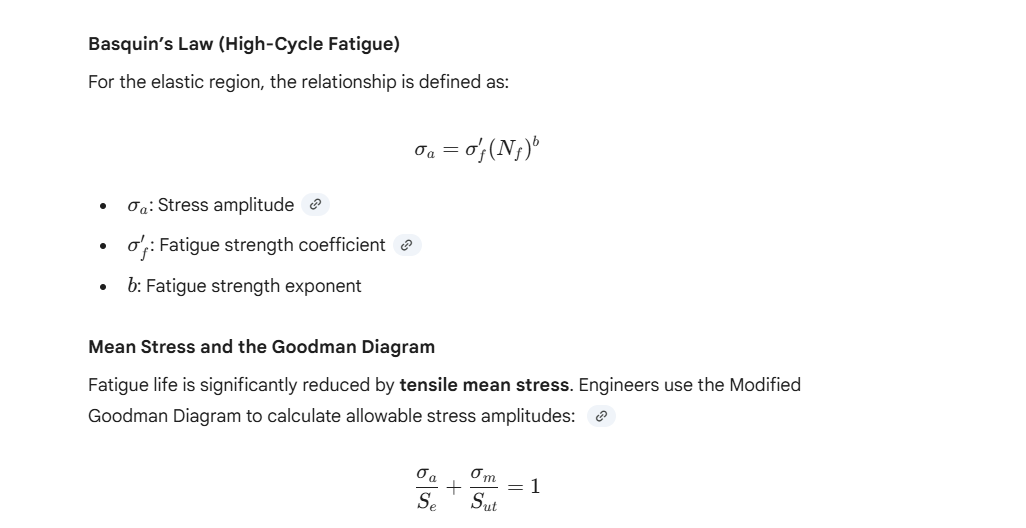
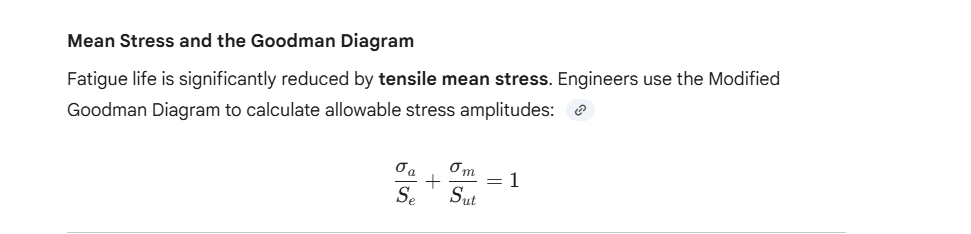
The primary output of fatigue testing is the S-N Curve (Wöhler Curve), which plots Stress Amplitude (16$) against the number of Cycles to Failure (17$) on a logarithmic scale.18https://help.altair.com/hwdesktop/hlife/topics/solvers/os/analysis_fatigue_stress_life_approach_r.htm#:~:text=When%20S%2DN%20testing%20data%20is,to%20failure%20N%20%2C%20the%20relationship
Industry-Specific Applications
-
Industry-Specific Applications
-
Aerospace: Landing gear and wing attachments must survive spectrum loading (takeoff/landing cycles). Testing typically requires a "scatter factor" of 4× the intended life.
-
Medical Devices: Orthopedic hip implants are tested to 10 million cycles (simulating 10 years of walking) in a 37℃ saline solution.
-
Automotive: Suspension control arms undergo multi-axial fatigue testing to replicate road vibrations over a 200,000 km service life.
-
Technical Specifications Comparison (ITM-LAB)
| Model | Type | Capacity | Freq. Range | Price (USD) |
| 1 | Servo-Hydraulic | 50 kN | 0.01-100 Hz | quote |
| 2 | Electrodynamic | 10 kN | 5-500 Hz | quote |
| 3 | Rotating Beam | 5 kN | 1000-6000 RPM | quote |
Critical Accessories
-
Axial Extensometer: ,500 – ,500 (Essential for strain-controlled LCF).
-
Environmental Chamber:,000-,000 (For testing at -70°C to 350°C).
-
Crack Growth Monitoring: ,000 – ,000 (Vision or ACPD-based systems).
Would you like me to generate a specific test matrix for a material you are currently evaluating?
