
ASTM D642 Carton Compression Test: Full Guide to Packaging Quality Evaluation
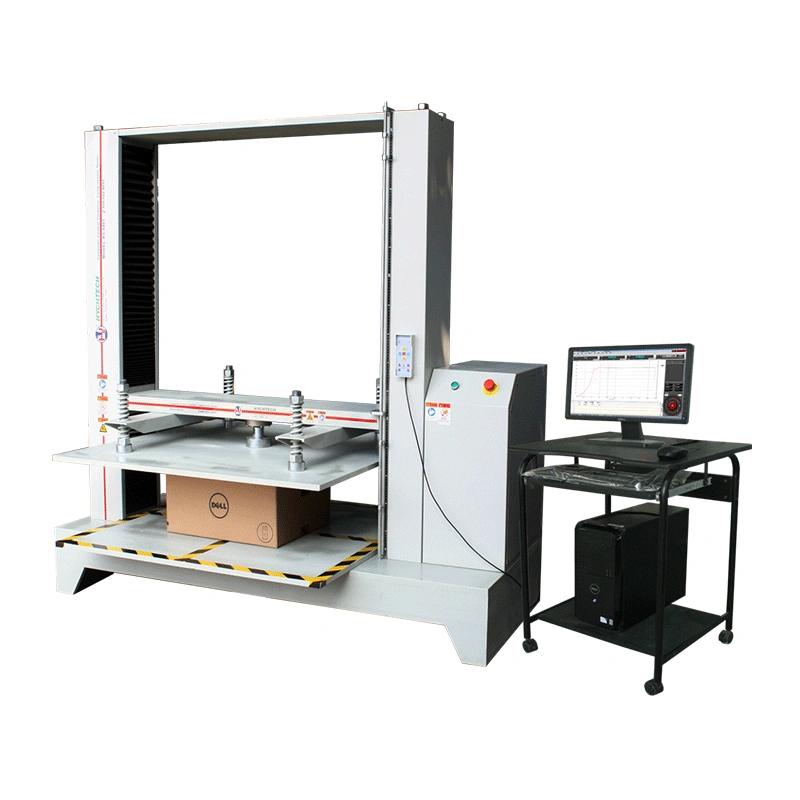
Anyone in the packaging, manufacturing, e-commerce and logistics industry knows well how costly poor carton quality can be. Collapsed boxes, deformed packaging during warehouse stacking, and product damage in long-distance shipping always lead to customer complaints, order claims and unnecessary losses.
↵
As the most widely recognized American standard, ASTM D642 sets the official rule for carton compression resistance testing. Today we break down everything practically: official test judgment standards, mandatory equipment parameters, and how to pick the right packaging compression tester for in-house quality inspection.
What Is ASTM D642 Carton Compression Test?
ASTM D642 refers to Standard Test Method for Determining Compressive Resistance of Shipping Containers. It is designed to simulate real warehouse stacking, container transportation and logistics pressure, and evaluate the vertical load-bearing capacity of corrugated cartons and regular shipping packages. For businesses aiming to meet international packaging standards, understanding the details of this test is crucial for avoiding costly mistakes.
This test is not simply pressing the carton until it breaks. It focuses on practical performance indicators:
- Maximum compression load capacity
- Load and deformation curve stability
- Constant load holding performance for long-term stacking
- Failure modes like corner cracking, side panel bulging, edge collapse and glue seam separation
Simply put, only packaging tested following ASTM D642 can stand strict international logistics and overseas customer audit requirements. To ensure your testing process is up to standard, using a compliant ASTM D642 testing machine is non-negotiable.
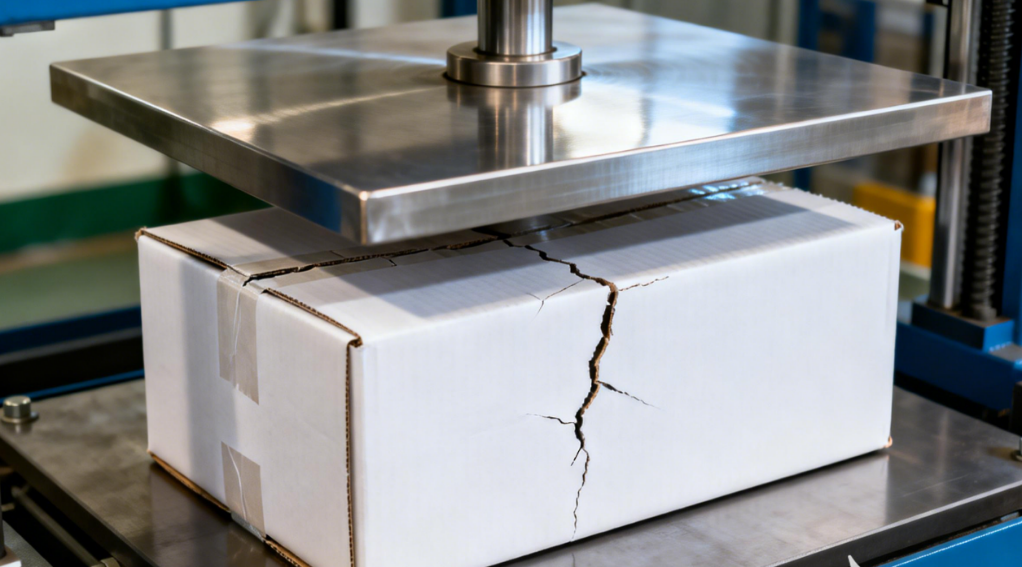
ASTM D642 Official Test Judgment & Qualification Criteria
1. Mandatory Sample Pre-Conditioning
Test results will be invalid without standard environmental treatment:
- Ambient temperature: 23±2°C
- Relative humidity: 50±5%RH
- Conditioning time: 16 to 24 hours minimum
- Sample rule: Select at least 3 batches of intact cartons without surface damage or printing defects.
2. Standard Test Operation Rules
-
Adopt rigid and parallel pressure plates with a larger area than the carton top
-
Standard loading speed: 12.7 mm/min with stable uniform pressing
-
Pre-load to eliminate gap deviation and avoid eccentric force
-
Stop testing when peak force drops sharply, obvious collapse occurs, or deformation exceeds the limit.
3. Three Core Qualification Judgment Rules
-
The peak compression force must meet your actual stacking and load design requirement.
-
Carton deformation shall be controlled within the allowable range according to product fragility.
-
Sudden corner cracking, edge crushing and glue layer shear failure are regarded as unqualified.
4. Valid Data Calculation Rule
-
Calculate the average value of 3 tested samples
-
Deviation between single sample data and average shall not exceed ±10%
-
Official test report must record maximum force, deformation amount, failure position and test environment.
Mandatory Equipment Parameters for ASTM D642 Compliance
Many manufacturers buy cheap testing machines but get unrecognized test data and fail customer audits. The key reason is that the equipment cannot meet ASTM D642 parameter requirements. Investing in a high-quality tester ensures consistent, audit-ready results and long-term cost savings.
1. Precision Requirements (Non-Negotiable)
-
Force accuracy: ±0.5% ~ ±1% FS
-
Displacement resolution: 0.01–0.1 mm
-
Speed control accuracy: within ±2%
-
Pressure plate parallelism & flatness: error ≤1 mm per meter
2. Recommended Standard Configuration
-
Test force range: 5kN–20kN, covering most regular carton sizes
-
Test space: 800×800×600mm / 1000×1000×1000mm optional
-
Adjustable test speed: 5–50 mm/min, fixed at 12.7 mm/min for ASTM D642
-
Core functions: constant load holding, fixed deformation testing, automatic stop, PDF & CSV data export
-
Safety design: overload protection, limit displacement stop and emergency stop button
Why Unqualified Test Equipment Causes Trouble
Unstable pressing speed leads to inaccurate force value; uneven pressure plates cause partial stress; low precision results in inconsistent data for the same carton batch — all make your quality control and third-party audit fail easily. For reliable and consistent testing, choose a machine that meets all ASTM D642 specifications, such as our industrial-grade packaging compression tester.
Why Invest in an In-House Packaging Compression Tester?
Many factories still rely on third-party laboratories for ASTM D642 testing, which is expensive, time-consuming and cannot match production progress. Equipping your own standard compression tester brings obvious benefits:
-
Real-time incoming inspection and finished product quality control to avoid unqualified packaging entering production.
-
Optimize carton material cost by confirming suitable corrugated type and layer thickness through accurate test data.
-
ASTM D642 official test reports are widely accepted by European and American clients, Amazon warehouses and global retailers.
-
Greatly reduce shipping damage and after-sales compensation risks.
-
Pass ISO, CE and customer factory audits with complete test data and standard testing equipment.
How to Choose a Qualified ASTM D642 Compression Tester
If you plan to set up an in-house lab, follow these practical selection tips:
-
Fully comply with ASTM D642, compatible with GB/T 4857.4 and ISO 12048 standards.
-
Prioritize force accuracy of ±0.5% for stable long-term use.
-
Support fixed 12.7 mm/min standard test speed.
-
Equipped with real-time curve display, automatic data calculation and batch report generation.
-
Choose a supplier with calibration certificate, on-site installation and professional after-sales training.
Get Custom Solution for Your Packaging Testing
If you are facing these problems:
-
Carton compression performance fails to meet export standards
-
Need ASTM D642 official test reports urgently
-
Don’t know how to configure testing equipment for your factory lab
↵Feel free to leave yourcarton size, stacking layers, load weight and target export market. We will provide you with a customized ASTM D642 test checklist, professional compression tester configuration plan and budget reference immediately.
We offer one-stop solution for packaging quality testing, no complicated sales pitch, only practical industry solutions for your factory.
