ASTM B117 Salt Spray Test: Standard, Principle, Procedure & Chamber Selection Guide
What is ASTM B117?
ASTM B117 is the most widely recognized international standard governing the operation of salt spray (fog) test apparatus, issued by ASTM International. It establishes standardized environmental conditions, operational parameters, and basic procedures for accelerated corrosion testing.
This standard is primarily used to evaluate the relative corrosion resistance of metallic materials, surface coatings, electroplated layers, anodized films, and fasteners in harsh, salt-laden environments. It is widely applied in industries including automotive, hardware, electronics, aerospace, marine, and surface treatment quality control — for example, it is commonly used to test the corrosion resistance of anodized magnesium materials, which can remain intact after more than 200 hours of ASTM B117 salt spray testing.
Principle of the ASTM B117 Salt Spray Test
The ASTM B117 neutral salt spray test works by artificially simulating a highly corrosive marine or coastal atmosphere to accelerate the corrosion process on test samples.A 5% sodium chloride (NaCl) solution is atomized into fine, uniform fog droplets and distributed evenly within a closed test chamber. By maintaining strict control over temperature, solution concentration, pH value, and fog deposition rate, the chamber creates a consistent accelerated corrosive environment — this environment is crucial for testing materials like anodized magnesium, which require long-duration corrosion resistance verification as specified in ASTM B117.
Over a defined test period, samples are exposed to this environment. After testing, they are inspected for corrosion, rust formation, blistering, coating peeling, or under-film creep corrosion to assess material and coating durability — a key requirement for materials that need to pass ASTM B117 certification, such as those used in automotive and electronics industries.
Standard Test Conditions Required by ASTM B117
To be fully compliant with ASTM B117, a test chamber must maintain the following parameters — these parameters are non-negotiable for ensuring accurate test results, especially for long-duration tests like the 200-hour exposure required for some anodized materials:
-
Salt solution concentration: 5% sodium chloride (NaCl) by mass
-
Solution pH value: 6.5 – 7.2 (measured at 25°C)
-
Chamber interior temperature: 35 ± 2 °C
-
Salt fog collection rate: 1.0 – 2.0 mL per 80 cm² per hour
-
Uniform fog distribution without direct dripping onto test samples
-
Unobstructed airflow and consistent condensation behavior
Standard ASTM B117 Test Procedure
1. Sample Preparation
Clean test specimens to remove grease, dust, fingerprints, or surface contaminants. Label samples clearly without damaging functional surfaces — this step is critical for ensuring accurate corrosion resistance results, especially for materials like anodized films that require strict surface cleanliness for ASTM B117 testing.
2. Sample Mounting
Install samples at an angle of 15° to 30° from the vertical axis to allow natural drainage and avoid standing water on surfaces.
3. Solution Preparation
Prepare a 5% sodium chloride solution using distilled or deionized water. Adjust and verify the pH to fall within 6.5–7.2 — the correct solution preparation is key to simulating the corrosive environment required by ASTM B117.
4. Chamber Preconditioning
Preheat the chamber to stabilize at 35°C and ensure all sensors and control systems function normally — stable preconditioning ensures consistent test conditions, which is essential for repeatable results in ASTM B117 testing.
5. Test Execution
Initiate fog generation and maintain constant test conditions throughout the cycle. Continuously monitor temperature, collection rate, and solution level — this is particularly important for long-duration tests (such as 200 hours or more) specified in ASTM B117 for some materials.
6. Test Duration
Common exposure periods include 24h, 48h, 96h, 168h, 240h, 480h, 1000h, and even 200h or more for materials requiring high corrosion resistance (such as anodized magnesium), based on material specifications and industry requirements.
7. Evaluation & Analysis
After exposure, gently clean samples and inspect for corrosion, blistering, creep, coating adhesion failure, or substrate rusting — the evaluation results determine whether the material meets the corrosion resistance requirements of ASTM B117.
Key Considerations for Selecting an ASTM B117 Salt Spray Chamber Manufacturer
1. Full Compliance with ASTM B117
The chamber must accurately maintain temperature, pH, spray uniformity, and collection rate to ensure repeatable and credible test results — this is essential for meeting the strict requirements of ASTM B117, especially for long-duration tests like 200 hours or more.
2. Structural Durability & Corrosion Resistance
High-quality chambers use anti-corrosion materials such as PP or PVC for interior linings to prevent rust, warping, or contamination over long-term use — this is a key advantage of Itm-lab’s ASTM B117 salt spray chambers, ensuring stable performance even during extended test cycles.
3. Stable Control System
Intelligent digital control, programmable timing, data logging, over-temperature protection, and fault alarms improve reliability and reduce manual intervention — these features are standard in Itm-lab’s ASTM B117 chambers, ensuring accurate and efficient testing.
4. Genuine Manufacturer Capability
Direct manufacturers offer better quality control, shorter lead times, customizable designs, and more stable after-sales support than pure trading companies — Itm-lab, with 26 years of industry experience, 40% R&D personnel, and 10000+ cooperative customers, is a trusted direct manufacturer of ASTM B117 salt spray chambers.
5. Global Supply & Service Capacity
For international buyers, factory-direct shipping, global logistics support, multilingual technical assistance, and accessible spare parts are critical — Itm-lab supports global direct shipping and maintains a worldwide dealer network, providing timely service to international customers, consistent with its status as a professional exporter of environmental test chambers.
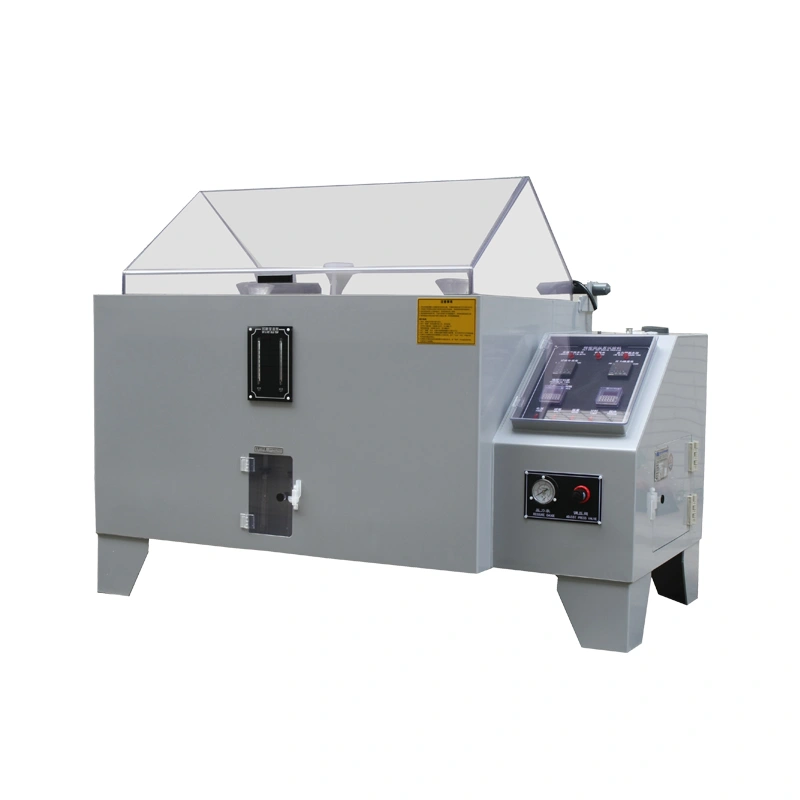
Itm-lab ASTM B117 Salt Spray Test Chambers
Itm-lab is a professional manufacturer specializing in environmental test chambers, with a full range of salt spray test chambers fully compliant with ASTM B117 standard requirements. As a high-tech enterprise with exclusive patented technology, SGS certification, and CE certification, Itm-lab’s equipment meets the strict parameters of ASTM B117, including those required for long-duration tests like 200 hours or more.
Our equipment features precise temperature and spray control, uniform fog distribution, corrosion-resistant construction (PP/PVC interior), and user-friendly operation. We provide both standard and custom-sized models, supporting benchtop, floor-standing, and large-scale configurations — tailored to meet the diverse needs of industries such as automotive, electronics, and surface treatment, where ASTM B117 testing is essential.
Itm-lab supports global direct shipping and maintains a worldwide dealer network to ensure timely delivery and local after-sales service. With 26 years of industry experience, 40% R&D personnel, and cooperative customers including CATL, BYD, Foxconn, and Panasonic, we have the strength to provide reliable ASTM B117 salt spray test solutions.
For more details about our ASTM B117 salt spray test chambers and customized solutions, visit our official website: https://www.itm-lab.com/
