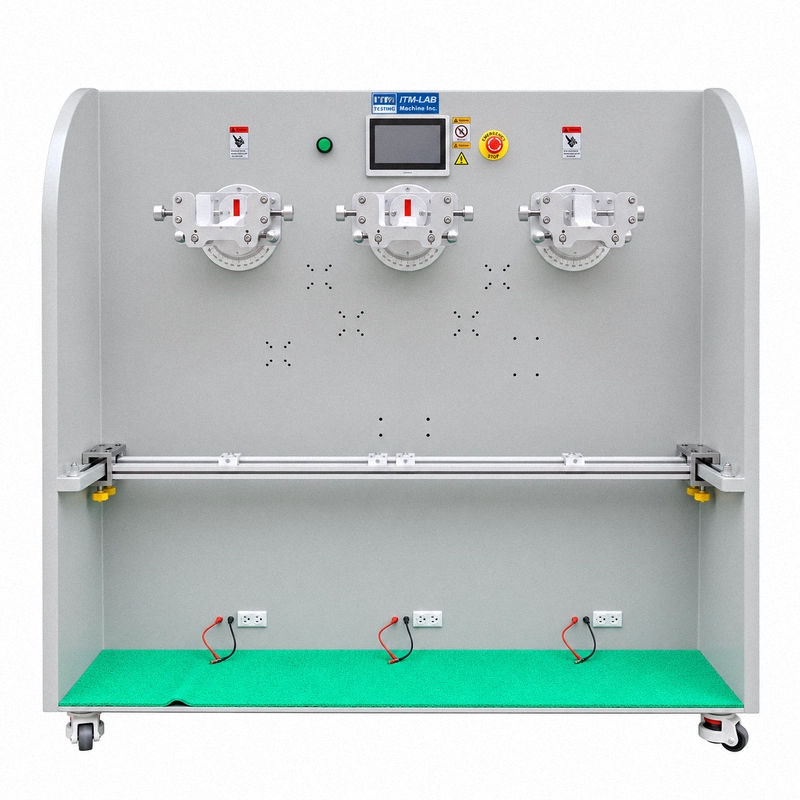
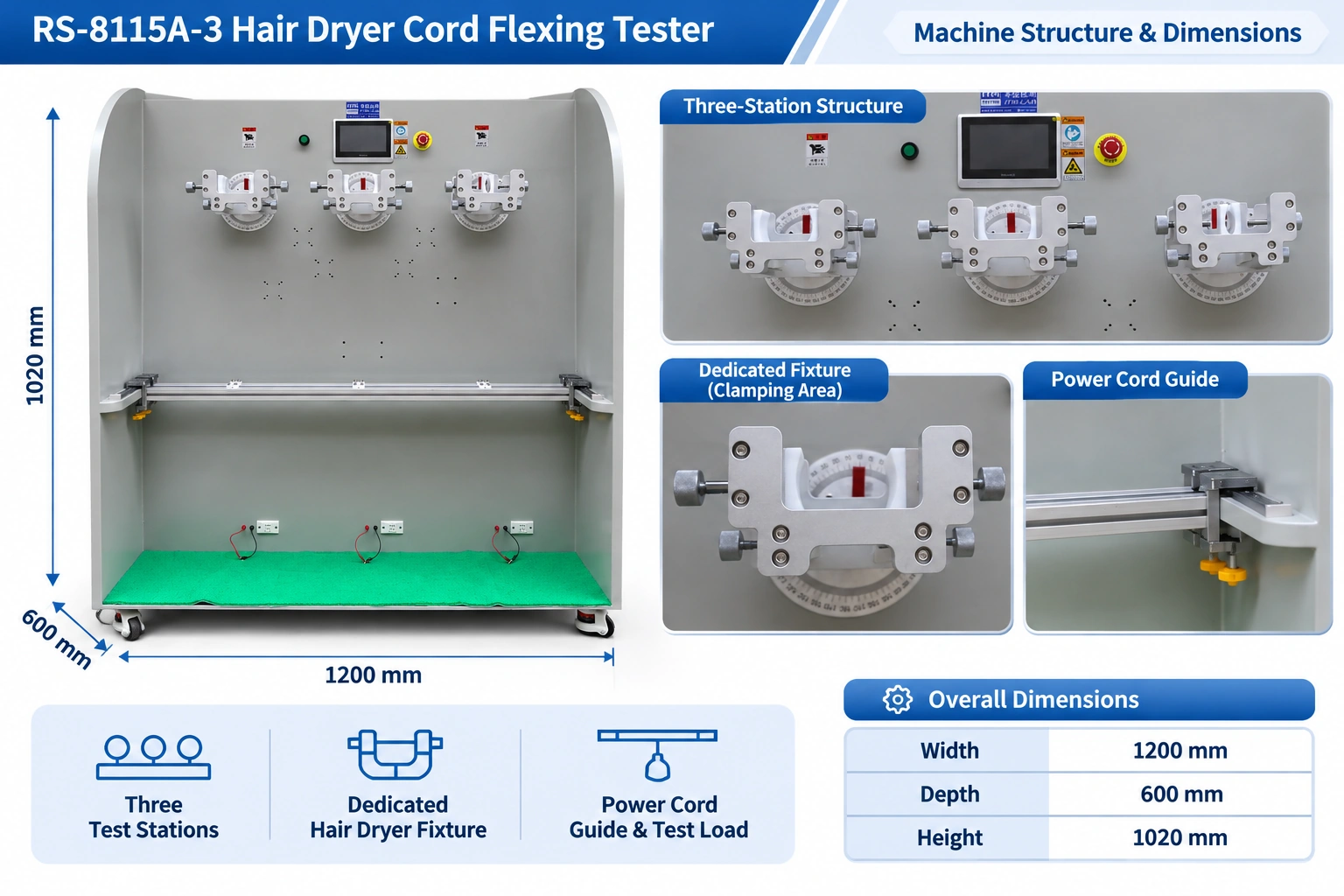
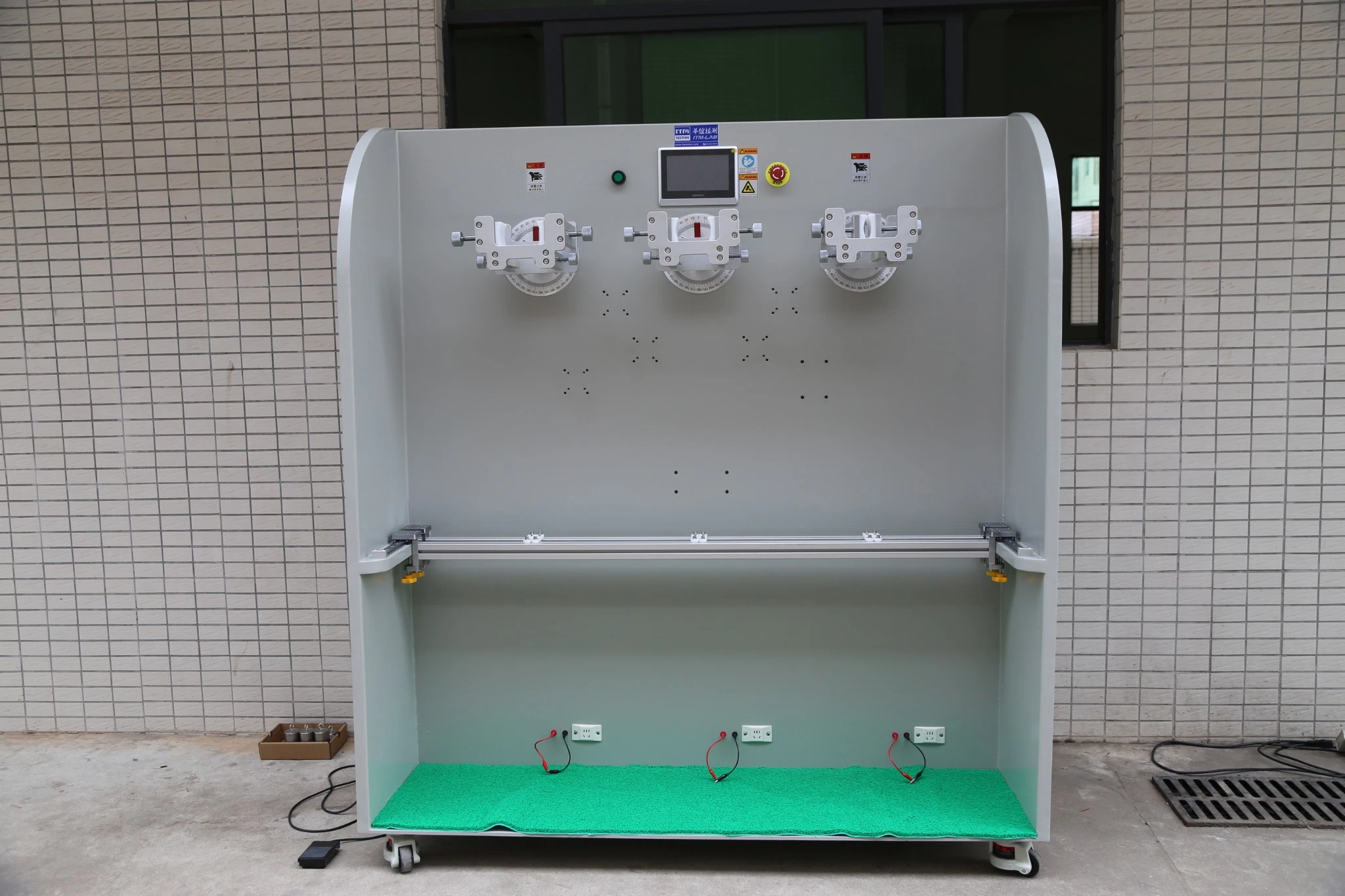
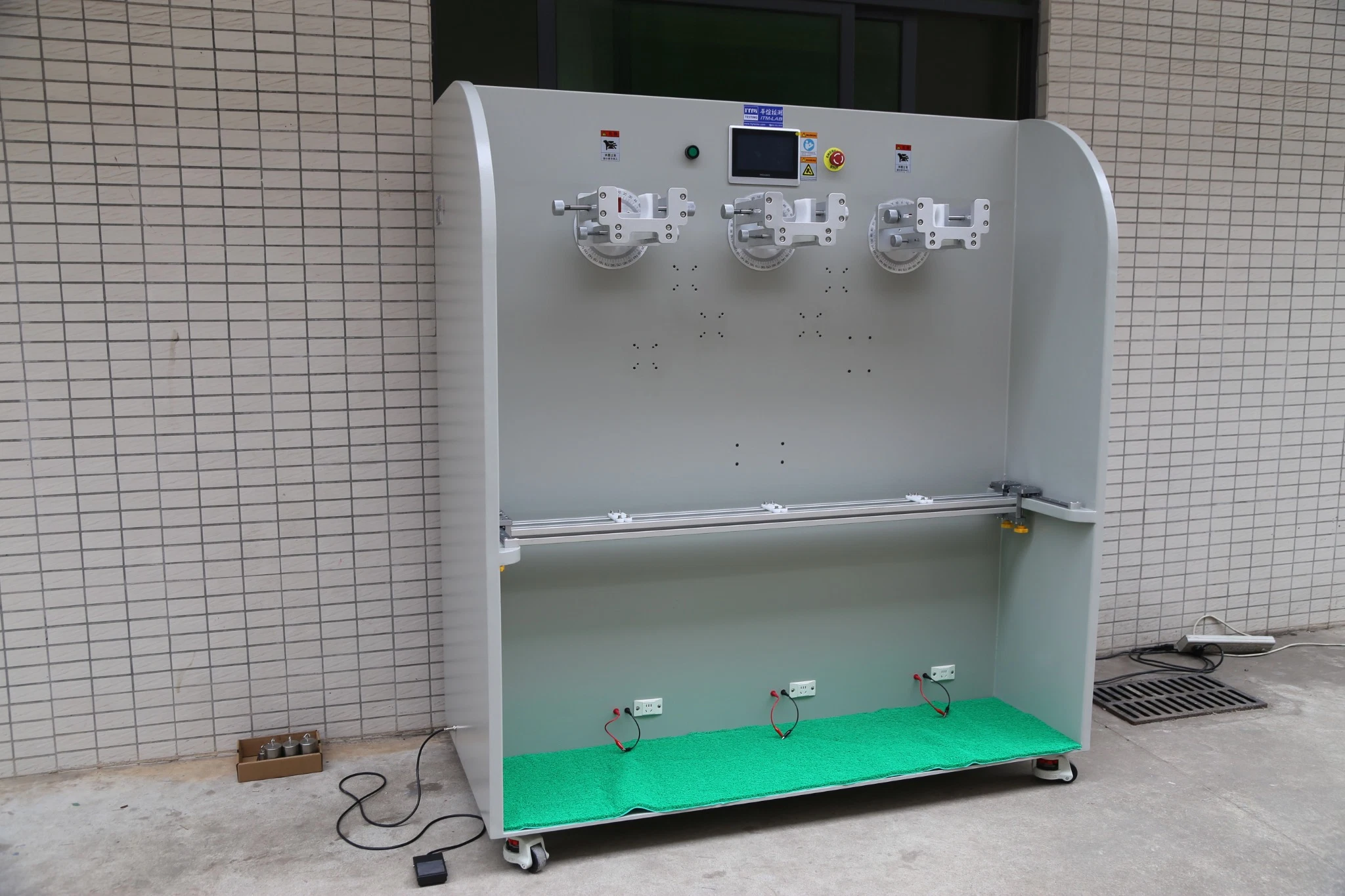
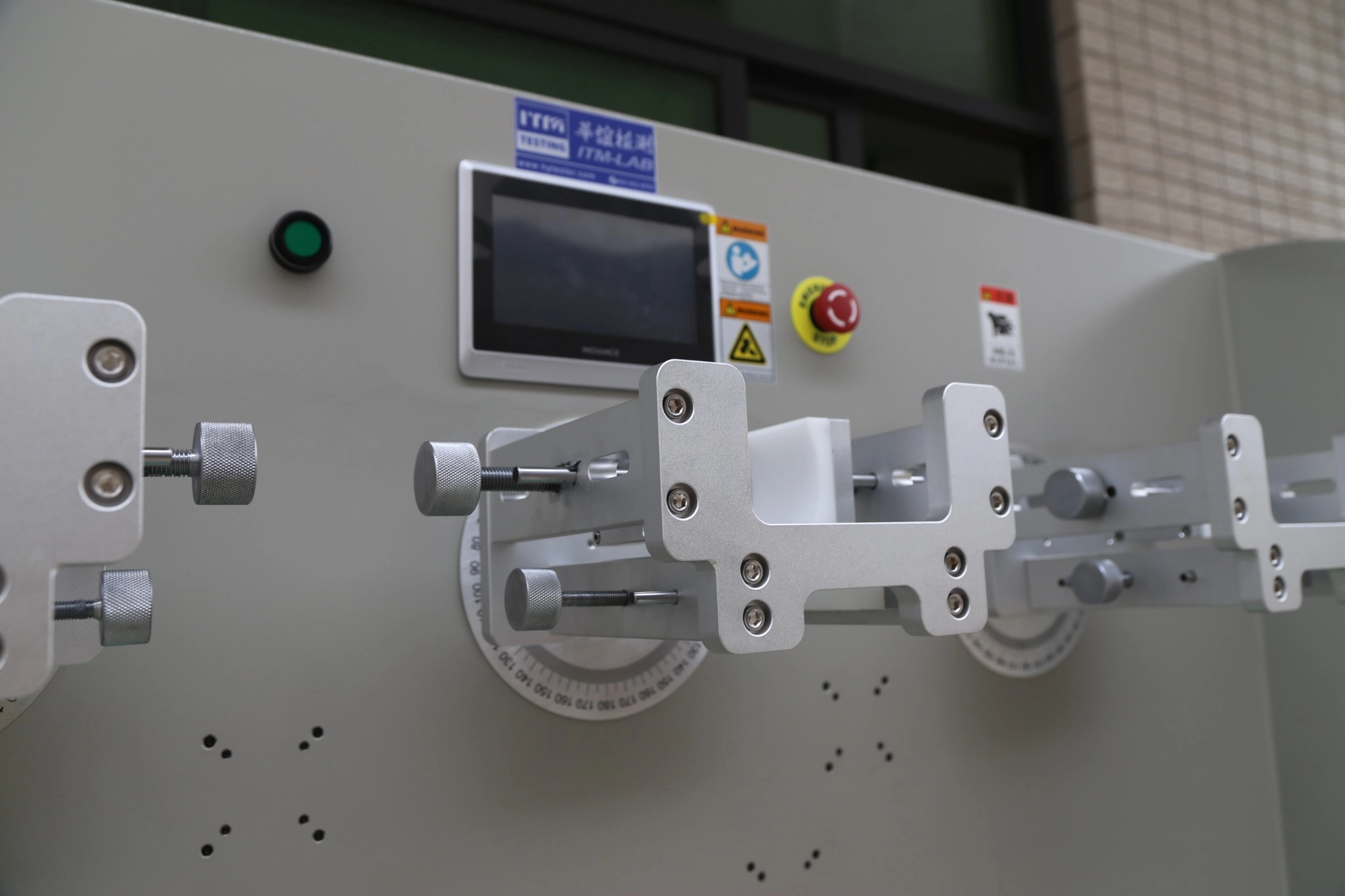
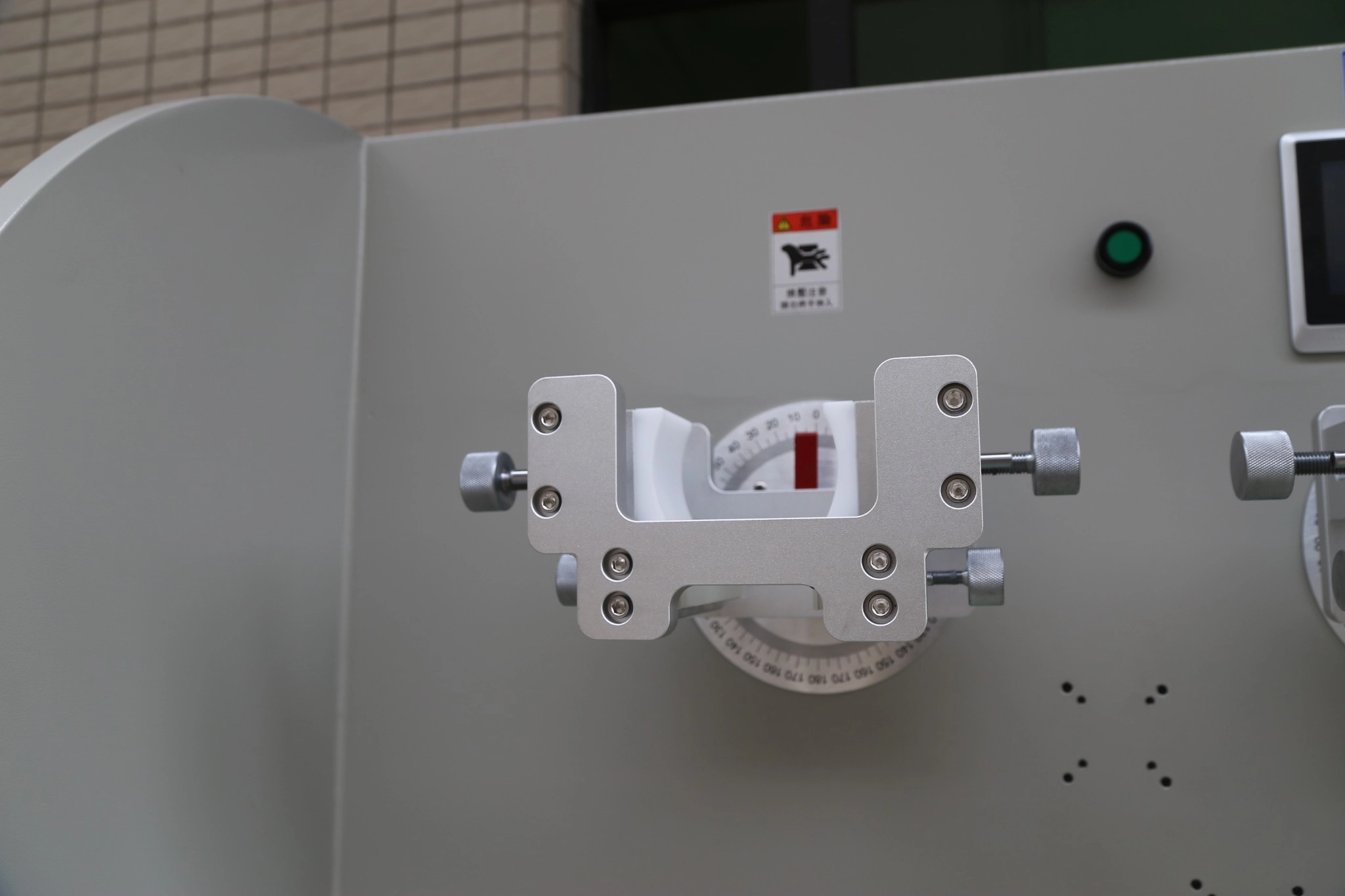
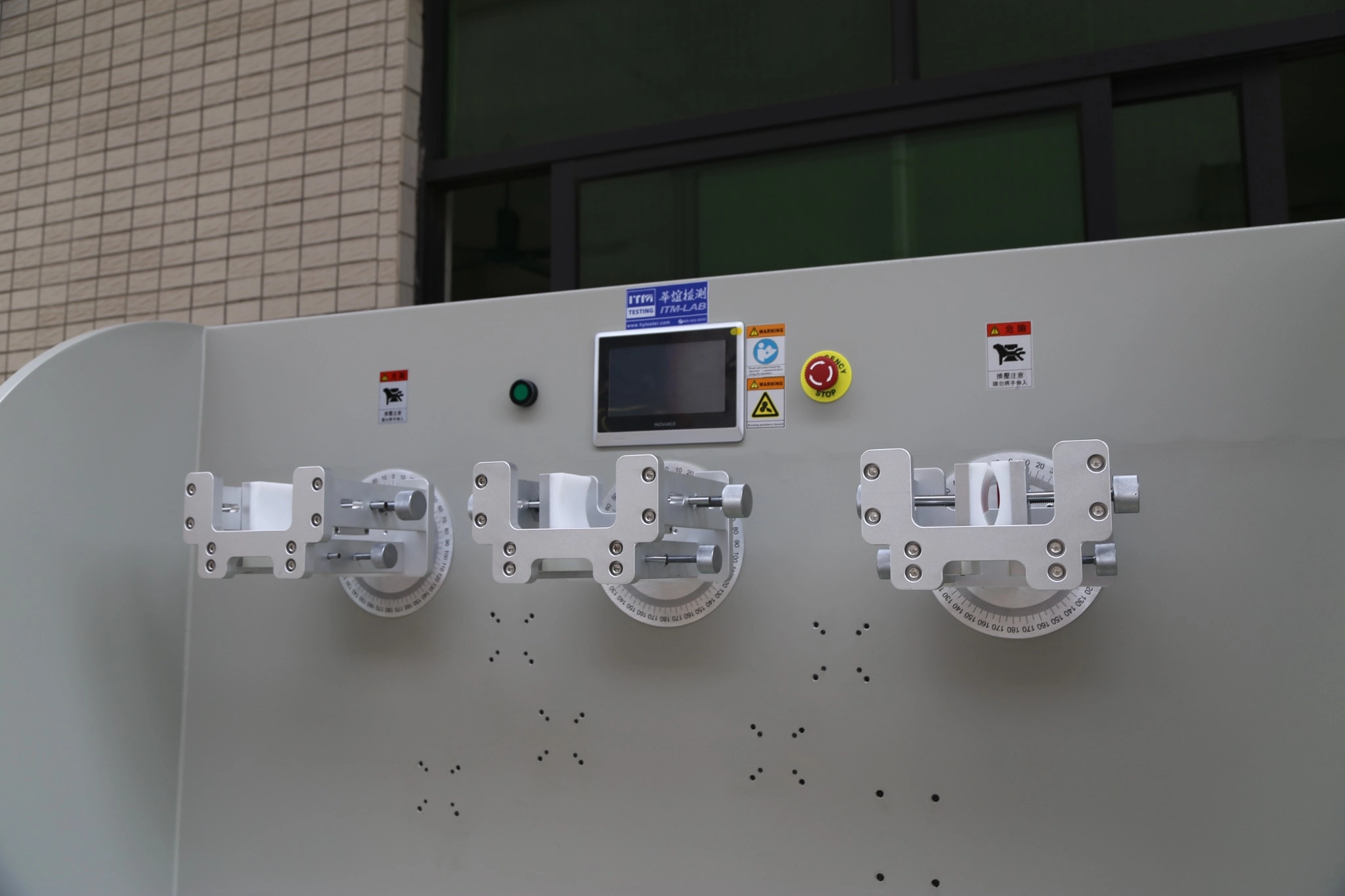
The ITM-LAB RS-8115A-3 Hair Dryer Cord Flexing Tester is designed to evaluate the bending durability of hair dryer power cords and cable entry areas. Featuring three synchronized test stations, adjustable bending angles from 0 to ±150°, and test speeds of 5–60 cycles/min, the system combines servo-driven motion with dedicated protective fixtures for controlled laboratory durability testing.
Share:
3-Station Servo-Driven Power Cord Bending Test System
Designed for controlled durability testing of hair dryer power cords and cable entry areas, the RS-8115A-3 combines synchronized bending motion with application-specific specimen fixtures for repeatable laboratory evaluation.
Evaluate Power Cord Durability at the Hair Dryer Entry Point
The cable entry area of a hair dryer is repeatedly subjected to bending during handling and everyday use. Over time, this mechanical stress can contribute to conductor fatigue, insulation damage and deterioration of the cord's strain-relief system.
The ITM-LAB RS-8115A-3 addresses this testing requirement by securing the hair dryer body and handle in dedicated protective fixtures while applying a defined hanging load to the power cord.
As the fixtures rotate through a programmed angular range, the cord undergoes repeated bending at the entry point. This allows engineers to assess durability under controlled test conditions, compare design alternatives and investigate potential failure mechanisms.
Designed for application-specific testing:
Specimen-specific clamping: Protective contact surfaces help secure hair dryer housings and handles without unnecessary surface damage.
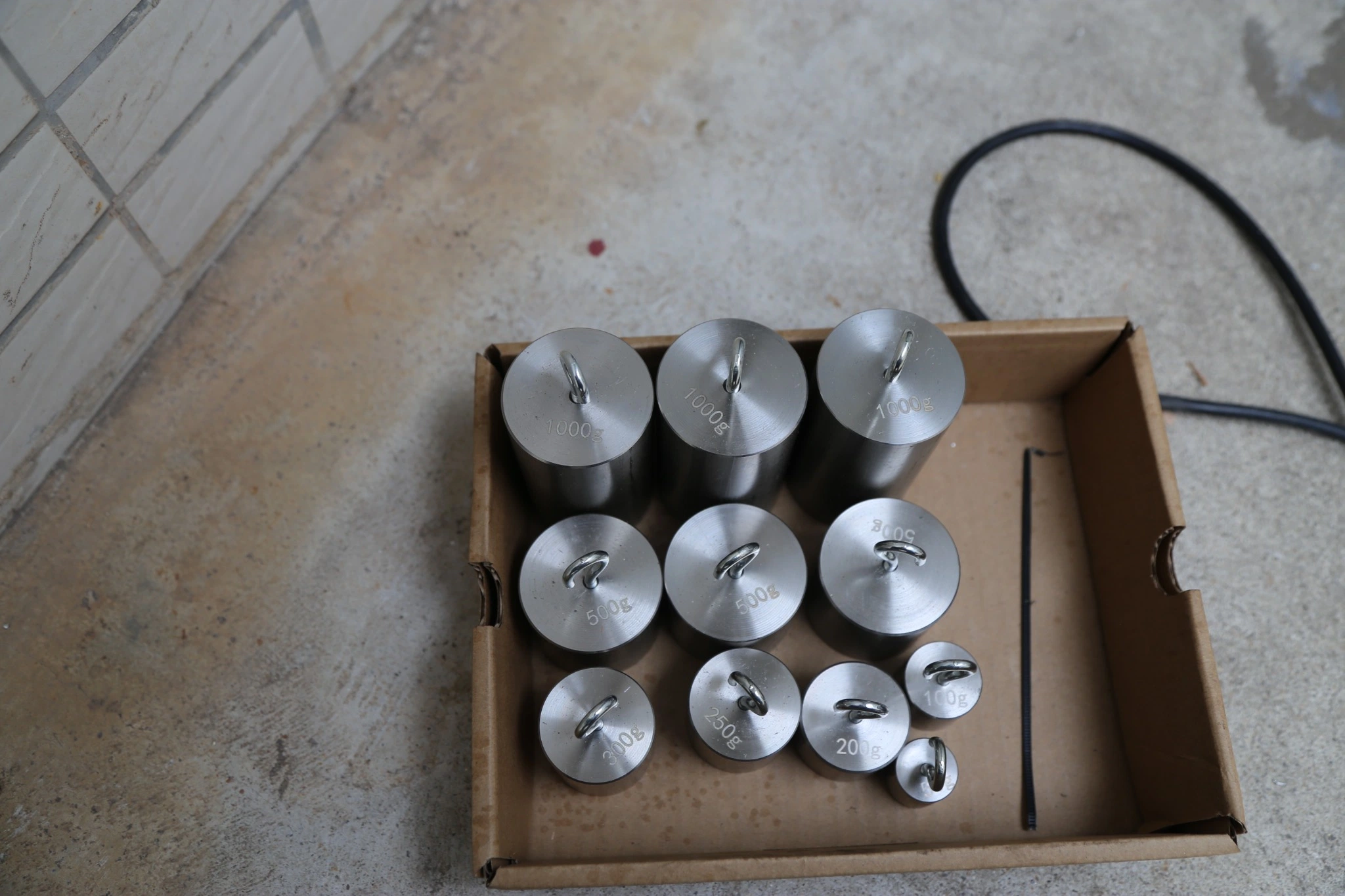
Controlled cable loading: Suspended weights and an adjustable guide structure support consistent test positioning.
Repeatable test conditions: Programmable bending angles and speeds support comparative durability evaluation.
Key Design Features
Three Synchronized Test Stations
Test up to three hair dryer specimens under synchronized bending movement, supporting comparative testing and laboratory sample evaluation.
Servo-Driven Angular Control
Adjustable bending angles up to ±150°, with ±0.2° angle accuracy and a test speed range of 5–60 cycles/min.
Dedicated POM-Protected Fixtures
Specimen fixtures incorporate engineering-plastic contact components to help reduce cosmetic damage to the hair dryer housing and handle during clamping.
Adjustable Cable Positioning
A cable guide helps limit unwanted forward and backward movement of the suspended cable and test weight during bending.
Working Principle
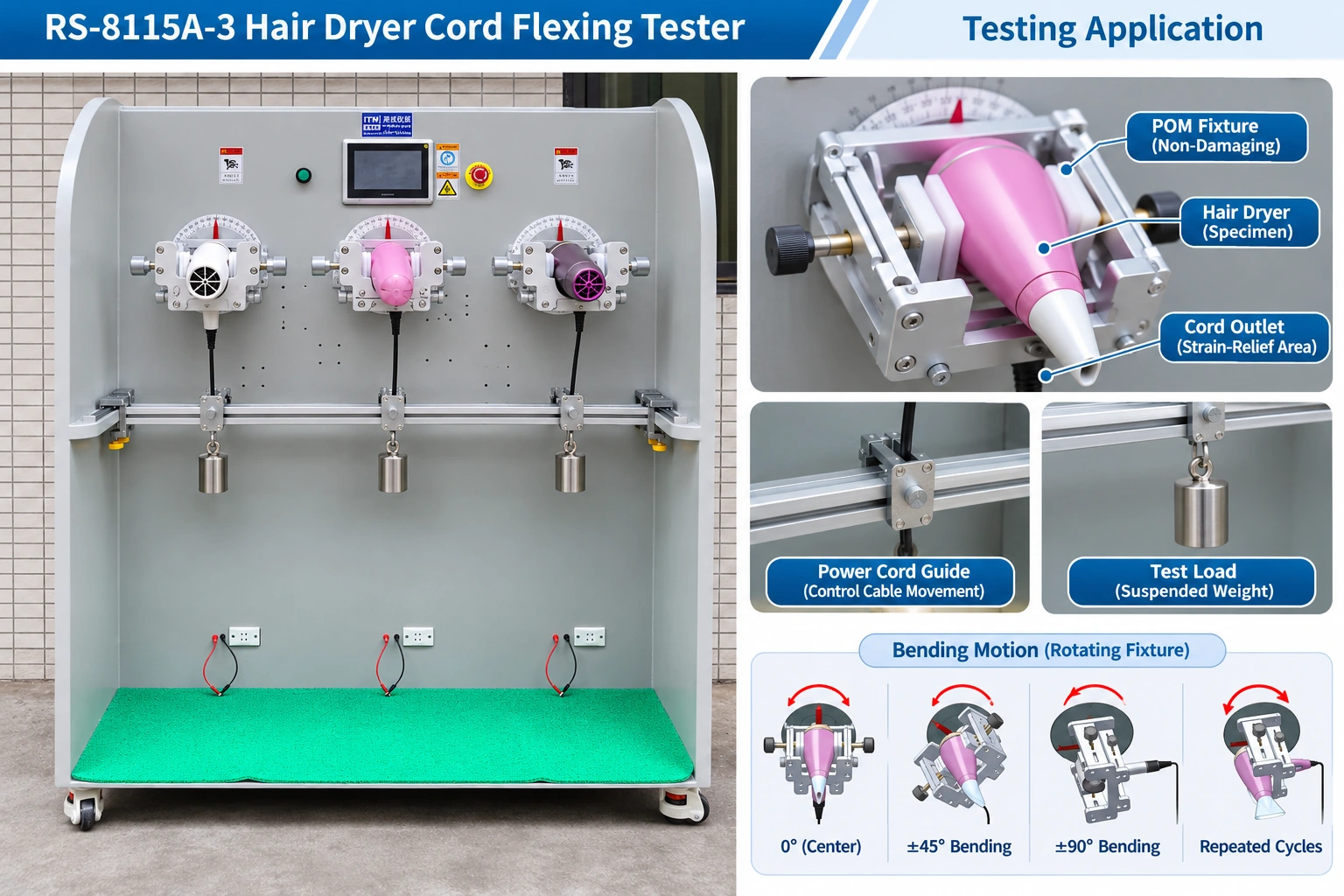
The RS-8115A-3 performs repeated power cord bending by rotating the secured hair dryer while its power cord hangs under an applied load.
The specimen is held in a dedicated fixture designed for the hair dryer body and handle. A suspended test weight applies tension to the power cord, while an adjustable cable guide helps maintain the intended cable position during movement.
The servo-driven fixture rotates between programmed positive and negative angular positions, repeatedly bending the power cord near the appliance connection.
Bending Movement Sequence
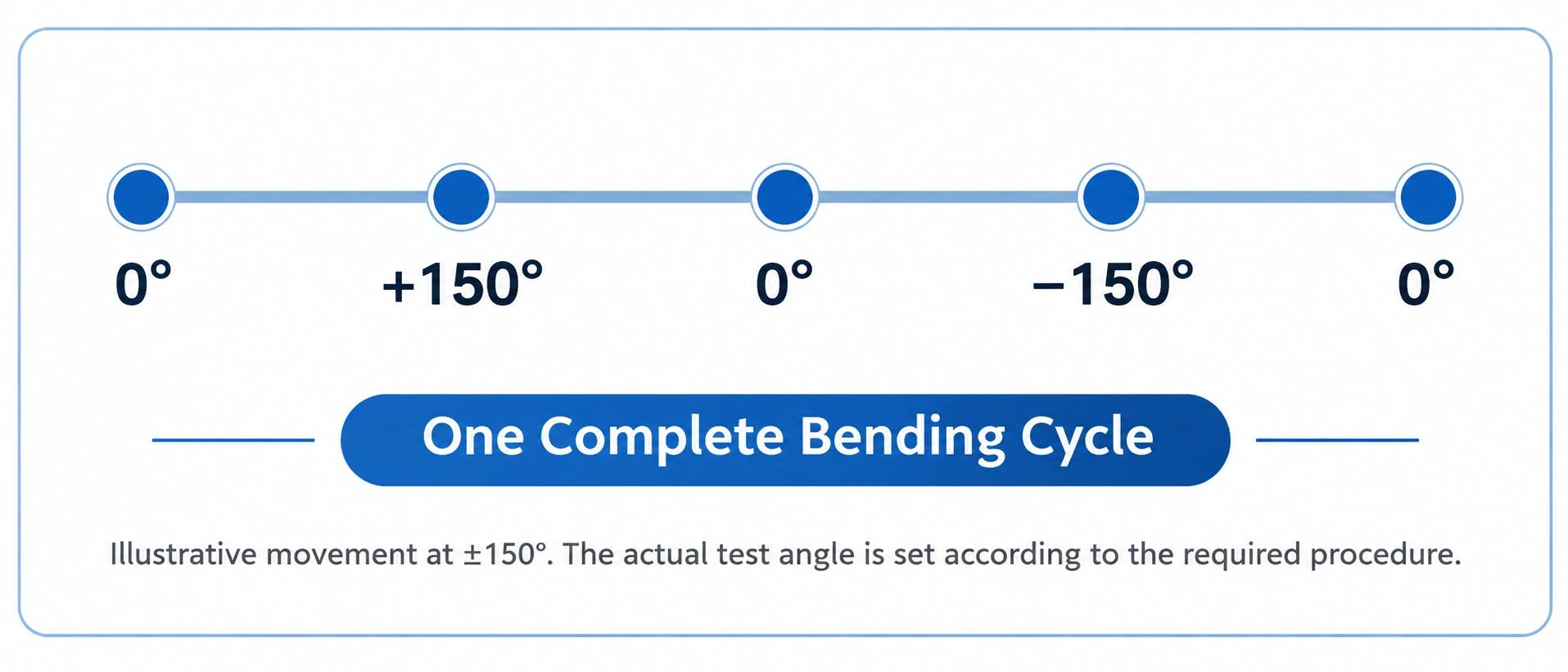
Illustrative movement at ±150°. The actual test angle is set according to the required procedure.
One complete bending cycle consists of movement from the initial position to the positive angle, return to zero, movement to the negative angle and return to the initial position.
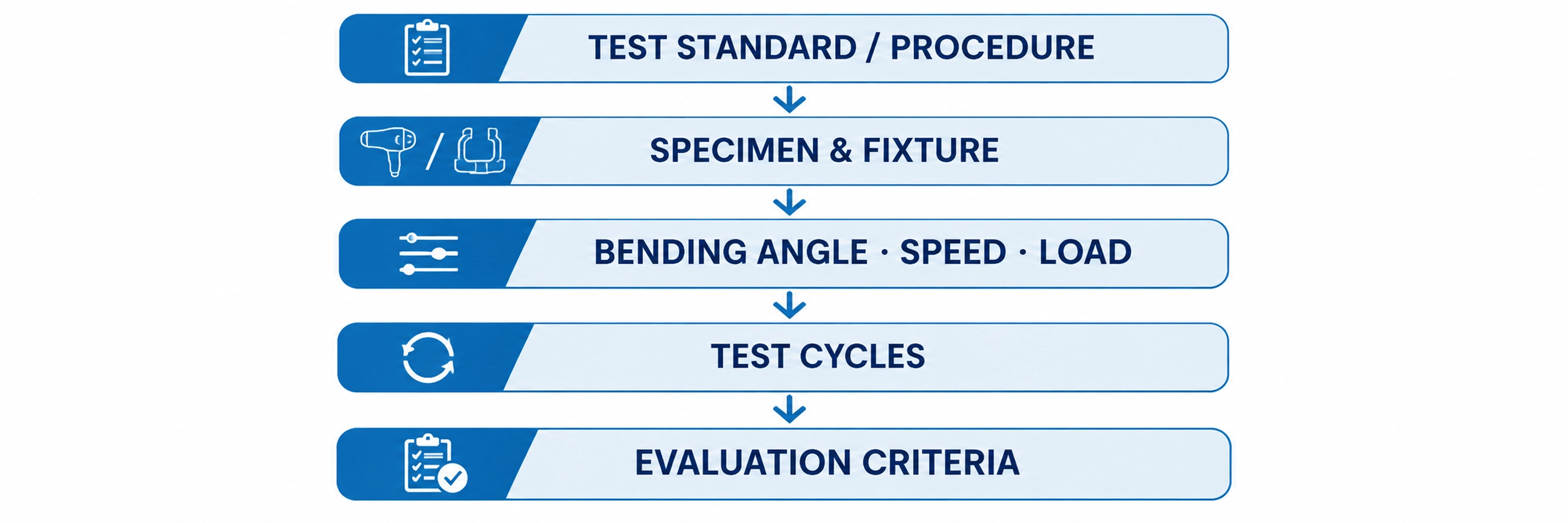
Test Procedure
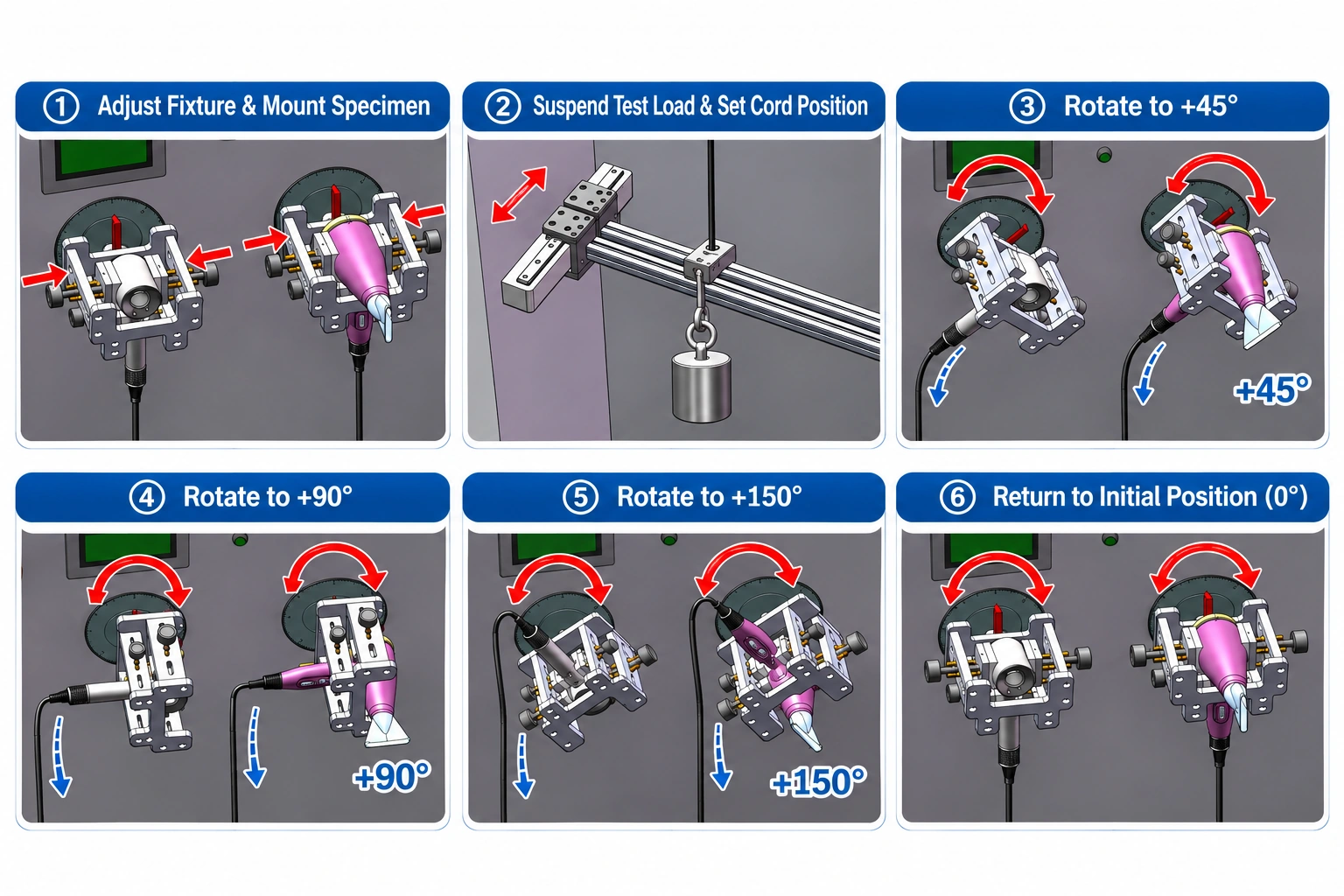
Specimen Mounting
Secure the hair dryer body and handle in the dedicated fixture. Adjust the clamping position to achieve stable and properly aligned mounting.
Load and Cable Guide Setup
Attach the required test weight to the power cord and adjust the cable guide to help control unwanted movement of the suspended cable and load.
Test Parameter Setting
Set the required bending angle and movement speed through the touchscreen control system according to the test procedure.
Repeated Bending and Evaluation
Run the programmed bending movement and evaluate the power cord and strain-relief area according to the specified test duration, cycle requirements and acceptance criteria.
Technical Specifications
The RS-8115A-3 combines a three-station mechanical test structure with servo-driven rotation, touchscreen operation and dedicated specimen fixtures.
Parameter
Specification
Model
RS-8115A-3
Product Type
Hair Dryer Cord Flexing Tester
Test Stations
3 synchronized stations
Bending Angle
0 to ±150°, adjustable
Angle Accuracy
±0.2°
Test Speed
5–60 cycles/min
Cable Test Height
1000 mm
Control System
Mitsubishi PLC with OMRON touchscreen
Drive System
Inovance servo motor
Specimen Fixture
Dedicated fixture with POM engineering-plastic contact components
Cable Positioning
Adjustable guide bar
Machine Dimensions
W1600 × D750 × H1800 mm
Machine Weight
Approx. 150 kg
Power Supply
Single-phase AC 220 V, 5 A
Note: Specifications are based on the RS-8115A-3 V2.0 technical documentation. Test weights, fixture geometry and additional monitoring functions should be confirmed for the required project configuration.
Fixture Design and Specimen Compatibility
The dedicated fixtures secure the hair dryer body and handle during repeated angular movement.
POM engineering-plastic contact components help protect the specimen surface during clamping. The fixture design can be reviewed according to the hair dryer housing dimensions, handle geometry and cable entry position.
The cable guide and suspended loading arrangement should be configured according to the required test procedure.
Relevant Standards & Test Requirements
Hair dryer power cord durability evaluation may involve applicable household appliance safety standards, customer-specific test methods or internal reliability requirements.
The RS-8115A-3 provides adjustable angular movement and a suspended-load testing arrangement. Its suitability for a specific test method depends on the required specimen mounting, bending motion, applied load, cycle count and evaluation criteria.
Reference
Technical Relevance
IEC 60335-1
General safety requirements for household and similar electrical appliances, including relevant supply-cord provisions
IEC 60335-2-23
Particular safety requirements for appliances for skin or hair care
Customer-Specific Test Procedures
Defined bending angles, applied loads, movement speeds, test cycles and acceptance criteria
Test Method Selection Considerations
Before selecting the test configuration, confirm the following requirements:
Specimen Geometry:Hair dryer dimensions, handle shape and cable entry position.
Bending Movement:Required angular range and cycle definition.
Test Load:Specified suspended weight and loading arrangement.
Test Duration:Movement speed, cycle count and operating conditions.
Acceptance Criteria:Required inspection, electrical evaluation or other failure criteria.
Testing Applications
The RS-8115A-3 is developed for hair dryer power cord durability evaluation, supporting product development, cable design assessment and manufacturing quality control.
Evaluate the cable entry and strain-relief area under repeated bending movement to assess its mechanical durability and identify potential areas of weakness.
02 Power Cord Bending Fatigue Evaluation
Compare power cord designs and materials under defined bending conditions to support cable selection and durability assessment.
03 Production Quality & Reliability Testing
Conduct repeatable sample testing during product development or manufacturing quality evaluation according to internal or customer-defined test procedures.
Request Your RS-8115A-3 Testing Configuration
Looking for a hair dryer power cord bending test solution?
Share your specimen dimensions, cord details and test requirements with ITM-LAB. Our team can review fixture compatibility and equipment configuration for your application.
What is a hair dryer cord flexing tester used for?
A hair dryer cord flexing tester is used to evaluate the mechanical durability of a hair dryer's power cord and cable entry area under repeated bending movement. It supports product development, reliability evaluation and manufacturing quality control.
How is one bending cycle defined on the RS-8115A-3?
One complete bending cycle consists of movement from the initial position to the programmed positive angle, return to zero, movement to the negative angle and return to the initial position.
What bending angles and test speeds are available?
The RS-8115A-3 provides an adjustable bending angle of 0 to ±150°, with an angle accuracy of ±0.2°. The test speed can be adjusted from 5 to 60 cycles per minute.
How are the specimen fixtures and test weights selected?
The fixture configuration depends on the hair dryer body dimensions, handle geometry and cable entry position. The suspended test load should be selected according to the required test procedure. Fixture and weight configurations should be confirmed before ordering.
Can the RS-8115A-3 perform IEC 60335-2-23 testing?
IEC 60335-2-23 provides particular safety requirements for appliances for skin or hair care. Whether the RS-8115A-3 can perform a specific test clause depends on the required apparatus, motion, applied load and test conditions. The applicable standard edition and clause should be reviewed before confirming suitability.
What information is required for a customized quotation?
Please provide the hair dryer photo or drawing, housing and handle dimensions, power cord diameter, required bending angle, test speed, applied load, cycle count and applicable test standard or customer procedure. ITM-LAB can then review fixture compatibility and the proposed equipment configuration.