
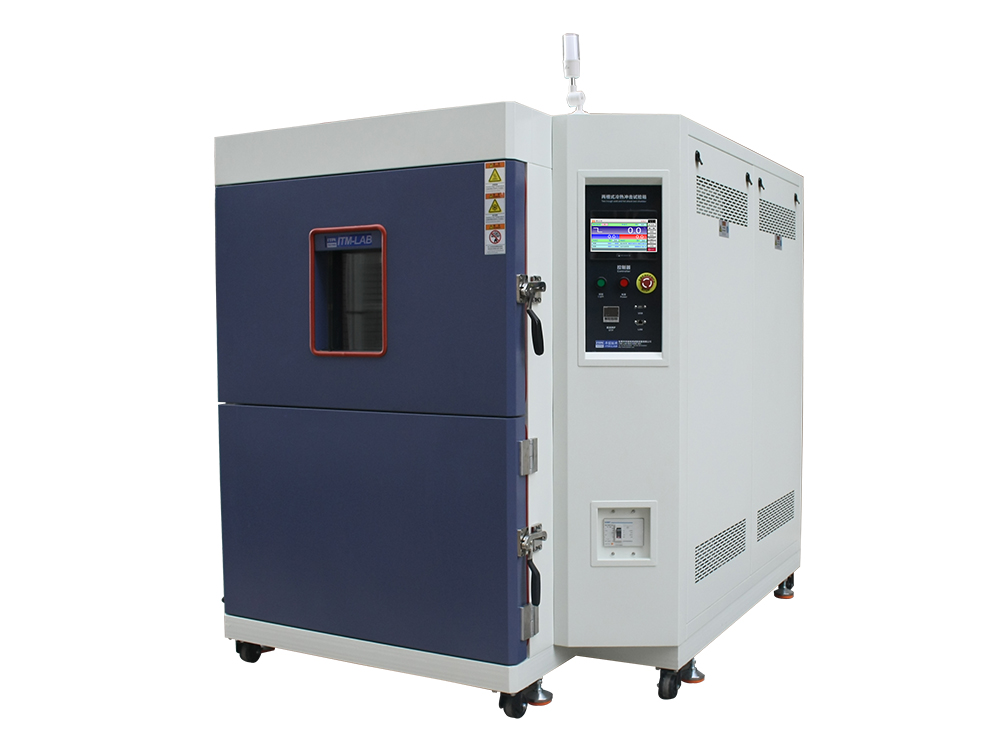
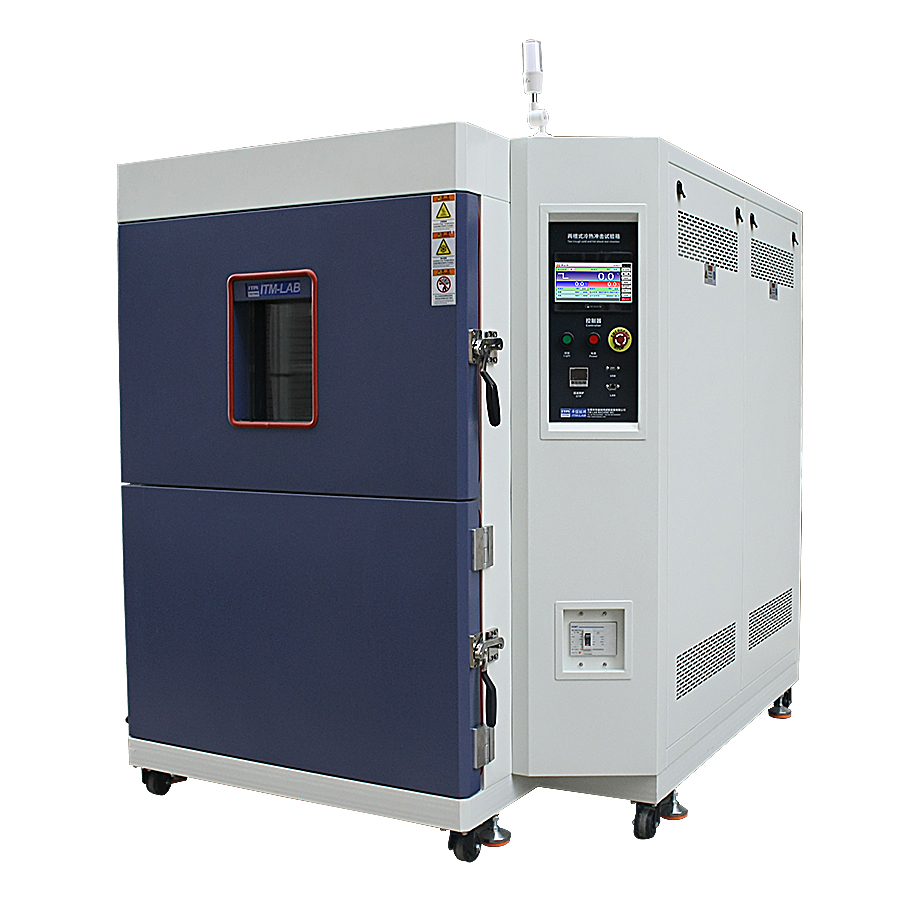
At present, the hot and cold shock chamber equipment on the market can be divided into two compartments and three compartments, and the three-compartment equipment has a wide range of needs in many industries, ITM-LAB will introduce the products of the three-compartment cold and hot shock box to you. Features and user.
Product use: The function of the three-chamber cold and hot shock chamber is to provide high temperature, normal temperature, low temperature, and other test environments, and to realize the harsh environment of high and low-temperature shock, meet the requirements of relevant standards for the test chamber, and conduct cold resistance tests on products and parts, various adaptability tests under the conditions of temperature and humidity changes or drastic changes to test the various properties of the product and discover the hidden dangers of the product.
Product features: The whole chamber of the thermal shock box is mainly divided into three parts: high temperature area, low temperature area and test area. The equipment adopts a unique thermal insulation structure and heat storage and cold storage effect. During the test process, the object to be tested is completely still, and cold and hot air is used. Road switching method, the air valve in the high-tempearature area and the low-temperature area is automatically opened during the impact test, so as to achieve the impact test effect of high temperature and low temperature!
Applicable fields: The hot and cold shock chamber is suitable for aplication in many industries. At present, it is mostly used in metal, plastic, communication components, auto parts, chemical materials, electronic and electrical components, automation components, and other industries, as well as aerospace, military industry, Various high-tech industries such as electronic chip IC, semiconductor ceramics and polymer materials, test the repeated resistance of their materials to high and low temperatures and the chemical changes or physical damage of the products during thermal expansion and contraction, so as to confirm and better improve products the quality of.
The above is ITM-LAB's general introduction to the three-compartment cold and hot shock box products, if you also have cold and hot shock chamber equipment requirements, please contact us for consultation. We are a large-scale manufacturer specializing in testing and testing equipment for many years, and can also provide various testing equipment such as constant temperature and humidity test chambers, high-temperature aging chambers, etc!
