
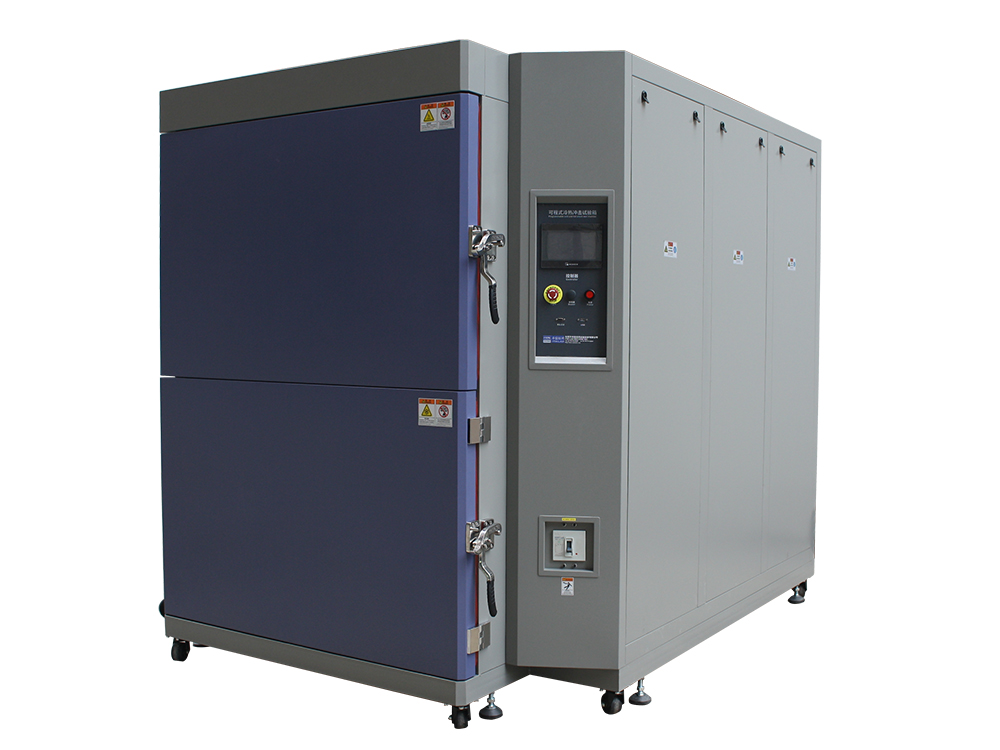

During the use of the hot and cold shock chamber, the cold row in the cold tank of the equipment will be frosted due to the exchange of cold and heat, and the frost will affect the subsequent use of the equipment, so it is necessary to defrost regularly, then the defrosting frequency of the hot and cold shock chamber how should it be set up?
In order to ensure the normal use of the hot and cold shock chamber, the inside of the equipment must have a defrosting function, and timely defrosting can ensure the long-term use of the equipment, so the problem of defrosting settings is also a concem of many customers, but at present most equipment the defrosting frequency is set before leaving the factory, of course, the frequency can also be adjusted according to your own needs!
There are two defrosting frequency setting for the hot and cold shock chamber, one is to defrost according to time, that is, the equipment will automatically defrost affer a certain period. Defrosting was performed during the test. The other is to defrost according to the number of cycles, that is , the device will automatically defrost after a certain number of times of use. This setting is more recommended!
If you don't know much about defrosting, it is recommended to use the factory default setting, becausse this is the result obtained after a lot of testing, which can be suitable for the detection situation of most industries. if the equipment is seriously frosted, it is necessary to adjust the frequency in time. The setting range is 1~9999 hours or can be set within the number of cycles. The frequency of the thermal shock test chamber.
All the thermal shock test chambers of ITM-LAB have been set the defrosting frequency before leaving the factory. The user does not need to modify it according to the recommended value, if the customer has his own defrosting frequency requirements, he can modify the number of cycles or time in the defrosting setting of the equipment control system. Regarding the range of the settable value: it can be set within 1~9999 hours according should be judged according to its own test temperature and number of times!
Regarding the defrosting frequency of the hot and cold shock box, ITM-LAB will assist customers to make reasonable settings, and will provide perfect after-sales service in terms of use training, maintenance and warranty, etc. Customers who need testing and testing equipment are welcome to contact us!
