
Compression Testing Machine: Complete Guide & ASTM Standards 2025
Compression testing quantifies material performance under compressive loads, providing essential data for structural design, quality control, and materials development. This guide covers compression testing machine specifications, international standards, and selection criteria based on 27 years of manufacturing experience in materials testing equipment.
---
## What is a Compression Testing Machine?
A compression testing machine applies controlled compressive force to a material specimen to measure mechanical properties including compressive strength, yield point, elastic modulus, and deformation characteristics. The equipment consists of a load frame, compression platens, load cell, displacement measurement system, and control unit.
**Core Function:**
The machine positions a specimen between two parallel platens, applies increasing compressive force at controlled strain rate, and records load-displacement data until specimen failure or specified deformation.
**Measured Parameters:**
- Compressive Strength (maximum stress at failure)
- Yield Strength (0.2% offset method per ASTM E9)
- Elastic Modulus in Compression (slope of stress-strain curve)
- Deformation at Failure (percentage or absolute displacement)
- Energy Absorption Capacity (area under stress-strain curve)
---
## Key Components and Working Principle
### Load Frame Structure
Compression testing requires rigid frame construction to prevent deflection under high loads. Common configurations:
- **C-Frame Design:** 5-50 kN capacity, suitable for plastics and packaging materials. Provides three-sided access for specimen placement.
- **Dual Column Frame:** 50-300 kN capacity, standard for metals, composites, and structural materials. Superior alignment and rigidity.
- **Floor-Standing Hydraulic Frame:** Above 300 kN, essential for concrete testing (ASTM C39 requires 2000 kN+ for 150mm cylinders).
**Frame Stiffness Requirements:**
Per ASTM E4, frame deflection must not exceed 1% of specimen deformation to ensure accurate modulus measurement. High-capacity concrete testing frames typically provide stiffness >100 kN/mm.
### Compression Platens
**Material Specifications:**
Hardened steel (HRC 58-62) per ASTM E9 Section 6.1. Surface flatness tolerance: 0.025mm over entire contact area per ASTM C39.
**Platen Designs:**
- **Fixed Platens:** Rigid mounting, requires precise specimen preparation (parallel surfaces within 0.05mm)
- **Spherically Seated Platens:** Self-aligning per ASTM C39 Section 5.4.2, compensates for specimen surface irregularities (±0.5° tilt capability)
- **Auxiliary Platens:** Interchangeable sizes for different specimen dimensions
**Platen Size Selection:**
Platen diameter should exceed specimen diameter by minimum 10mm per ASTM D695 to prevent edge failures.
### Load Cell
Measures applied force with accuracy class 1.0 or better per ISO 7500-1. Compression testing typically requires lower accuracy than tensile testing due to higher force magnitudes.
**Capacity Selection:**
Load cell capacity should be 110-150% of maximum expected test force. Example: ASTM C39 concrete cylinders (150mm diameter) with 50 MPa strength require 880 kN capacity; select 1000 kN load cell.
### Displacement Measurement
**Crosshead Displacement:**
Standard method using encoder on ball screw or hydraulic actuator. Resolution: 0.01mm minimum per ISO 9513 Class 1.
**Compressometer (Strain Measurement Device):**
Contact extensometer measuring actual specimen deformation, excluding machine compliance and platen deflection. Required for accurate modulus calculation per ASTM D695 and ISO 604.
**LVDTs (Linear Variable Differential Transformers):**
Non-contact displacement sensors with ±0.001mm accuracy for research applications requiring precise deformation data.
---
## Types of Compression Testing Machines
### By Load Capacity Classification
| Capacity Range | Typical Applications | Specimen Examples | Frame Type |
|---|---|---|---|
| 5-50 kN | Plastics, foams, packaging | ASTM D695 Type I (12.7×12.7×25.4mm) | C-frame |
| 50-300 kN | Metals, composites, small concrete | Cube specimens (50×50×50mm) | Dual column |
| 300-1000 kN | Standard concrete cylinders | 100×200mm cylinders (ASTM C39) | Floor-standing |
| 1000-3000 kN | Large concrete specimens | 150×300mm cylinders | Hydraulic |
| Above 3000 kN | Concrete cubes, structural components | 150×150×150mm cubes, bridge bearings | Heavy-duty hydraulic |
*Source: Capacity classifications based on ASTM C39, ASTM D695, and ISO 7500-1 specimen requirements*
### By Drive System
**Electromechanical Compression Testers:**
- Capacity: Up to 600 kN typical
- Speed range: 0.01-500 mm/min
- Applications: Plastics (ASTM D695), metals (ASTM E9), composites
- Advantages: Precise speed control, programmable test protocols, lower maintenance
**Hydraulic Compression Testers:**
- Capacity: 300 kN to 5000 kN (concrete testing requires 2000-3000 kN)
- Speed range: 0.05-50 mm/min
- Applications: Concrete (ASTM C39), rock core, large structural components
- Advantages: High force capability, lower cost per kN capacity, robust construction
### By Application Specialization
**Concrete Compression Testing Machines:**
Purpose-built for ASTM C39/C31 compliance. Features:
- Spherically seated upper platen (ASTM C39 Section 5.4.2)
- Digital load rate control (0.25±0.05 MPa/s per ASTM C39)
- Automatic load rate adjustment based on specimen geometry
- Touch-screen interface with cylinder/cube dimension database
**Plastics Compression Testers:**
Designed for ASTM D695/ISO 604 compliance. Features:
- Compressometer with 50mm gage length
- Low-force load cells (5-50 kN) for accurate modulus measurement
- Temperature-controlled enclosures (23±2°C per ASTM D695 Section 6.1)
- Support jigs for slenderness ratio L/d = 11:1 to prevent buckling
---
## Technical Specifications Table
| Parameter | Specification Range | Verification Standard |
|---|---|---|
| Load Accuracy | ±1.0% of reading (Class 1) | ISO 7500-1 |
| Load Resolution | 0.1% of load cell capacity | ASTM E4 |
| Crosshead Speed Range | 0.01-500 mm/min (electromechanical) | Application-dependent |
| Speed Accuracy | ±1% of set speed | ISO 7500-1 |
| Platen Flatness | 0.025 mm maximum deviation | ASTM C39, ASTM E9 |
| Platen Parallelism | 0.05 mm over platen diameter | ASTM C39 Section 5.2 |
| Displacement Resolution | 0.01 mm minimum | ISO 9513 Class 1 |
| Maximum Test Space | 200-500 mm (varies by capacity) | Frame design |
| Return Speed | Up to 300 mm/min (rapid positioning) | Equipment capability |
*Note: Specifications represent industry-standard ranges per ASTM and ISO requirements. Actual parameters vary by manufacturer and model.*
---
## International Testing Standards
### Concrete and Construction Materials
**ASTM C39/C39M:**
Standard Test Method for Compressive Strength of Cylindrical Concrete Specimens
**Key Requirements:**
- Specimen dimensions: 150×300mm or 100×200mm cylinders
- Capping requirements: Sulfur mortar or unbonded caps per ASTM C617
- Loading rate: 0.25±0.05 MPa/s (35±7 psi/s)
- Spherically seated upper platen required
- Specimen moisture condition: test in moisture condition representative of service
**ASTM C109/C109M:**
Standard Test Method for Compressive Strength of Hydraulic Cement Mortars (using 50mm cube specimens)
**ISO 1920-4:**
Testing of Concrete - Part 4: Strength of hardened concrete. International equivalent for concrete compression testing.
### Plastic Materials
**ASTM D695:**
Standard Test Method for Compressive Properties of Rigid Plastics
**Key Requirements:**
- Specimen Type I: 12.7×12.7×25.4mm (slenderness ratio 2:1)
- Test speed: 1.3 mm/min (strain rate 0.01 s⁻¹) for modulus determination
- Compressometer required for strain measurement (crosshead displacement not acceptable)
- Support jig required if L/d ratio >11:1 to prevent buckling
- Conditioning: 40 hours at 23±2°C, 50±5% RH per ASTM D618
**ISO 604:**
Plastics - Determination of compressive properties. Specifies strain rates of 1±0.5 mm/min for standard tests.
### Metallic Materials
**ASTM E9:**
Standard Test Methods of Compression Testing of Metallic Materials at Room Temperature
**Key Requirements:**
- Specimen length-to-diameter ratio: 1.5:1 to 10:1 (depends on material ductility)
- Loading rate: stress rate <1500 psi/s before yield, strain rate 0.005 s⁻¹ after yield
- Platens: hardened steel, flat within 0.025mm
- Lubrication required for ductile materials to reduce barreling
**ISO 7438:**
Metallic materials - Bend test. Includes compression testing provisions.
### Composite Materials
**ASTM D3410:**
Standard Test Method for Compressive Properties of Polymer Matrix Composite Materials with Unsupported Gage Section by Shear Loading
**ASTM D6641:**
Standard Test Method for Compressive Properties of Polymer Matrix Composite Materials Using a Combined Loading Compression (CLC) Test Fixture
*Standards Source: ASTM International (www.astm.org) and ISO (www.iso.org) - publicly available standard references*
---
## Applications and Industries
### Concrete and Construction Quality Control
**Daily Applications:**
- Ready-mix concrete strength verification per ASTM C39
- Precast concrete element quality control
- Concrete core testing from existing structures (ASTM C42)
- Cement mortar cube testing (ASTM C109)
**Acceptance Criteria:**
Concrete strength must meet specified design strength (f'c) typically at 28 days. Example: 30 MPa design strength requires average compressive strength ≥33.5 MPa per ACI 318.
### Plastics Manufacturing
**Material Characterization:**
- Rigid plastics compressive strength per ASTM D695 (polycarbonate, acetal, nylon)
- Foam compression testing per ASTM D1621 (packaging materials, insulation)
- Pipe stiffness and crush resistance per ASTM D2412
**Quality Assurance:**
Batch testing for injection molded components, ensuring material properties meet specification (e.g., polycarbonate compressive strength >80 MPa per material datasheet).
### Packaging Industry
**Corrugated Box Testing:**
- Edge Crush Test (ECT) per TAPPI T811 - measures stacking strength
- Box Compression Test (BCT) per TAPPI T804 - predicts pallet load capacity
- Flat Crush Test per TAPPI T808 - evaluates flute resistance
**Container Testing:**
Plastic bottle compression resistance, metal can axial crush strength.
### Aerospace and Defense
**Composite Testing:**
- Honeycomb core compression per ASTM C365
- Sandwich panel facesheet compression per ASTM D7137
- Open-hole compression strength for damage tolerance analysis
**Material Qualification:**
Aluminum alloy compression properties per AMS specifications (e.g., 7075-T6 compressive yield strength verification).
### Medical Device Manufacturing
**Implant Testing:**
- Spinal cage compression per ASTM F2077
- Bone graft substitute compression strength per ASTM F451
- Dental material compression per ISO 9917
### Geological and Mining
**Rock Mechanics:**
- Unconfined compressive strength (UCS) testing per ASTM D7012
- Rock core compression for tunnel/mine design
- Coal strength testing per ASTM D2938
---
## How to Choose the Right Compression Testing Machine
### Step 1: Calculate Required Force Capacity
**Formula:** F = σ × A
Where:
- F = Required force (N)
- σ = Material compressive strength (MPa)
- A = Specimen cross-sectional area (mm²)
**Example 1 - Concrete Testing:**
Concrete cylinder: 150mm diameter, expected strength 50 MPa
- A = π × (150/2)² = 17,671 mm²
- F = 50 × 17,671 = 883,550 N = 884 kN
- **Select:** 1000 kN or 2000 kN machine (provides safety margin for higher-strength concrete)
**Example 2 - Plastic Testing:**
ASTM D695 Type I specimen: 12.7×12.7 mm, polycarbonate (σ ≈ 90 MPa)
- A = 12.7 × 12.7 = 161 mm²
- F = 90 × 161 = 14,490 N = 14.5 kN
- **Select:** 50 kN machine (accommodates stronger engineering plastics)
### Step 2: Verify Standard Compliance Requirements
**Critical Verification Points:**
For ASTM C39 (Concrete):
- ✅ Spherically seated upper platen (Section 5.4.2)
- ✅ Load rate control: 0.25±0.05 MPa/s
- ✅ Platen size: minimum 150mm larger than specimen
- ✅ Load accuracy: Class 1 per ISO 7500-1
For ASTM D695 (Plastics):
- ✅ Compressometer capability (not just crosshead displacement)
- ✅ Speed range includes 1.3 mm/min
- ✅ Support jigs available for slender specimens
- ✅ Environmental chamber for conditioned testing
### Step 3: Assess Specimen Size Range
Verify machine test space accommodates maximum specimen height plus platen thickness:
**Test Space Calculation:**
Required height = Maximum specimen height + Upper platen + Lower platen + 50mm clearance
Example: 300mm concrete cylinders require minimum 400mm test space.
### Step 4: Evaluate Testing Volume and Automation Needs
**Low Volume (<20 tests/day):**
Manual operation acceptable. Operator positions specimen, initiates test, records results.
**Medium Volume (20-100 tests/day):**
Semi-automatic operation. Features:
- Automatic test start when load detected
- Pre-programmed test methods
- Automatic data export to LIMS (Laboratory Information Management System)
**High Volume (>100 tests/day):**
Fully automated systems. Features:
- Robotic specimen loading (concrete testing plants)
- Automatic dimension measurement (laser/vision systems)
- Integrated specimen labeling and tracking
- Statistical process control (SPC) charting
### Step 5: Consider Data Management and Reporting
**ISO 17025 Accredited Laboratories:**
Requirements:
- Calibration certificate traceability to national standards (NIST)
- Electronic data security and archiving
- Audit trail for all test results
- Automated calculation per specified standards
**Production Quality Control:**
- SPC capability with X-bar and R charts
- Real-time alerts for out-of-specification results
- Network integration for centralized data management
---
## Common Testing Issues and Solutions
### Problem 1: Inconsistent Compressive Strength Results (High Coefficient of Variation)
**Root Causes:**
- Non-parallel specimen end surfaces (concrete cylinders)
- Inadequate capping (sulfur mortar voids or uneven thickness)
- Moisture condition variation between specimens
- Load rate variation during test
**Solutions:**
- Verify platen parallelism: 0.05mm maximum deviation per ASTM C39
- Improve capping procedure: sulfur mortar thickness 3mm maximum per ASTM C617
- Standardize specimen moisture condition: test all specimens at same moisture state
- Use automatic load rate control per ASTM C39 Section 8.3
**Verification:**
Calculate coefficient of variation (COV). For concrete: COV should be <3% for laboratory-cured specimens, <5% for field specimens per ASTM C39 precision statement.
### Problem 2: Premature Edge Failure in Plastic Specimens
**Root Causes:**
- Platen diameter too small relative to specimen
- Excessive platen hardness creating stress concentration
- Non-uniform load application
**Solutions:**
- Use platens exceeding specimen dimensions by ≥10mm per ASTM D695
- Check platen flatness: resurface if flatness exceeds 0.025mm
- Verify specimen preparation: surfaces parallel within 0.05mm
### Problem 3: Specimen Buckling During Test
**Root Causes:**
- Excessive slenderness ratio (length-to-diameter >11:1)
- Misalignment between platens
- Eccentric loading
**Solutions:**
- Use support jigs per ASTM D695 for slender specimens
- Verify platen alignment: use precision level or alignment fixture
- Reduce specimen length-to-diameter ratio to 2:1 for ductile materials per ASTM E9
### Problem 4: Barreling Effect in Ductile Materials
**Phenomenon:**
Specimen diameter increases at mid-height during compression due to friction at platen interfaces, creating barrel shape and non-uniform stress distribution.
**Solutions per ASTM E9:**
- Apply lubricant to platen-specimen interfaces (MoS₂ grease or PTFE film)
- Use hardened steel platens (HRC 58-62 minimum)
- Reduce friction coefficient to <0.05
- For research applications: use strain gages at specimen mid-height to measure true strain
---
## Maintenance and Calibration
### Routine Maintenance Schedule
**Daily Operations:**
- Clean platen surfaces (remove concrete residue, specimen debris)
- Verify emergency stop function
- Inspect hydraulic fluid level (hydraulic systems)
- Check for oil leaks at actuator seals
**Weekly Tasks:**
- Lubricate ball screw and guide rails (electromechanical systems) per manufacturer schedule
- Clean load cell protection from concrete dust/moisture
- Verify platen parallelism using precision level
**Monthly Procedures:**
- Inspect spherically seated platen bearing (concrete testers) - should rotate freely
- Check hydraulic hose connections for wear
- Verify crosshead movement throughout full stroke (no binding)
### Annual Calibration Requirements
**Load Cell Calibration:**
Per ISO 7500-1 using calibrated proving ring or load cell traceable to national standards. Calibration points at 20%, 40%, 60%, 80%, and 100% of capacity.
**Acceptance Criteria:**
Class 1 accuracy: Load indication error ≤±1.0% of indicated value
**Platen Verification:**
- Flatness measurement using precision straight edge and feeler gage: maximum 0.025mm deviation per ASTM C39
- Parallelism check: 0.05mm maximum over entire platen diameter
**Displacement Verification:**
Compare crosshead displacement to calibrated standard (precision gage blocks or laser interferometer). Accuracy: ±0.5% of reading per ISO 9513.
**Speed Verification:**
Measure actual crosshead speed using calibrated stopwatch over 100mm travel. ASTM C39 requires loading rate accuracy of 0.25±0.05 MPa/s.
**Documentation:**
Maintain calibration certificates, measurement uncertainty calculations, and equipment history logs per ISO/IEC 17025.
---
## Compression Testing vs Tensile Testing
### Comparative Analysis
| Aspect | Compression Testing | Tensile Testing |
|---|---|---|
| **Load Application** | Two parallel platens | Gripping both specimen ends |
| **Failure Mode** | Crushing, shearing, buckling | Necking, fracture |
| **Specimen Preparation** | Parallel end surfaces critical | Machined gage section, smooth transitions |
| **Alignment Sensitivity** | Moderate (spherical seat compensates) | High (misalignment causes bending) |
| **Typical Materials** | Concrete, ceramics, brittle materials | Metals, plastics, composites |
| **Standards** | ASTM C39, D695, E9 | ASTM E8, D638, D3039 |
**When to Use Compression Testing:**
- Material experiences compressive loads in service (concrete columns, packaging)
- Brittle materials difficult to grip for tensile testing (ceramics, concrete)
- Characterizing crushing resistance (protective packaging, helmets)
**When to Use Tensile Testing:**
- Material experiences tension in service (cables, fasteners, pressure vessels)
- Ductility measurement required (elongation, reduction of area)
- Weld joint quality evaluation
**Multi-Function Solution:**
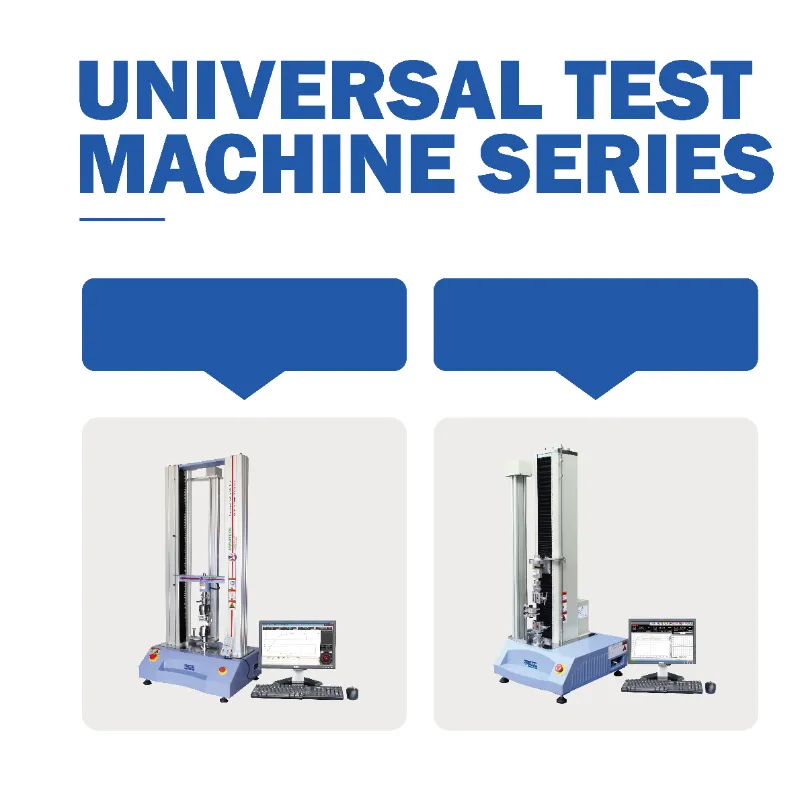
Many laboratories use [universal testing machines](/universal-testing-machine-buyers-guide) capable of both compression and tension testing, providing versatility for diverse material testing requirements. For equipment comparison between dedicated compression testers and multi-function systems, refer to our [Universal Testing Machine buyer's guide](/universal-testing-machine-buyers-guide).
---
## ITM-LAB Compression Testing Solutions
ITM-LAB manufactures compression testing equipment with 27 years of engineering experience in materials testing systems.
### Technical Capabilities
**Load Capacity Range:**
- Electromechanical systems: 50 kN to 600 kN
- Hydraulic systems: 300 kN to 3000 kN
- Specialized concrete testers: 2000 kN, 3000 kN
**Control Systems:**
- Digital closed-loop control for constant loading rate (ASTM C39 compliance)
- PC-based software with test method libraries (ASTM, ISO, GB, EN standards)
- Automatic calculation: compressive strength, elastic modulus, energy absorption
- Real-time graphing: load-displacement, stress-strain curves
**Standard Compliance:**
Equipment designed to facilitate testing per:
- ASTM C39 (concrete compression)
- ASTM D695 (plastics compression)
- ASTM E9 (metallic materials compression)
- ISO 7500-1 (machine calibration and verification)
- ISO 604 (plastics compression properties)
### Application-Specific Configurations
**Concrete Testing Systems:**
- Spherically seated upper platen per ASTM C39
- Digital load rate controller: 0.25±0.05 MPa/s
- Interchangeable platen sets (100mm, 150mm, 200mm cylinders/cubes)
- Touch-screen operation with specimen dimension database
**Plastics Testing Systems:**
- Compressometer with 50mm gage length
- Environmental chamber: -70°C to +250°C
- Low-force load cells (5-50 kN) for accurate modulus measurement
- Support jig sets per ASTM D695 requirements
**Multi-Material UTM Configurations:**
For laboratories testing multiple material types, ITM-LAB offers [universal testing machines](/universal-testing-machine-buyers-guide) with interchangeable compression platens and tensile grips, providing cost-effective multi-function capability.
### Technical Support Services
Engineering team provides:
- Test method development for custom specimens
- Specimen preparation training per ASTM standards
- Calibration and verification services (ISO 17025 compliant)
- Equipment qualification documentation for regulatory submissions
### Manufacturing Information
- Production facility: Vertically integrated manufacturing (frame fabrication, hydraulic systems, control systems)
- Quality system: Process controls and equipment verification procedures
- After-sales support: Technical helpline, spare parts inventory, field service
**Contact for Technical Specifications:**
Request detailed datasheets including force-displacement curves, system specifications, and compliance documentation for specific testing applications.
---
## Conclusion
Compression testing machines provide critical data for material qualification, structural design verification, and quality control across construction, manufacturing, and research sectors. Proper equipment selection requires analysis of force capacity requirements, specimen size range, standard compliance needs, and testing volume.
Key selection criteria:
- Load capacity with adequate safety margin (calculate per material strength and specimen area)
- Compliance with applicable testing standards (ASTM C39 for concrete, ASTM D695 for plastics, ASTM E9 for metals)
- Platen specifications (spherically seated for concrete, flat hardened steel for other materials)
- Calibration and verification capabilities per ISO 7500-1
Understanding the differences between compression and [tensile testing](/tensile-testing-machine-complete-guide) helps laboratories select appropriate equipment for their material characterization needs. For multi-functional testing requirements, [universal testing machines](/universal-testing-machine-buyers-guide) offer combined compression and tension capabilities.
ITM-LAB provides compression testing solutions engineered for industrial and laboratory applications. Contact technical support for application-specific equipment recommendations and testing standard implementation guidance.
**Technical Inquiries:**
Visit www.itm-lab.com for equipment specifications, application notes, and testing standard resources.
---
**References:**
- ASTM C39/C39M: Standard Test Method for Compressive Strength of Cylindrical Concrete Specimens (ASTM International)
- ASTM D695: Standard Test Method for Compressive Properties of Rigid Plastics (ASTM International)
- ASTM E9: Standard Test Methods of Compression Testing of Metallic Materials at Room Temperature (ASTM International)
- ISO 7500-1: Metallic materials - Calibration and verification of static uniaxial testing machines (ISO)
- ISO 604: Plastics - Determination of compressive properties (ISO)
- ACI 318: Building Code Requirements for Structural Concrete (American Concrete Institute)
*Note: All referenced standards are publicly available through respective standards organizations. Technical specifications represent industry-standard ranges verified through published literature and manufacturer data.*
