Tensile Tester Buying Guide: Technical Selection Criteria for Material Testing
Tensile testing equipment measures material strength by applying controlled force until failure. This guide provides technical selection criteria based on testing standards, load requirements, and operational considerations.
Understanding Tensile Testing Requirements
A tensile tester applies axial load to a specimen while measuring force and displacement. The primary testing standards are:
ASTM D638 - Standard Test Method for Tensile Properties of Plastics
ASTM E8 - Standard Test Methods for Tension Testing of Metallic Materials
ISO 527 - Determination of tensile properties for plastics
GB/T 1040 - Plastics tensile testing method (China standard)
Each standard specifies crosshead speed, specimen dimensions, and data collection requirements. ASTM D638 requires test speeds of 5 mm/min for rigid plastics and 50 mm/min for elastomers. ASTM E8 for metals typically uses 10 mm/min for yield strength determination.
Key Technical Specifications
Load Capacity
Select based on maximum expected force:
- 5 kN: Thin films, textiles, small plastic components
- 10-50 kN: General plastics, rubber, composites
- 100-300 kN: Metals, high-strength composites, structural materials
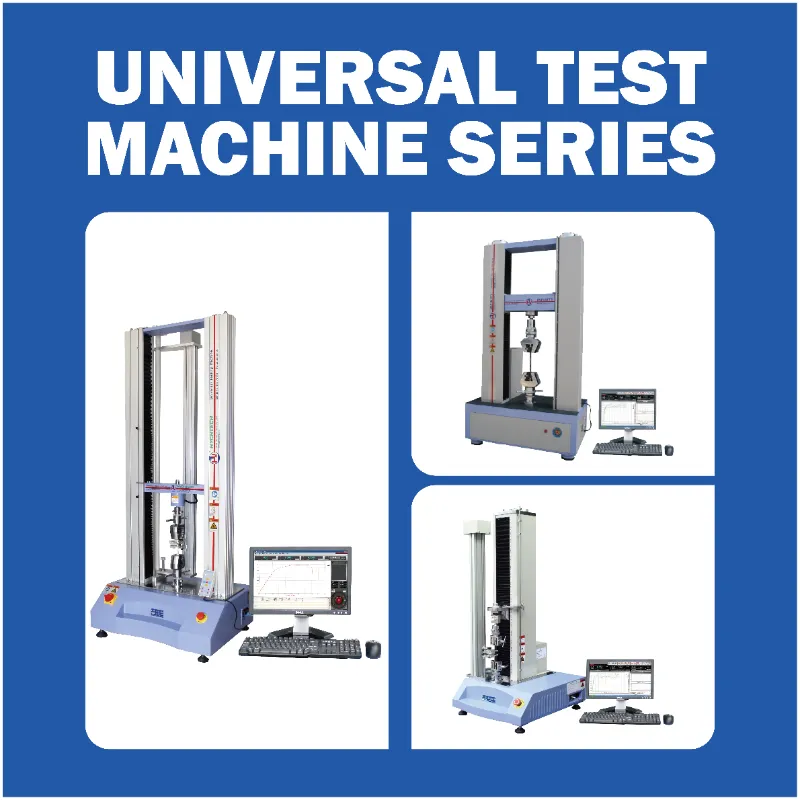
ITM-LAB RS-8000 series offers load cells from 5 kN to 300 kN with Class 0.5 accuracy per ISO 7500-1.
Accuracy Class
ISO 7500-1 defines accuracy classes:
- Class 0.5: ±0.5% of indicated force (research applications)
- Class 1: ±1% of indicated force (production QC)
- Class 2: ±2% of indicated force (basic testing)
Higher accuracy requires calibrated load cells and precise displacement sensors.
Test Space and Stroke Length
Vertical test space determines maximum specimen length:
- Standard: 600-800 mm test space
- Extended: 1200-1500 mm for long specimens
- Maximum stroke typically 50-80% of test space
Crosshead Speed Range
Required range depends on material type:
- Plastics: 1-500 mm/min per ASTM D638
- Metals: 0.5-50 mm/min per ASTM E8
- Elastomers: Up to 500 mm/min per ISO 37
The RS-8000 provides 0.001-500 mm/min speed control with servo motor system.
Electromechanical vs Hydraulic Systems
Technical Comparison Table:
| Parameter | Electromechanical | Hydraulic |
|-----------|------------------|-----------|
| Load capacity | Up to 300 kN | 100 kN to 2000 kN |
| Speed control accuracy | ±0.1% | ±0.5% |
| Maintenance frequency | Annual calibration | Quarterly fluid check |
| Noise level | <65 dB | 70-80 dB |
| Power consumption | 2-5 kW | 15-30 kW |
| Position resolution | 0.001 mm | 0.01 mm |
Electromechanical systems use ball screw drive with servo motors. These provide precise speed control and lower operating costs. Suitable for loads under 300 kN.
Hydraulic systems use pressurized fluid for force generation. Required for loads exceeding 300 kN. Higher maintenance requirements due to fluid management and seal replacement.
ITM-LAB manufactures electromechanical systems (RS-8000 series) for the 5-300 kN range, covering 90% of material testing applications.
Grip System Selection
Proper gripping prevents specimen slippage and ensures valid test results.
Pneumatic Grips
- Air pressure: 0.6-0.8 MPa
- Clamping force: Adjustable 0-5 kN
- Specimen width: 5-50 mm
- Application: Plastics, thin metals, films
Manual Wedge Grips
- Maximum clamping force: 10-15 kN
- Specimen thickness: 0.5-10 mm
- Application: Sheet metal, composite panels
Hydraulic Grips
- Clamping force: 50-100 kN
- Specimen diameter: 12-50 mm
- Application: High-strength metals, structural testing
The RS-8000 series accepts standard grip interfaces with quick-change capability.
Data Acquisition and Control Systems
Modern tensile testers require digital control and data collection.
Minimum Requirements:
- Load measurement: 50,000 data points per test minimum
- Displacement measurement: Linear encoder or LVDT sensor
- Sampling rate: 100 Hz minimum for standard tests
- Data output: CSV format for statistical analysis
The RS-8000 control software provides:
- Real-time force-displacement curves
- Automatic calculation per ASTM/ISO formulas
- Statistical analysis for multiple specimens
- PDF report generation with test parameters
Software should calculate:
- Tensile strength (MPa)
- Yield strength (MPa)
- Elongation at break (%)
- Modulus of elasticity (GPa)
Testing Standards Compliance
Equipment must meet calibration requirements:
ISO 7500-1: Verification of force-indicating systems
- Calibration interval: 12 months maximum
- Calibration points: Minimum 5 points across range
- Uncertainty: ±0.5% for Class 0.5 machines
ASTM E4: Verification of testing machines
- Three calibration points minimum: 10%, 50%, 100% of capacity
- Annual verification required
ITM-LAB provides traceable calibration certificates with each RS-8000 unit.
Environmental Testing Capability
Some applications require controlled temperature testing:
Standard Temperature Chamber Integration:
- Temperature range: -70°C to +350°C
- Temperature uniformity: ±2°C
- Specimen environment control per ASTM D638 conditioning
The RS-8000GDW model integrates temperature chamber for polymer testing under thermal conditions.
Application-Specific Considerations
Plastics and Polymers
Test speed: 5-50 mm/min (ASTM D638)
Load range: 5-50 kN
Grip type: Pneumatic with serrated faces
Extension measurement: Video extensometer for accurate strain
Metals and Alloys
Test speed: 0.5-50 mm/min (ASTM E8)
Load range: 50-300 kN
Grip type: Hydraulic wedge grips
Extension measurement: Clip-on extensometer (25-50 mm gauge)
Textiles and Films
Test speed: 50-500 mm/min
Load range: 1-5 kN
Grip type: Roller grips or flat-faced pneumatic
Width measurement: Automatic specimen width detection
Composites and Laminates
Test speed: 2 mm/min (ASTM D3039)
Load range: 10-100 kN
Grip type: Hydraulic side-action grips
Tab bonding: Required for grip area reinforcement
Maintenance and Calibration Schedule
Daily Maintenance:
- Visual inspection of grips and fixtures
- Verification of zero-load reading
- Lubrication check on moving components
Monthly Maintenance:
- Ball screw lubrication (electromechanical systems)
- Grip jaw inspection for wear
- Control system diagnostic check
Annual Requirements:
- Load cell calibration per ISO 7500-1
- Displacement sensor verification
- Control software validation
- Comprehensive performance verification
ITM-LAB provides maintenance kits and remote diagnostic support. Typical service life exceeds 15 years with proper maintenance.
Selection Decision Matrix
Budget Range: ,000 - ,000
- Load capacity: 5-10 kN
- System type: Single-column electromechanical
- Application: Plastics, films, textiles
- Recommended: RS-8000 5kN model
Budget Range: ,000 - ,000
- Load capacity: 10-50 kN
- System type: Dual-column electromechanical
- Application: General materials, metals, composites
- Recommended: RS-8000 50kN model
Budget Range: ,000+
- Load capacity: 100-300 kN
- System type: Dual-column servo system
- Application: High-strength materials, research
- Recommended: RS-8000 300kN with environmental chamber option
Technical Support and Training
Equipment purchase should include:
- Installation and commissioning (2-3 days)
- Operator training on ASTM/ISO procedures (8 hours minimum)
- Software training and report template setup
- Remote diagnostic access capability
ITM-LAB provides:
- Video training modules for common procedures
- Phone/email technical support during operational hours
- Annual calibration service with traceable certificates
- Spare parts availability with 48-hour delivery
Contact technical support: Provide model number, serial number, and specific application requirements for equipment selection assistance.
Quality Assurance Verification
After installation, verify equipment performance:
1. Perform tensile test on certified reference material
2. Compare results to material certificate values
3. Verify force accuracy at 20%, 50%, 100% of capacity
4. Check displacement accuracy using gauge blocks
5. Document baseline performance data
ITM-LAB supplies reference specimens with known properties for initial verification.
Conclusion
Tensile tester selection requires matching equipment specifications to testing standards and material properties. Key factors are load capacity, accuracy class, and grip system compatibility. Electromechanical systems provide adequate performance for most applications under 300 kN.
The RS-8000 series from ITM-LAB meets ASTM and ISO requirements with Class 0.5 accuracy. Equipment includes control software, calibration documentation, and technical support.
For technical specifications and application consultation, contact ITM-LAB engineering team. Provide material type, expected force range, and applicable testing standards for equipment recommendation.
