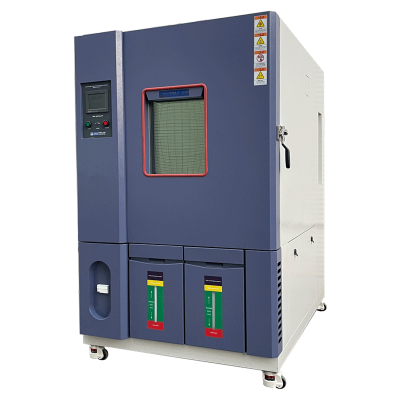
Many US. manufacturers buy an environmental test chamber only to discover it’s too small, too weak, inefficient, or non‑compliant. The result: wasted budget, failed tests, delayed certifications, and unexpected downtime. These mistakes are avoidable. Below are the 7 most expensive errors — and how to skip them entirely.
Low‑cost chambers often cut corners on components, leading to poor temperature uniformity, unstable humidity control, and high failure rates. While the upfront cost may be lower, the long-term cost — including repairs, re-testing, and replacement — far exceeds any initial savings. Invest in a reliable model that meets your compliance and performance needs.
2. Ignoring temperature uniformity
U.S. standards like ASTM, IEC, and UL require tight temperature uniformity (≤ ±2°C for most applications). Cheap machines often have inconsistent temperature distribution, producing invalid test data that will be rejected by customers and certification labs. Always verify uniformity specs before buying.
3. Under‑estimating internal space
Buyers often choose chambers that are just large enough for their current samples, forgetting to account for future growth or larger test items. This leads to having to buy a second chamber sooner than expected. We recommend 10–20% extra internal space to accommodate changing testing needs.
4. Neglecting energy efficiency
U.S. electricity costs are among the highest in the world, and environmental test chambers run for hours or days at a time. Low‑efficiency compressors and poor insulation can double your operating cost over 5 years. Look for models with high-efficiency inverters and eco-friendly refrigerants to save on energy bills.
5. Not verifying U.S. standard compliance
Without compliance with ASTM, IEC 60068, or UL standards, your test results may be rejected by U.S. importers, brands, and third-party certification bodies. Always confirm that the chamber meets the specific standards required for your industry (e.g., MIL-STD-810 for aerospace, UL 2580 for EV batteries).
6. Overlooking after‑sales and calibration support
U.S. customers need fast after-sales service, easy access to spare parts, and professional calibration to keep their chambers running smoothly. Poor support leads to costly downtime — especially if your lab relies on the chamber for critical quality control. Choose a manufacturer with a strong global support network.
7. Choosing the wrong temperature/humidity range
Selecting a chamber with a wider temperature or humidity range than you need wastes money on unnecessary features. Conversely, choosing a range that’s too narrow makes the machine useless for future projects or new product lines. Evaluate your current and future testing needs to select the right range.
Avoid these mistakes, and you will choose a durable, accurate, cost‑effective temperature and humidity chamber that supports your production and certification for years. For professional selection support or a free quote tailored to your U.S. facility, contact ITM‑LAB today.
